Part II — The Age of Manufactured Reality
A Forgery Lab Investigation
Have you noticed how something feels off in the way information moves now? Not because people are lying more boldly, but because the volume, speed, and emotional charge of what reaches us is engineered to overwhelm. The goal isn’t persuasion — it’s exhaustion. When you’re tired, you stop questioning. When you stop questioning, someone else gets to define what’s real.
This is the architecture of manufactured reality: a world where the reflection looks familiar enough to trust, but warped just enough to mislead.

This investigation draws from a widely circulated manipulated Facebook post that spread across multiple communities in December 2025. Its rapid reach, emotional framing, and selective presentation make it a clear example of how manufactured reality enters public view — and how quickly it can distort understanding.
“Confusion isn’t a side effect. It’s a strategy.”

Design Notes
Why This Image Looks the Way It Does
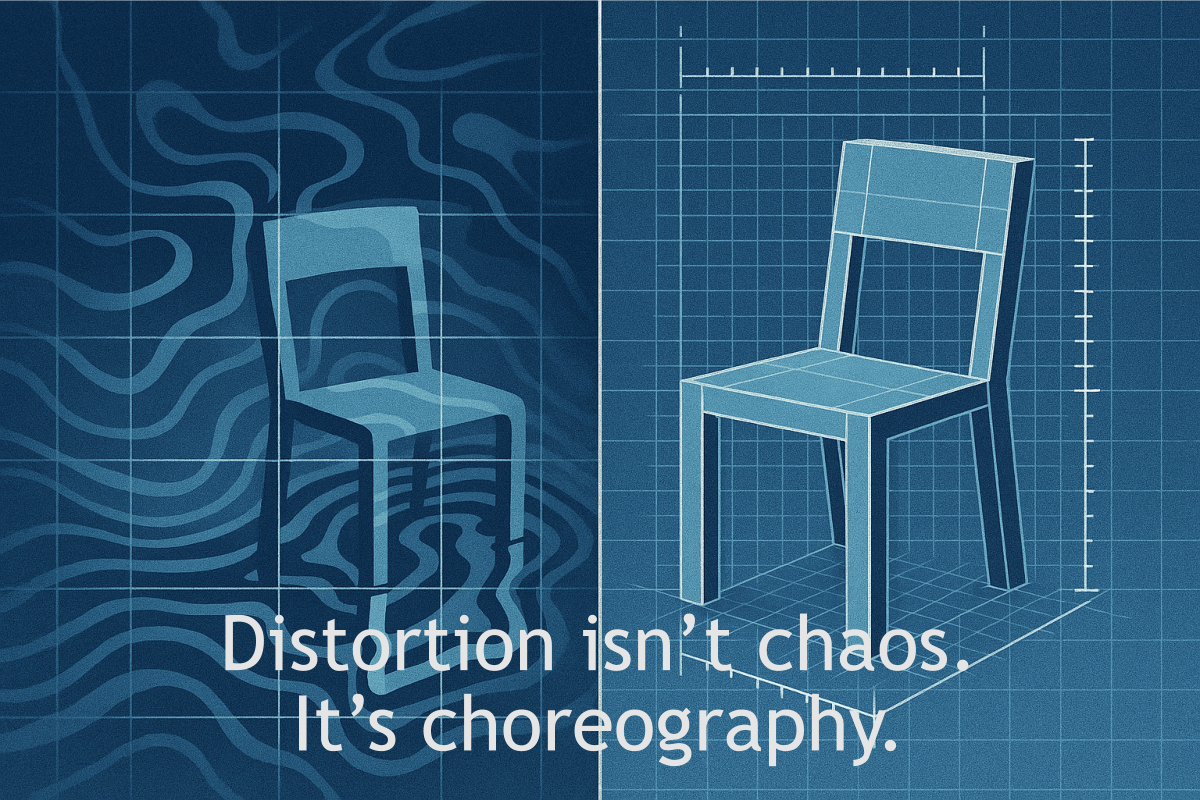
This HERO image exposes the engineered nature of distortion.
The composition splits the frame into two visual truths: on the left, an ordinary object rendered strange through funhouse like warping; on the right, the same object clarified through blueprint lines, measurements, and structural cues. This duality is the core metaphor of manufactured reality — distortion is not accidental, emotional, or chaotic. It is designed.
What to Look For
The cool, analytical lighting reinforces the emotional register of Clarity moving toward Indictment. The viewer is invited to compare the warped reflection with the precise blueprint, revealing that the “funhouse” effect is not whimsy but architecture. The grid lines, measurement ticks, and clean geometry on the right side function as the forensic counterweight to the manipulated image on the left.
Why It Matters
By pairing distortion with its underlying blueprint, the image teaches the reader how to interpret Part II: manufactured reality is not a glitch in perception but a system built to shape perception. The HERO establishes the investigative tone for the entire page — not by dramatizing the distortion, but by revealing the machinery behind it.
Recent global investigations into unsafe AI image generators have revealed how easily synthetic harm can slip into the world when guardrails are thin or absent. These cases mirror the dynamic described in this section: when the counterfeit can be produced without friction, it begins to blur the edges of the authentic in ways that feel ordinary until the damage is already done. The civic implication is clear and clinical — emerging technologies require tighter, enforceable safety regulations, because voluntary safeguards erode at the same speed as the systems that depend on them.
A brief note about the post that sparked this page
How Confusion Became a Political Weapon
Source Summary
Where the Signal Is Deliberately Broken
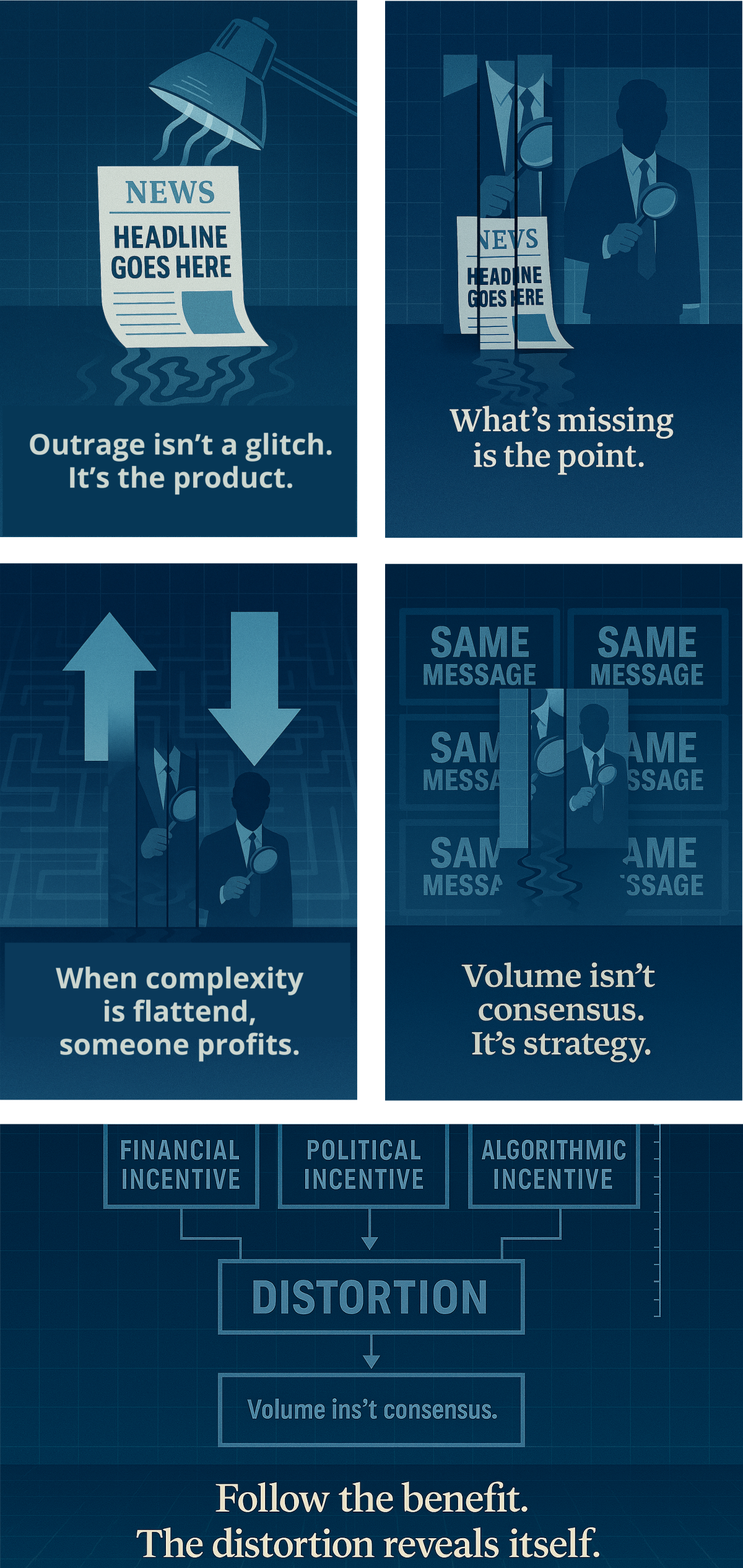
Manufactured reality does not rely on a single lie. It works by flooding the public sphere with distortions, half-truths, and engineered ambiguity until certainty itself feels out of reach. The confusion is not accidental; it is the product of design.
This strategy succeeds because it targets the most vulnerable point in any information system: the moment when people are unsure what to believe. When doubt becomes the default, bad actors no longer need to persuade — they only need to destabilize. The goal is not to replace truth, but to exhaust it.
The betrayal lies in that exhaustion. When clarity is deliberately broken, the public loses more than facts; it loses the ability to act with confidence. Manufactured confusion weakens civic judgment, erodes collective memory, and blurs the line between accountability and noise. Part II examines this fracture not to amplify it, but to expose the machinery that depends on our disorientation and to name the civic harm it inflicts.
This strategy succeeds because it targets the most vulnerable point in any information system: the moment when people are unsure what to believe. When doubt becomes the default, bad actors no longer need to persuade — they only need to destabilize. The goal is not to replace truth, but to exhaust it.
Explore the Trilogy:
- Part I — What Counterfeits Reveal
- Part II — The Age of Manufactured Reality
- Part III — Seeing Through the Noise
Author’s Note
This trilogy was written to help readers navigate a world where distortion has become routine
and clarity feels increasingly rare. My intention is that these pages offer a steady place to
return to whenever the noise rises or the mirrors close in. We protect our shared reality by
learning to see clearly — and by refusing to surrender that skill to anyone. Clarity isn’t loud.
It’s steady. And steadiness is its own form of strength.