When Culture Speaks, Power Panics
When culture asserts itself with clarity and confidence, power often responds not with understanding but with fear. What should have been a moment of celebration becomes a manufactured crisis, engineered through selective framing, primed outrage, and a choreography designed to turn identity into threat. The panic isn’t organic. It’s constructed — a reaction to visibility, not harm — revealing far more about the insecurities of those in power than about the culture they claim to fear.

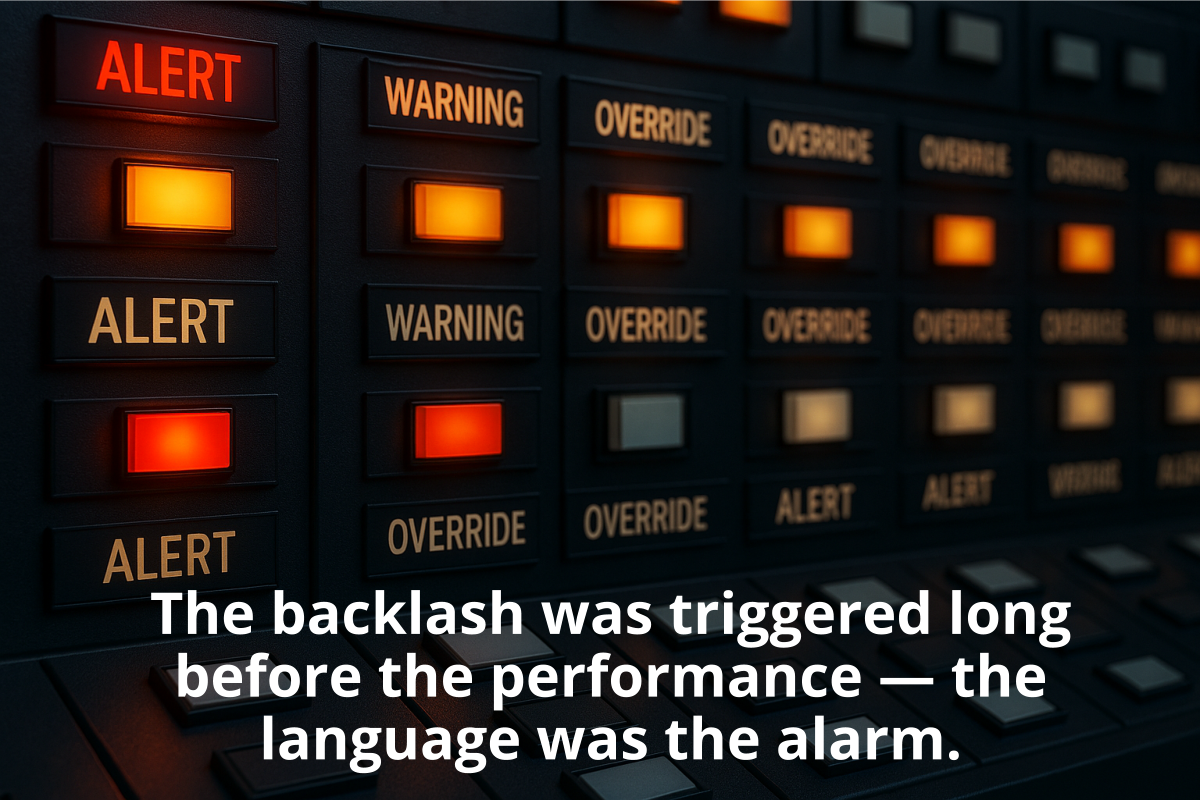
In their coverage of the GOP’s reaction to the Super Bowl Halftime Performance, multiple outlets documented how conservative commentators and elected officials escalated outrage before the show even aired, framing the use of Spanish as a cultural affront rather than an artistic choice. As one commentator put it, “This wasn’t a performance — it was a provocation.” This page draws from reporting and analysis across those sources to examine how language itself became the trigger, revealing a familiar pattern in which cultural expression is treated as a threat, and the outrage machinery activates on cue. The blinking‑alert motif in the HERO image reflects that mechanism: a system primed to panic the moment culture speaks in a voice it cannot control.
“The outrage wasn’t a reaction. It was a strategy.”

Design Notes
Why This Image Looks the Way It Does
This image captures the exact mechanism that defined the backlash: a system already wired for alarm before a single note was sung. The Panic Switchboard visualizes the infrastructure of outrage — the buttons, triggers, and warning lights that were primed long before Bad Bunny announced his performance would be in Spanish.Symbolic function:
The illuminated controls symbolize a narrative machine waiting for activation. Nothing in the image reflects the performance itself; instead, it reflects the conditions that made the backlash inevitable. The switches and alerts stand in for the political, cultural, and media actors who treat language, identity, and visibility as threats requiring escalation.
Civic meaning:
The HERO establishes the civic thesis: the panic was not spontaneous. It was engineered. The outrage that followed the Spanish‑language announcement wasn’t about content — it was about a system predisposed to treat cultural expression as provocation. This image makes the mechanism visible, showing how power manufactures crisis through pre‑set alarms rather than genuine reaction.
Why it opens the page:
This image sets the reader’s frame before they encounter the grid. It tells them: the story begins before the performance. By opening with the machinery of panic rather than the cultural moment itself, the page makes clear that the backlash was never about what happened onstage. It was about the infrastructure of fear that was already humming in the background — and the machinery built to control the narrative.
A brief note about the post that sparked this page
A closer look at the reaction behind the alarms
Source Summary
The Pre-Staged Outrage
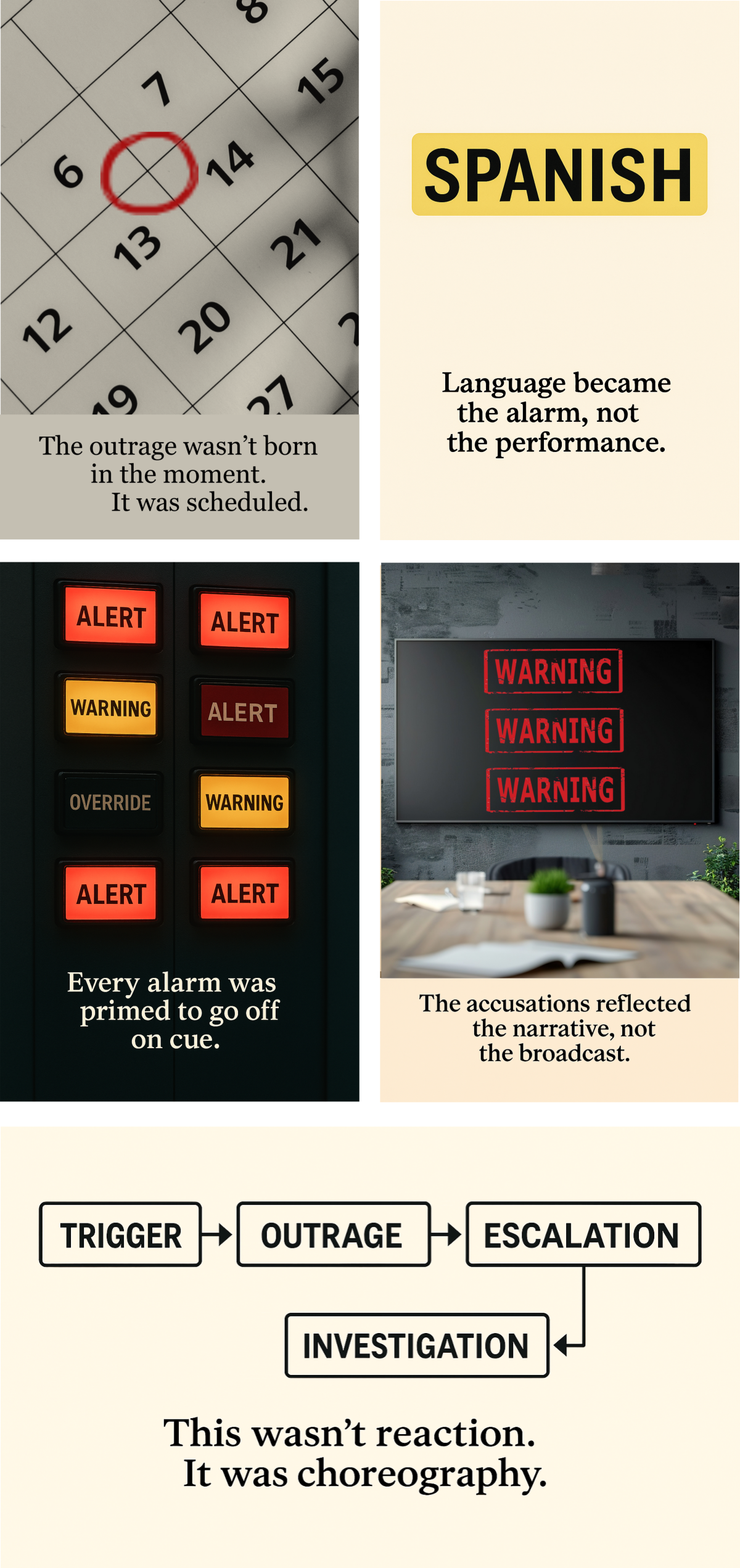
The GOP’s response to the halftime performance didn’t begin with what happened on stage — it began weeks earlier, when conservative media figures and political operatives were already promoting an “alternate halftime show.” An event of that scale requires planning, booking, production, and coordination, revealing that the backlash was not spontaneous but pre‑engineered. The language choice — Spanish — became the first trigger, framed as a cultural provocation long before the Super Bowl aired. This early narrative primed audiences for outrage, ensuring the alarms were blinking before a single moment of the performance existed to react to.
The Manufactured Aftermath
Once the show aired, the preloaded narrative escalated into a full‑blown moral panic. Several Republican lawmakers and commentators demanded investigations, alleging “smut,” “gay sex acts,” and other claims that were not supported by the broadcast itself. These accusations weren’t responses to the content; they were extensions of a storyline already in motion. The performance became a surface onto which predetermined grievances were projected, allowing political actors to amplify fear, redirect attention, and reinforce cultural division. The outrage wasn’t about what viewers saw — it was about what the outrage system was built to produce.