Inside the Machinery: The Certification Battlefield
By: Janiece
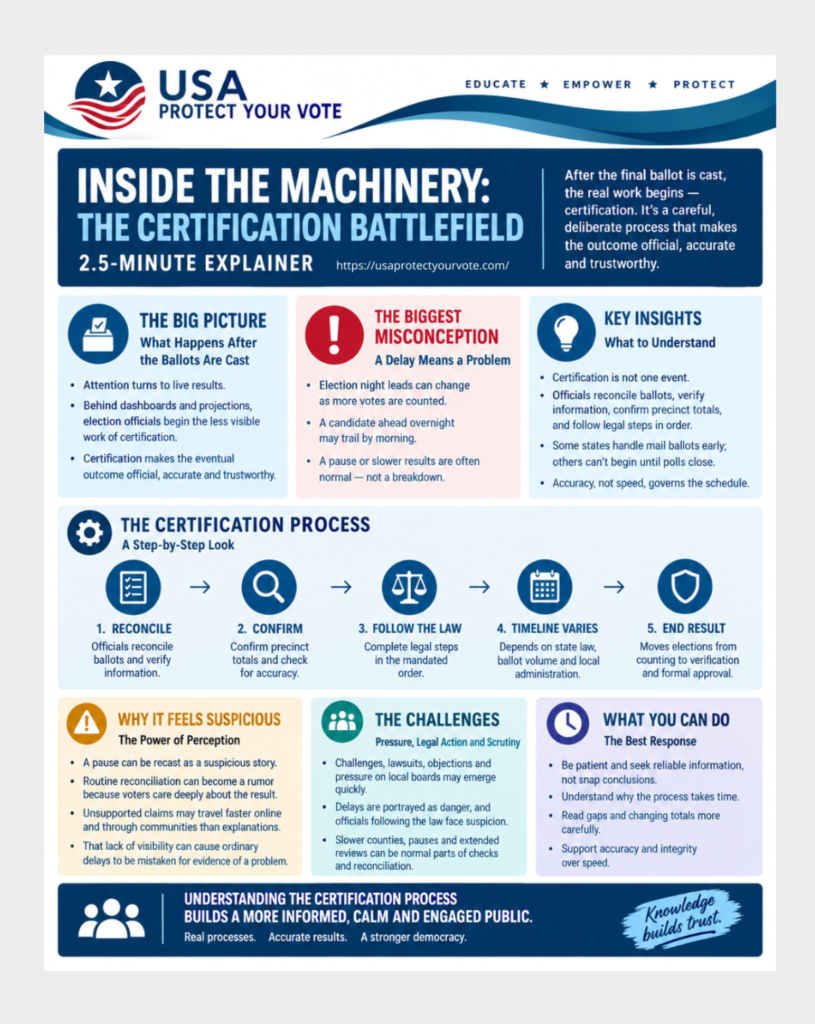
The post-election period is one of the most misunderstood phases of the entire democratic process. Once the last ballot is cast, public attention shifts instantly to results — refreshing dashboards, watching county updates, comparing early returns, and waiting for the moment when the numbers finally settle. But beneath that anticipation is a quieter, more deliberate machinery at work: certification. And without understanding how that machinery operates, the wait can feel confusing, uneven, or even unbearable.
Election night often adds to this tension. Early projections can shift once all precincts finish tabulating overnight, and once mail‑in ballots — which may arrive or be processed later — are added to the tally. It’s the familiar experience: you turn off the television at 1 a.m. with Candidate A ahead, only to wake up and find Candidate B has taken the lead. This isn’t chaos; it’s the natural progression of counting votes in different stages and at different speeds.
Certification is not a single action — it is a structured sequence of verification steps designed to protect accuracy, not speed. Ballots must be reconciled, signatures verified, precinct totals confirmed, and legal requirements followed in the exact order each state mandates. These steps take time, and they unfold differently across the country. Some states can begin processing early; others must wait until polls close. Large states move more slowly than small ones. None of this is irregular — but when anticipation runs high, normal timelines can feel like delays.
This is where uncertainty becomes fertile ground. When results arrive unevenly or slowly, people often fill the silence with assumptions. A pause in reporting becomes a narrative. A routine reconciliation becomes a rumor. A procedural step becomes a question mark. And because voters are emotionally invested in the outcome, unsubstantiated uncertainty can spread faster than the facts that would resolve it.
Understanding certification is how voters stay grounded during this fragile moment. When people know what the process requires — and why it takes time — they are less likely to misread the gaps, misunderstand the pace, or mistake normal procedures for signs of trouble. The machinery behind the wait is built to protect accuracy, but it only provides reassurance when voters know it exists.

Civic Context
Certification is the quiet machinery most voters never see — and that makes it the most vulnerable part of the election process. After Election Day, the work shifts from casting ballots to verifying them, from counting votes to certifying results. This period is orderly, procedural, and governed by law, but because it happens out of public view, it becomes an easy target for manipulation. When people don’t understand what certification entails, they’re more likely to misinterpret normal delays as signs of trouble.
Phase III is where uncertainty becomes a tool. Challenges, lawsuits, procedural objections, and pressure campaigns often appear in rapid succession, not because the underlying processes are flawed, but because confusion itself is strategically useful. When voters don’t know how certification works, they can be persuaded that something is wrong simply because something is taking time. This is the phase where narrative warfare intensifies — where delays are framed as danger, where routine discrepancies are inflated into anomalies, and where pressure is applied to local officials who are simply following the law.
Certification timelines vary widely because states follow different governing rules. Some states begin processing mail ballots as soon as they arrive, while others are legally prohibited from doing so until after polls close. Large states — like California — often take longer simply because they have more ballots to verify. Comparing how quickly one state certifies its results to another doesn’t indicate mishandling; it reflects differences in law, population size, and administrative procedures. But when timelines differ, misinformation can exploit those differences — turning normal delays into claims of chaos, tampering, or wrongdoing, even when the underlying processes are routine and lawful.
This is the moment when voters must resist jumping to conclusions. Certification involves checks, reconciliations, and legal steps that naturally take time. Temporary pauses, extended reviews, or slower‑moving counties often reflect normal administrative processes, not signs of interference. Staying patient and informed is the strongest protection against narrative manipulation, especially when misinformation attempts to fill the gaps with claims that something “seems off.”
This page prepares readers for the turbulence that follows Election Day. It explains why lawsuits appear, why certification boards face pressure, why narratives escalate, and why confusion is often intentional. It shows how Phase I’s groundwork and Phase II’s disruptions create conditions that can be misinterpreted or manipulated during certification. Most importantly, this page gives voters the tools to interpret what they’re seeing during certification—without being pulled into misinterpretation or misinformation. When readers understand how certification works, they can navigate the post-election period with clarity, confidence, and calm.
“Certification takes time, and different timelines don’t signal trouble — they’re a reminder that accuracy and integrity take precedence over speed.“

Design Notes
Why This Image
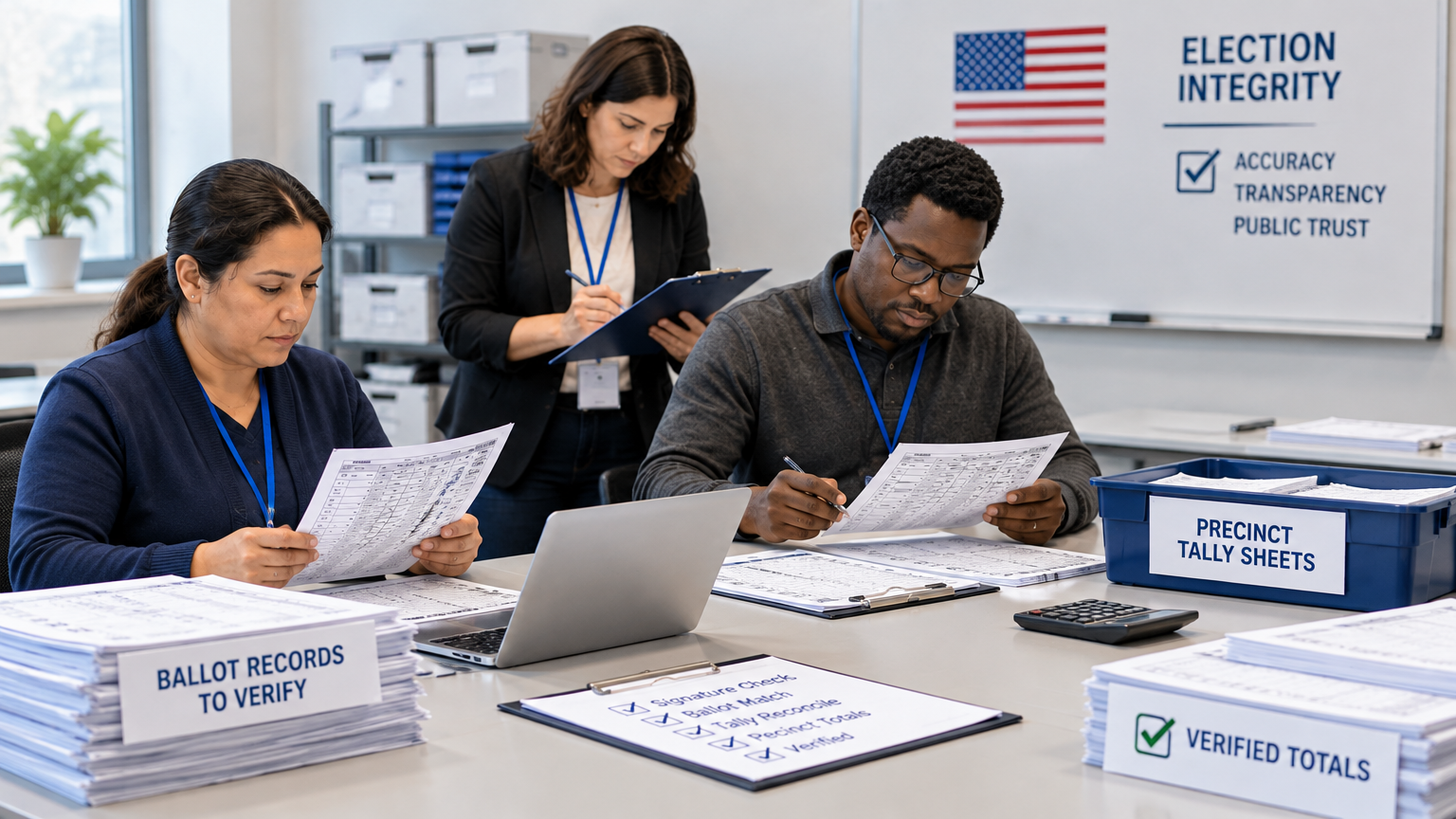
This image captures the moment when election verification becomes certification — the point where every number, every tally sheet, and every signature must withstand scrutiny. It shows real people performing the meticulous work that transforms raw vote counts into official results. The scene is grounded, procedural, and unmistakably administrative, which is exactly what Phase 3 demands.
Symbolic Function
The HERO symbolizes the battlefield of accuracy — not a fight between people, but a disciplined confrontation between claims and evidence. The labeled stacks of documents, the tally sheets, the verification records, and the Election Integrity board all serve as visual anchors for the idea that certification is a structured, rule‑bound process. The image stands as a reminder that the final outcome of an election is not decided by noise, but by documented truth.
Civic Meaning
Certification is where democracy proves its resilience. This image communicates that the finalization of election results is not a mystery or a black box — it is a transparent, methodical, multi‑step process carried out by trained officials following established standards. It reinforces public trust by showing the human hands and institutional safeguards that ensure accuracy, transparency, and legitimacy.
Why It Opens the Visual Story
Phase 3 begins at the threshold between verification and certification, and this image places the viewer directly inside that threshold. It sets the tone for the entire section by showing the environment where the final decisions are made: organized, accountable, and evidence‑driven. As the opening visual, it prepares the reader to understand the certification battlefield not as chaos, but as a disciplined civic arena where accuracy becomes final.
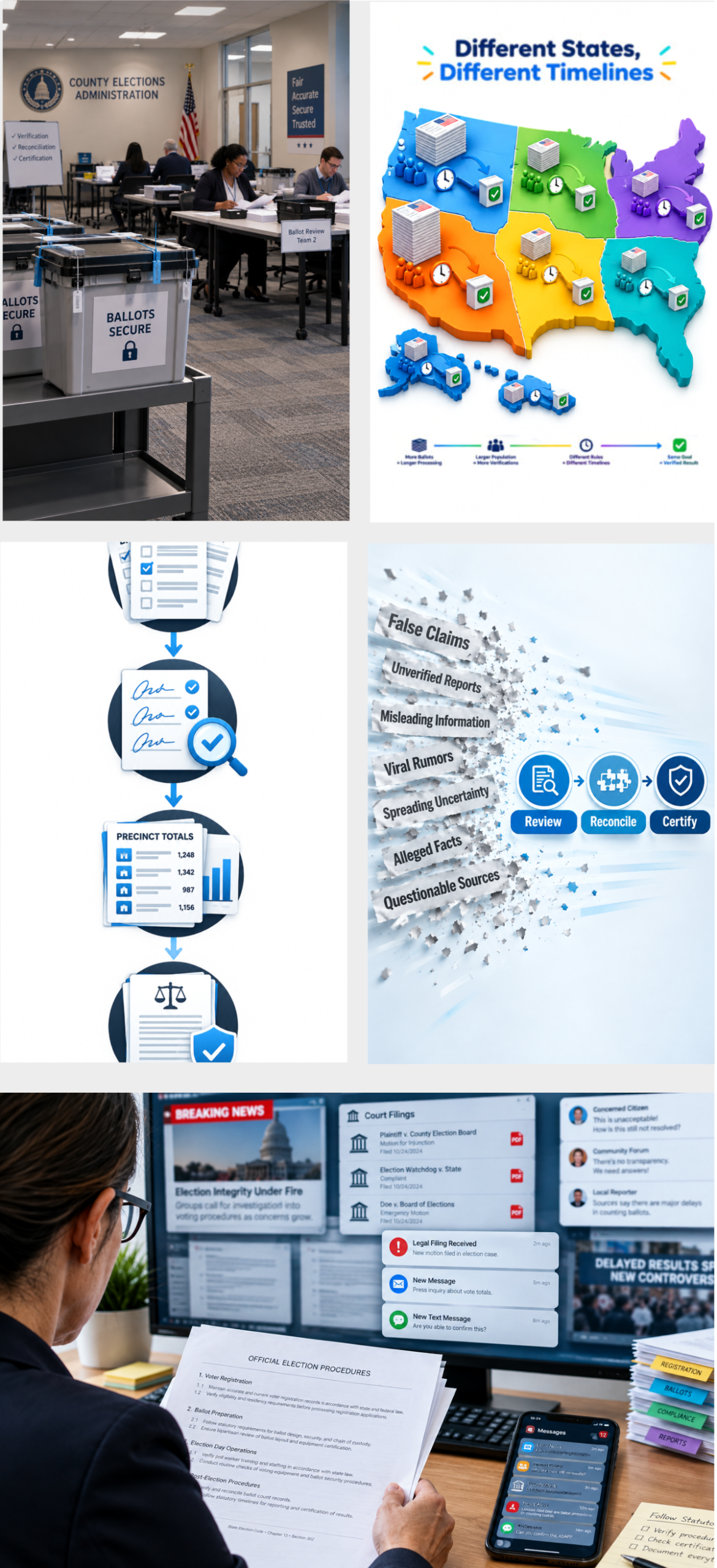
Election results don’t arrive all at once — and the anticipation that builds in those gaps is often what can fuel confusion.
Why This Post Matters
Anticipation is one of the most powerful forces in the election cycle. As soon as polls close, people want answers — quickly. They watch early returns, refresh dashboards, compare counties, and look for signs of momentum. That desire for closure is natural, but it also creates a fragile moment where expectations can outrun the process itself. When results don’t appear as fast as people hope, uncertainty fills the space.
Certification is the part of the election process most voters never see, and that makes anticipation even harder to manage. After ballots are cast, the work shifts from voting to verifying — a careful, methodical sequence of checks, reconciliations, and legal steps. These steps take time, and they happen out of public view. When anticipation meets silence, people often assume something is wrong even when everything is proceeding exactly as the law requires.
Different states follow different certification rules, and those rules directly shape how quickly results become official. Some states can begin processing mail ballots early, while others must wait until Election Day. Large states naturally move more slowly than smaller ones. These variations are structural, not suspicious — but when timelines differ, anticipation can turn into frustration, and frustration can turn into false accusations or claims of chaos.
This uncertainty creates an opening for misinformation. When people are emotionally invested in an outcome, delays or procedural pauses can be misinterpreted as signs of interference. Routine steps — like reconciling precinct totals or verifying signatures — can be framed as anomalies simply because they interrupt the flow of anticipated results. Confusion becomes a tool, not because the process is flawed, but because anticipation makes people vulnerable to misinterpretation.
This post matters because it gives voters the context they need to stay grounded during the most emotionally charged part of the election cycle. When people understand how certification works — and why results arrive at different speeds — they’re less likely to jump to conclusions or mistake normal procedures for signs of trouble. This page helps voters interpret what they’re seeing during certification without being pulled into cycles of unsubstantiated claims, misplaced suspicion, or rising mistrust. It encourages readers to pause, breathe, and allow the built‑in safeguards of the process to do their work.
To understand the post-election period, voters must understand how certification works — and how anticipation can turn unsubstantiated uncertainty into misunderstanding.

What to Watch For
The post-election period unfolds in stages, not in a single moment. Results may arrive unevenly across counties, with some reporting early and others updating overnight. In large states like California, it can take days — sometimes even a week — before certain races are called, simply due to the volume of ballots and the time required to process them. These shifts and delays are normal parts of the counting process.
What It Actually Means
Uneven reporting does not indicate irregularities — it reflects the different speeds at which counties complete their work. Some jurisdictions process ballots quickly; others require more time due to volume, staffing, or legal requirements. Overnight updates often include verified mail‑in ballots or precinct totals that were still being reconciled when you turned off the television. These shifts are part of the machinery behind the wait.
What You Should Know
Certification is a deliberate, multi‑step process designed to protect accuracy and uphold the integrity of every citizen’s vote. Ballots must be reconciled, signatures verified, provisional ballots reviewed, and precinct totals confirmed. Each state follows its own legally defined timeline, which means results settle at different speeds across the country. Understanding these structural differences helps prevent unsubstantiated uncertainty from turning into misunderstanding and widespread confusion.
The Purpose of This Stage
This stage is where claims meet evidence. Certification is the arena where every number, every tally sheet, and every signature must prove itself. It is the moment when the election’s narrative is reduced to documented truth, and only what can be verified moves forward. Phase 3 is a disciplined civic battleground where accuracy is tested, challenged, defended, and ultimately confirmed.
What Comes Next
After initial results are reported, counties finalize their tallies, states complete their certification procedures, and official results are confirmed. This period may feel slow, especially when anticipation is high, but the pace is intentional. The safeguards built into the process are designed to ensure accuracy — and they require patience, not panic.
People often misunderstand the post-election period because results arrive in stages, not all at once. Early returns may shift overnight as counties finish tabulating precincts and add verified mail‑in ballots to the tally. These changes are normal parts of the counting process, especially in large states where volume and legal timelines extend reporting.
Certification is a deliberate, multi‑step procedure designed to protect accuracy and uphold the integrity of every citizen’s vote. Ballots are reconciled, signatures verified, provisional ballots reviewed, and precinct totals confirmed according to each state’s legally defined schedule. These safeguards take time, and they unfold differently across the country.
When anticipation runs high, gaps in reporting can create unsubstantiated uncertainty. Without understanding how the machinery behind the wait operates, that uncertainty can turn into misunderstanding and widespread confusion. Knowing what the process requires — and why it moves at its own pace — helps voters stay grounded during this fragile moment.
The post-election period becomes clearer, calmer, and more transparent when voters understand the structure guiding it — and
The post-election period becomes clearer, calmer, and more transparent when voters understand the structure guiding it — and the patience it requires.