Inside the Machinery: The Pre-Election Blueprint
By: Janiece
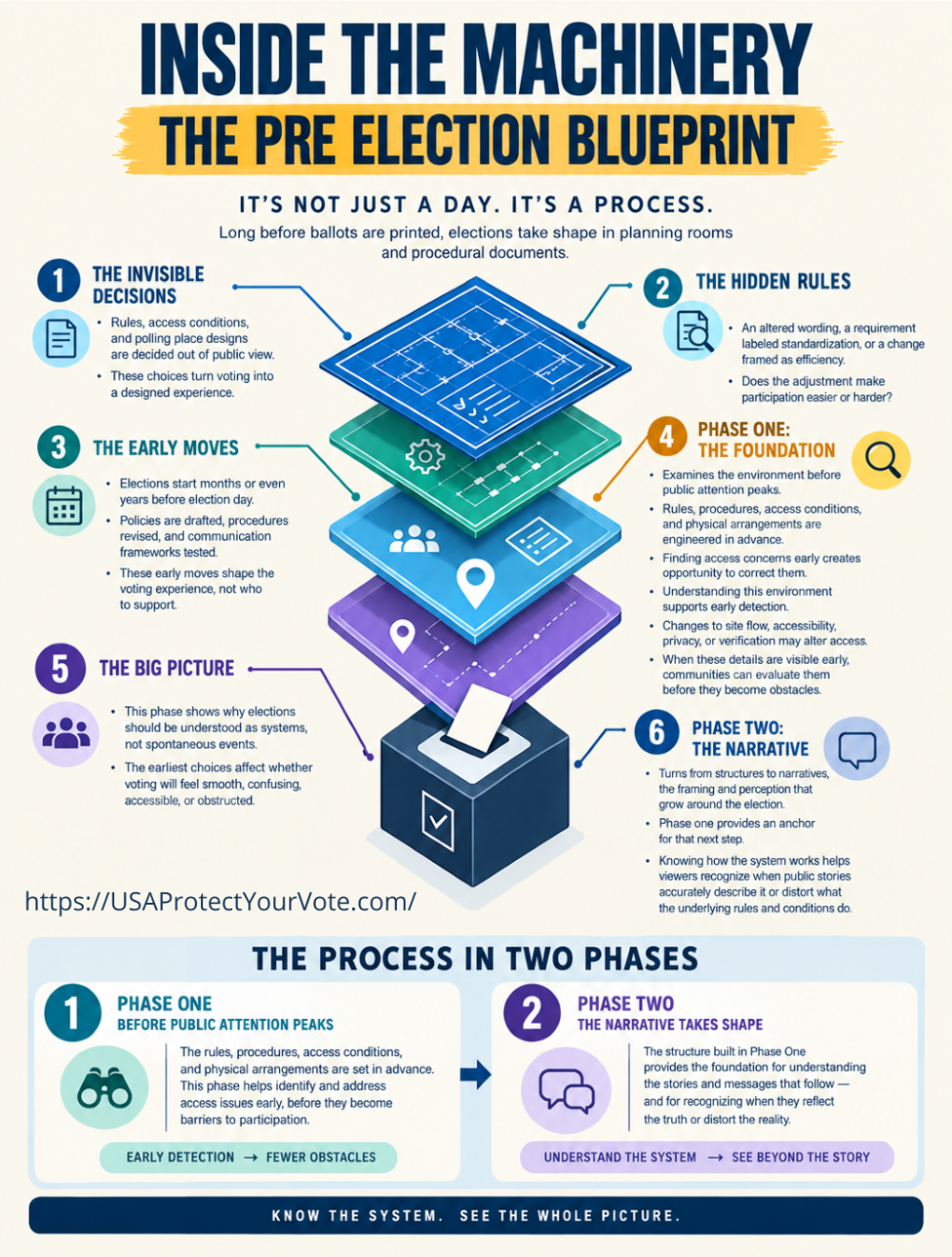
Every election begins long before the public sees it. The earliest phase unfolds quietly — in planning rooms, procedural documents, and structural decisions that shape the voting experience months before a single ballot exists. This is the part of the election most people never witness, yet it determines whether all registered voters can actually move through the process — and how accessible or obstructed that experience will be when Election Day finally arrives.
The pre‑election environment is where the machinery is built. Rules are drafted, access conditions are reviewed, and the physical layout of polling places is engineered with deliberate intention. These choices are not abstract; they define the pathways voters will follow, the friction they may encounter, and the clarity or confusion they will experience. When we understand this phase, we begin to see the election not as an event, but as a designed system.
This early stage also shapes the narrative. Headlines, talking points, and public framing begin to form before voters are paying attention. The story of the election — what it means, what is at stake, and how people should feel about it — starts taking shape in quiet editorial spaces. These narrative choices influence perception long before the first vote is cast, and they often determine which details rise to the surface and which remain unseen.
Structural choices matter just as much. The placement of check‑in stations, the flow of foot traffic, the accessibility routes, and the privacy components are all engineered in advance. These decisions can expand access or restrict it, smooth the process or complicate it, empower voters or frustrate them. The blueprint reveals the truth: voting is not only a civic act — it is an experience shaped by design.
Phase I begins here because clarity begins here. When we recognize how the pre‑election environment is constructed — through rules, narratives, and structural choices — we gain the ability to understand the election before it happens. And once we see it, we cannot unsee it. But once seen, the opportunities to implement corrective changes finally become visible.

Civic Context
Elections don’t begin on Election Day. They begin in the months and years beforehand, in the quiet decisions that shape the voter’s environment long before a single ballot exists. Phase I of Inside the Machinery pulls back that curtain. It shows readers how the pre-election blueprint is assembled — not through dramatic moments, but through rules, narratives, and structural choices that determine how accessible or difficult voting will be when the cycle finally arrives.
Most voters only see the surface: campaign ads, debates, candidate announcements, and the countdown to Election Day. But beneath that surface, something more consequential is happening. Policies are drafted. Procedures are revised. Messaging frameworks are tested. These early moves don’t tell voters who to choose — they shape how voters will experience the process itself. And that experience can tilt toward clarity or confusion depending on the strategic planning built in Phase I.
This phase matters because the earliest signals are often the easiest to miss. A change in verbiage. A shift in how rules are described. A new requirement framed as “standardization.” A procedural adjustment presented as “efficiency.” These choices may appear administrative, but they carry real weight. They determine whether voting becomes more accessible or more difficult — and that single axis is the most reliable indicator of the machinery’s direction.
Phase I teaches readers to recognize these signals. Not to predict outcomes, not to assign motives, but to understand the structure. When confusion becomes strategy, clarity becomes resistance — and clarity begins here, in the blueprint. By learning how the pre‑election environment is engineered, voters gain the ability to see the machinery before it moves.
“The first sign of the machinery is always the language — the words that quietly make voting access harder or easier long before Election Day arrives.”

Design Notes
Why This Image
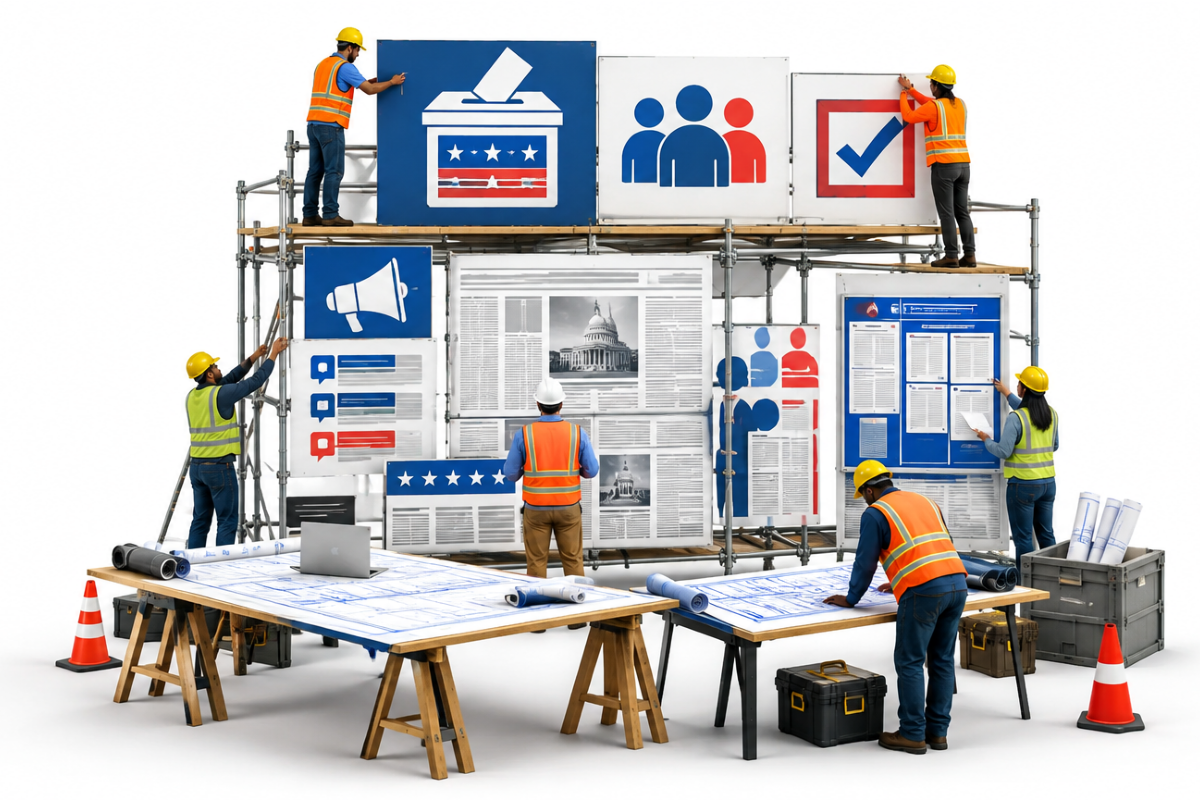
This image reveals the part of the election the public never sees: the pre‑election planning environment where access conditions are designed, documented, and approved. The combination of physical documents, blueprint schematics, procedural checklists, and drafting tools shows the election as an engineered system — not an improvised event. Every element in the frame reinforces the idea that voting access is shaped long before ballots exist.
Symbolic Function
The HERO symbolizes the machinery before it moves. The blueprint projection represents the structural choices that define how voters will navigate the polling place. The procedural documents symbolize the rules, requirements, and operational decisions that determine who will find the process easy — and who will encounter friction. The checklist with “Access Conditions” checked is the symbolic heartbeat of Phase I: the earliest signal of whether the system will expand or restrict access.
Civic Meaning
This image teaches the reader that elections are not just events — they are systems built through deliberate choices. The HERO makes visible the planning stage where access, flow, privacy, and compliance are engineered. It reframes voting as a designed experience, shaped by decisions that occur months before Election Day. By showing the machinery in its quiet, procedural form, the image reinforces the civic truth that clarity begins with understanding how the system is constructed.
Why It Opens the Visual Story
Phase I begins with the blueprint because the blueprint is the story. Before voters arrive, before ballots are cast, before results are counted — the system is already shaping the experience. Opening with this image signals to the reader that the Civic Page will walk them through the earliest phase of the election: the planning, the structure, the language, and the choices that determine access. It sets the tone for the trilogy by revealing the foundation on which everything else rests.
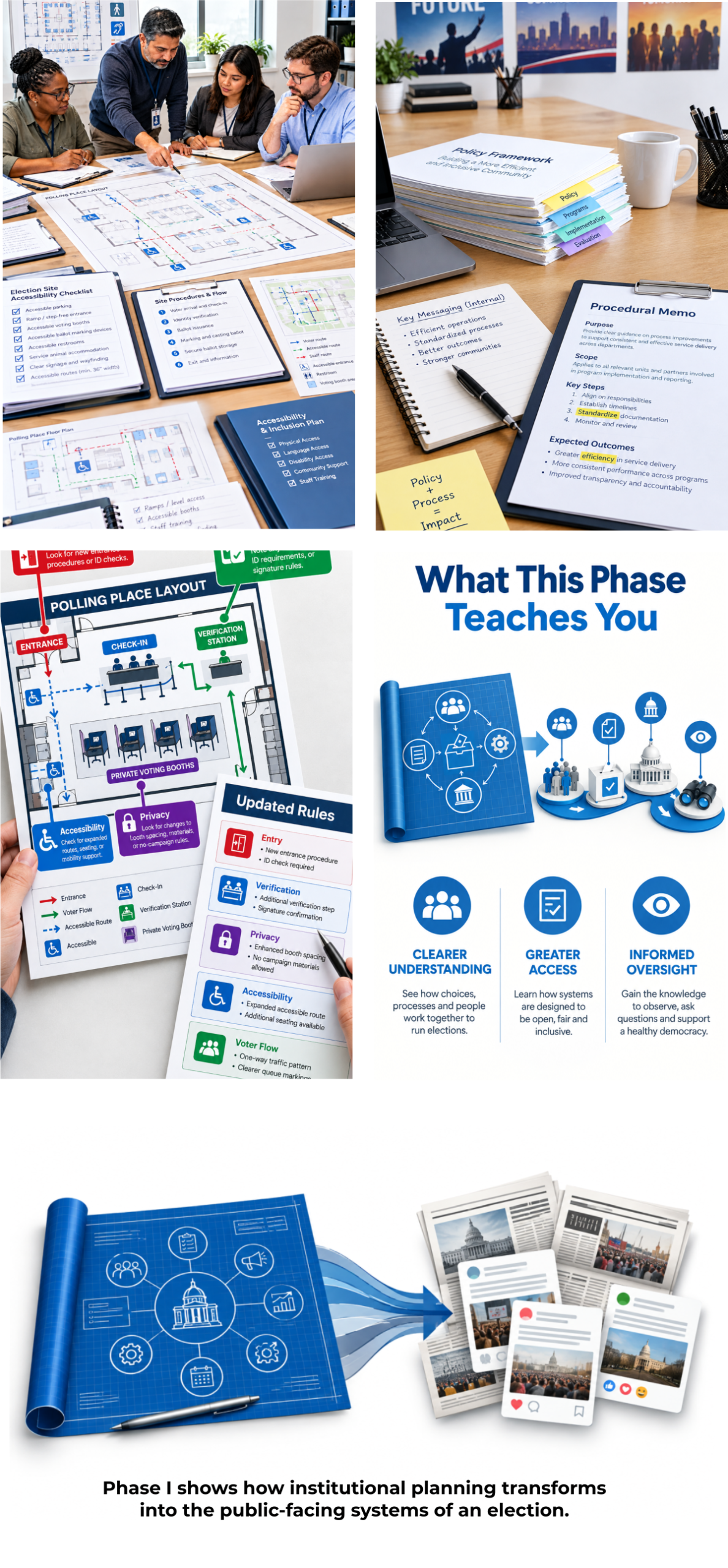
Before the election begins, the machinery is already being constructed.
Why This Post Matters
The earliest phase of any election happens long before voters arrive, and long before ballots are printed. It begins quietly — in planning rooms, procedural documents, access reviews, and structural decisions that shape the voting experience months ahead of time. These choices are rarely visible to the public, yet they determine how easily people can participate in the democratic process.
Understanding this phase matters because voting access is not accidental. It is designed. Every checklist item, every procedural update, every structural adjustment contributes to the conditions voters will encounter on Election Day. When we see the machinery clearly, we can recognize how access expands, how it contracts, and how the system signals its intentions before a single voter completes a ballot.
This post opens the trilogy by revealing the blueprint stage — the part of the election where clarity is possible because the noise has not yet begun. It shows the reader that the election is not just an event but an engineered experience shaped by deliberate choices. By understanding Phase I, we gain the ability to track the earliest indicators of fairness, friction, or imbalance.
Most importantly, this phase teaches us that vigilance begins early. The story of voting access starts long before the public is paying attention, and recognizing that truth is the first step toward protecting the integrity of the process.
The blueprint always comes first — and it always tells the truth.
When confusion becomes strategy, clarity becomes resistance. In Phase I, clarity begins by recognizing how the pre-election environment is engineered — through rules, narratives, and structural choices that shape voter perception long before a single ballot exits.

What You Should Know
Phase I reveals the part of the election cycle that happens before the public is paying attention — the planning environment where rules, procedures, access conditions, and structural choices are engineered. These early decisions shape how easily voters can move through the process and whether barriers emerge long before Election Day. One core principle guides this phase: early detection = early correction. When readers understand how the pre‑election environment is constructed, they can recognize access issues early — long before those issues become obstacles that obstruct participation.
What You Should Watch For
Watch for changes in rules, procedures, and access conditions that alter how voters enter, move through, or complete the voting process. Pay attention to structural adjustments that affect flow, accessibility, privacy, or verification. Notice when narratives begin forming around “efficiency,” “security,” or “integrity,” especially when those narratives appear before any ballots exist. Early signals often reveal whether the system is expanding access or quietly constricting it.
What This Phase Teaches You
Phase I teaches that elections are not spontaneous events — they are engineered systems. The earliest choices determine whether the voting experience will be smooth, confusing, accessible, or obstructed. By understanding the machinery before it moves, readers gain the ability to interpret later phases with clarity instead of confusion. This phase builds the foundation for civic literacy: once you see how the system is designed, you can track how it behaves.
How This Prepares You for the Next Phase
Phase II shifts from the structural environment to the narrative environment — where meaning, framing, and perception begin to take shape. The awareness you gain in Phase I becomes your anchor in Phase II. When you understand the machinery, you can recognize when narratives distort it. The clarity you build here becomes the lens you carry forward, allowing you to see both the system and the story with accuracy.