Inside the Machinery: The Pressure Inside the Machinery
By: Janiece
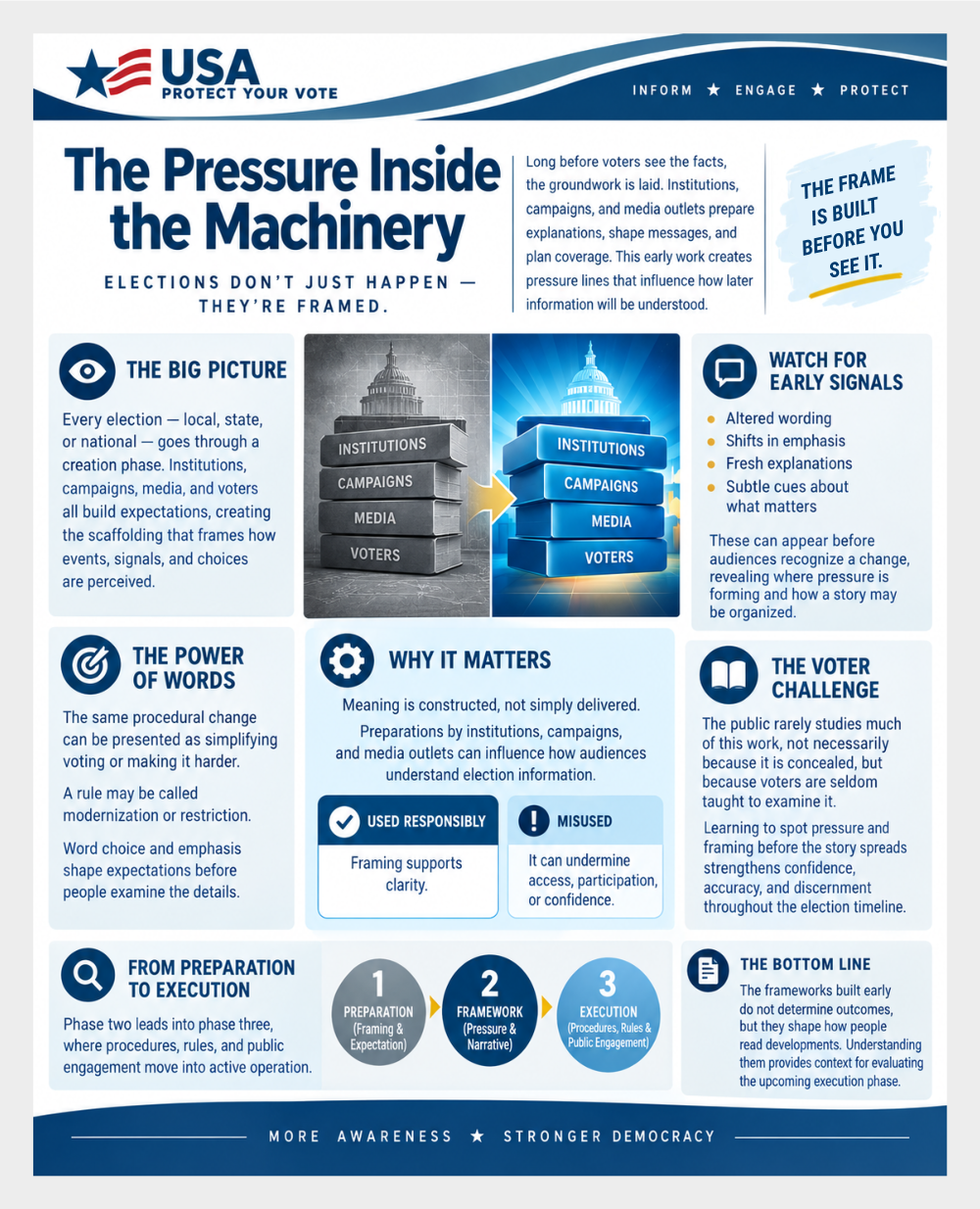
Meaning doesn’t emerge fully formed; it’s constructed through pressure long before the public ever encounters the story. In the earliest stage of the election environment, the narrative framework begins taking shape behind the scenes. Institutions prepare their explanations, campaigns prepare their messages, and media prepares its coverage — all of which generate pressure lines that influence how information will be understood once it reaches the public. These early constructions are quiet, subtle, and often invisible, but they set the foundation for everything that follows.
The pressure lines of Phase 2 are not inherently harmful; they are structural. Every election creates a natural environment where meaning must be organized, clarified, and prepared for public engagement. But these same pressure lines can also be misused, bending the early framework in ways that limit access, participation, or confidence in the process. Understanding how meaning is built — and how it can be shaped — gives readers the ability to recognize the architecture behind the messages they encounter.
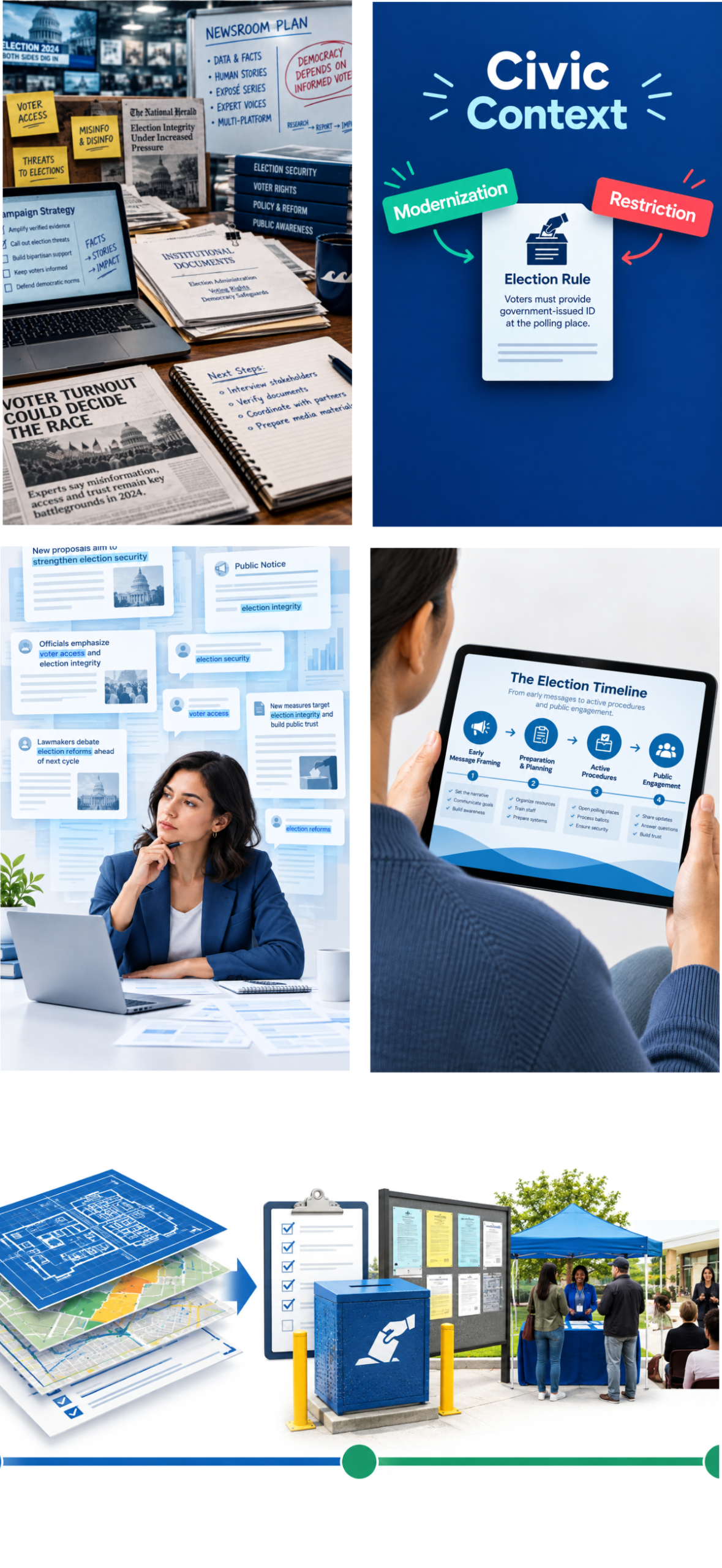
This construction stage matters because early framing has real influence. A procedural update can be described as “streamlining” or “complicating.” A rule change can be framed as “modernization” or “restriction.” These language choices and their emphasis shape the public’s understanding before the election ever reaches the public. When readers recognize these dynamics, they can identify framing as it happens instead of absorbing it without awareness.
Phase 2 is the moment where meaning begins to take form — not through distortion, but through preparation. It is the stage where expectations are set, where signals begin to align, and where the earliest interpretations start to emerge. By understanding this construction process, readers gain the clarity needed to navigate the election environment with confidence and discernment.
And as the Series moves forward, this awareness becomes essential. The pressure lines of Phase 2 set the stage for the execution phase that follows. When readers understand how meaning is built, they are better equipped to interpret what comes next — and to see the election more clearly from beginning to end.

Civic Context
Phase 2 reveals the moment when meaning begins to take shape — not through distortion, but through construction. Before any narrative is bent, challenged, or weaponized, it is built. The pressure lines of an election form long before the public sees them, shaping how voters will interpret events, signals, and choices. This phase exposes the architecture of that meaning: the frames, the cues, the expectations, and the early storylines that define how the election will be understood.
Every election carries a structural pressure — a force that shapes how information is presented and how the public perceives it. This pressure is not inherently harmful; it is simply part of the civic environment. Campaigns prepare their messages. Institutions prepare their explanations. Media prepares its coverage. Voters prepare their expectations. These early constructions create the scaffolding for everything that follows. Phase 2 teaches readers to recognize these pressure lines before they harden into assumptions.
Understanding this phase is essential because meaning is rarely neutral. Even before distortion enters the picture, the way information is framed influences how people interpret it. A rule change can be described as “streamlining” or “restricting.” A procedural update can be framed as “modernization” or “complication.” A shift in access can be presented as “efficiency” or “obstruction.” These early choices in language and emphasis shape the public’s understanding before the election ever reaches the public.
Phase 2 shows readers how narrative frameworks are built — and why those frameworks matter. When people understand the architecture of meaning, they can see how pressure lines guide perception. They can recognize when a frame is being constructed, when a storyline is being shaped, and when expectations are being set. This awareness becomes the foundation for distinguishing between construction and distortion, clarity and confusion, pressure and manipulation
By learning how meaning is built, readers gain the ability to navigate the election environment with greater clarity. Phase 2 prepares them for Phase 3, where the execution of the system — and the narratives surrounding it — reveal the full impact of these early constructions. Understanding the pressure lines now ensures that readers can interpret the later phases with accuracy instead of assumption.
“Pressure shapes the frame before the public ever encounters it.”

Design Notes
Why This Image
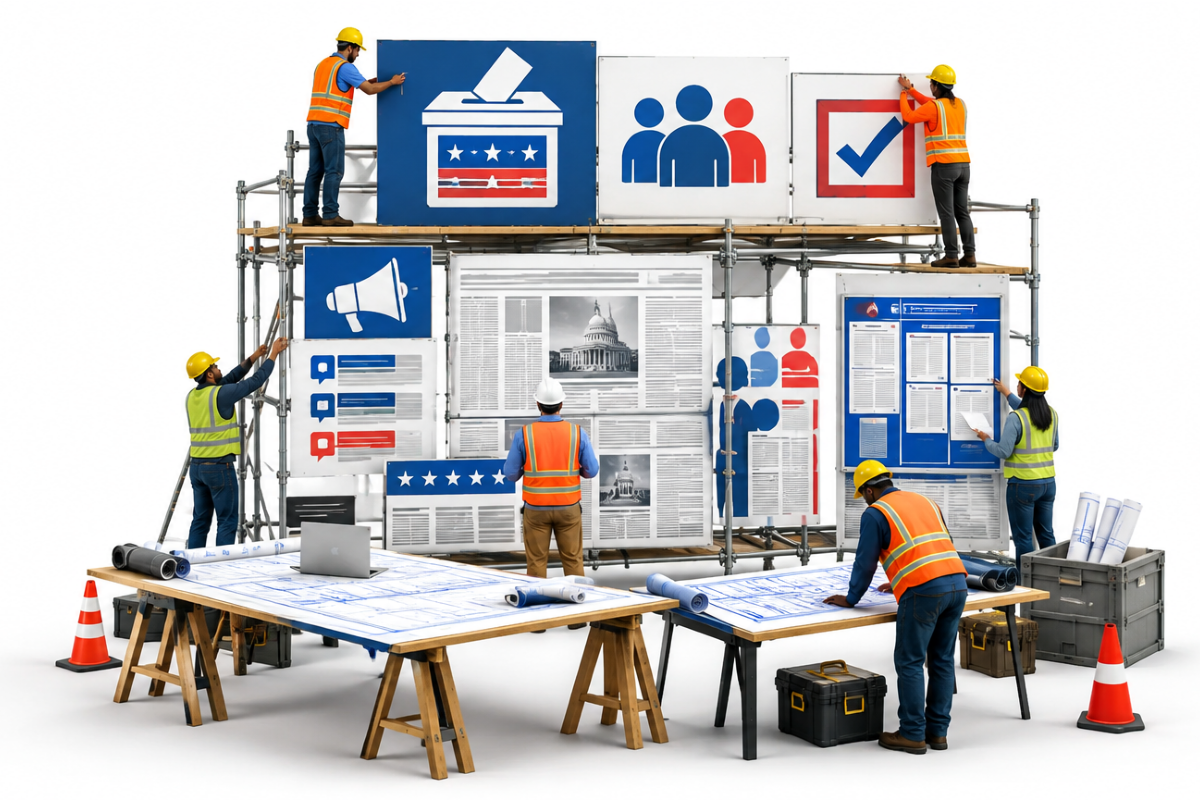
This image reveals the part of meaning‑making the public never sees: the interior workshop where narrative, interpretation, and public understanding are physically constructed. The combination of oversized letterforms, scaffolding, blueprints, worktables, and industrial lighting shows meaning as an engineered product — not an accidental outcome. Every element in the frame reinforces the idea that what the public eventually encounters has been shaped, assembled, and reinforced long before it appears in the world.
Symbolic Function
The HERO symbolizes the machinery under pressure. The massive letters represent meaning as a structural object — heavy, deliberate, and requiring coordinated labor to stand. The scaffolding and cranes symbolize the supports, adjustments, and reinforcements needed to shape public perception. The workers in hard hats represent the human operators inside the machinery who build, revise, and stabilize the message. The blueprints and drafting boards symbolize the pre‑planned design of meaning, showing that interpretation is not spontaneous but architected. The spotlights symbolize selective illumination — the parts of the machinery the public is allowed to see versus the parts kept in shadow.
Civic Meaning
This image teaches the reader that civic meaning is not discovered — it is manufactured. The HERO makes visible the internal pressure points where narrative is shaped, reinforced, and prepared for public release. It reframes meaning as a constructed civic artifact, built through decisions, agendas, constraints, and coordinated effort. By showing the machinery in active construction, the image reinforces the civic truth that understanding the pressures inside the system is essential to understanding how meaning gains its final form.
Why It Opens the Visual Story
This chapter begins with the construction zone because the construction zone is the story. Before meaning reaches the public, before interpretation becomes widespread, before narrative becomes “common sense,” the machinery has already shaped it under pressure. Opening with this image signals to the reader that the Civic Page will walk them through the internal environment where meaning is built, reinforced, and prepared for release. It sets the tone for the chapter by revealing the hidden interior of the machinery — the place where pressure determines what the world will eventually see.
Here’s why understanding the pressure lines matters.
Why This Post Matters
Meaning doesn’t appear fully formed — it’s built. Before the public ever encounters an election, the pressure lines of the civic environment begin shaping how information will be understood — or, if misused, how it can be manipulated in ways that affect access, participation, or confidence in the process These early constructions influence expectations, interpretations, and assumptions long before any storyline reaches the public. When readers understand how meaning is assembled, they gain the ability to recognize the architecture behind the messages they encounter.
Pressure is not inherently negative; it is structural. Every election creates a natural environment where institutions prepare their explanations, campaigns prepare their messages, and media prepares its coverage. These preparations generate pressure lines that guide how information is framed. Recognizing these lines allows readers to see the difference between construction and distortion — between the shaping of meaning and the bending of it.
Early framing has real impact on public understanding. A procedural update can be described as “streamlining” or “complicating.” A rule change can be framed as “modernization” or “restriction.” These choices in language and emphasis shape how the public interprets the election before the election ever reaches the public. When readers understand this dynamic, they can identify framing as it happens instead of absorbing it without awareness.
Understanding the pressure lines strengthens civic clarity. When readers can see how meaning is constructed, they become better equipped to navigate the election environment with accuracy. They can identify when a frame is being built, when expectations are being set, and when a storyline is forming. This awareness becomes a foundation for interpreting later phases of the election without confusion or assumption.
Phase 2 matters because it prepares readers for what comes next. The construction of meaning sets the stage for the execution of the system in Phase 3. By understanding how pressure shapes interpretation early in the process, readers can approach the later phases with clarity, confidence, and a stronger grasp of how the election environment works.
When you understand how meaning is built, you can see the election more clearly.
Meaning takes shape under pressure long before the public ever sees the outcome.

What to Watch For
Look for the early signals that meaning is being constructed behind the scenes. These include shifts in language, changes in emphasis, new explanations entering the environment, and subtle cues that begin shaping how the election will be understood. These signals often appear before the public realizes anything is happening, and they reveal where pressure is beginning to form — giving readers a clearer view of how early framing starts shaping meaning.
What Those Signals Mean
These early cues show how the narrative framework is being assembled. They indicate which parts of the election environment are being clarified, which parts are being emphasized, and which parts are being positioned for public interpretation. When these signals appear, they reveal how meaning is taking shape — and how pressure is guiding that formation.
What You Should Know
Meaning is not neutral; it is constructed. Institutions, campaigns, and media all prepare their explanations long before the public sees the story. These preparations create pressure lines that influence how information will be understood — or, if misused, how it can be manipulated in ways that limit access, participation, or confidence in the process. Recognizing this construction stage gives readers the clarity needed to interpret the election environment accurately.
What Comes Next
The pressure lines of Phase 2 set the stage for the execution phase that follows. Once meaning has been constructed, the system moves into active operation, where procedures, rules, and public engagement begin. Understanding Phase 2 prepares readers for Phase 3 by giving them the ability to see how early framing influences later interpretation — and how clarity at this stage strengthens understanding throughout the entire election timeline.
Phase 2 reveals the part of the election environment the public rarely sees: the construction of meaning while the election framework is still taking shape. In this stage, institutions, campaigns, and media begin preparing their explanations, messages, and coverage. These preparations generate pressure lines that shape how information will be understood once it enters the public sphere. Meaning doesn’t emerge fully formed — it is built, refined, and positioned long before the public encounters it. This part of the election environment is rarely seen by the public, not because it is hidden, but because no one has ever taught voters to study it. This Series exists to correct that gap — to teach voters the part of the election environment they were never shown.
These pressure lines are structural, not inherently harmful. Every election requires early organization, clarification, and narrative preparation. But these same lines can also be misused, bending the framework in ways that limit access, participation, or confidence in the process. Recognizing how meaning is constructed gives readers the ability to see the architecture behind the messages they encounter — and to understand how early framing influences later interpretation.
This phase matters because it sets the foundation for everything that follows. Once meaning has been shaped, the system moves into active operation, where procedures, rules, and public engagement begin. By understanding how pressure forms and how meaning takes shape behind the scenes, readers gain the clarity needed to navigate the election environment with confidence, accuracy, and discernment.
Phase 2 prepares readers for Phase 3 by showing them how early framing influences the public’s understanding of the election. When readers can see how meaning is built, they are better equipped to interpret what comes next — and to see the election more clearly from beginning to end.