Micro Joys in a Macro Sadness – What Bad Bunny Taught America in 13 Minutes
In a year heavy with distortion, division, and the quiet ache of a country forgetting its own people, Bad Bunny offered something rare on the Super Bowl stage: a micro joy with macro meaning. His thirteen‑minute performance didn’t just entertain — it insisted on visibility, dignity, and cultural truth in a place where erasure has long been the norm. Micro joys are not small; they are precise and profound. They are the moments that cut through the noise and remind us who we are, and who we refuse to disappear. This civic page traces how one artist, in one of America’s most-watched broadcasts, made the nation pause long enough to feel something real again.

On February 8, 2026, Bad Bunny transformed the Super Bowl halftime show into a living archive of Puerto Rican history, weaving cultural joy with historical grief. Through symbolic staging — from sugar cane workers honoring Indigenous Taíno and enslaved African labor, to the blackout referencing Puerto Rico’s ongoing energy crisis, to the once illegal light blue independence flag — he delivered a 13-minute civic lesson on identity, colonialism, and resistance. His performance, grounded in documented history from the Museum of the American Revolution, the Library of Congress, the Puerto Rico Legislature, and U.S. energy reports, re-framed entertainment as testimony. It was a hemispheric declaration: our culture belongs here, our history belongs here, and we refuse to be erased.
“Belonging isn’t granted.
It’s embraced.
It’s lived.”

Why this image:
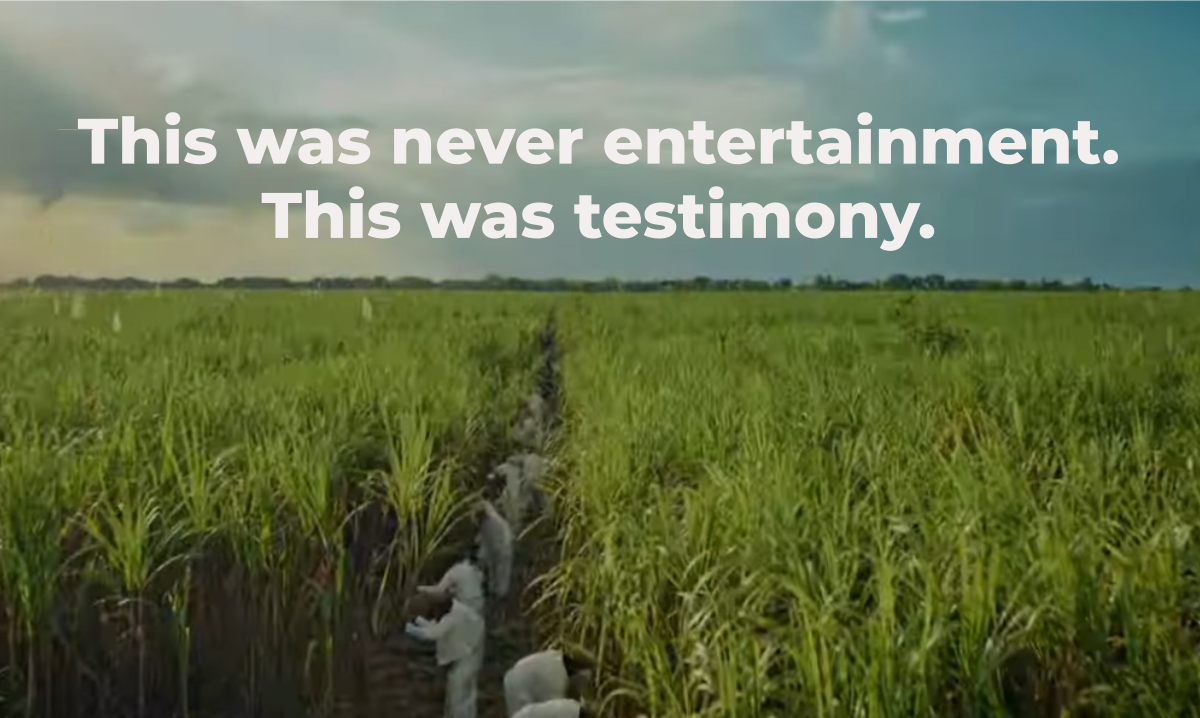
The HERO image places viewers inside a narrow path cut through towering green cane — a landscape historically tied to labor, migration, and the erasure of the very people who built it. The single‑file line of figures moving through the field evokes both endurance and testimony. It signals that what we’re witnessing is not spectacle, but lived history.
Symbolic function:
The height of the cane creates a visual metaphor for systems that obscure, minimize, or consume the people within them. The narrow path becomes a corridor of visibility — a reminder that presence itself can be an act of resistance. The muted sky and soft light keep the emotional temperature grounded, allowing the figures to carry the weight of the narrative.
Civic meaning:
This image re-frames the idea of “performance.” It asserts that cultural expression — whether on a field, a stage, or a path through a cane field — is never just entertainment for communities who have been historically erased. It is testimony. It is lineage. It is belonging lived out loud.
Why it opens the page:
As the first visual encounter, the HERO image sets the thesis: Micro joys are not small; they are precise and profound. It prepares the reader to understand Bad Bunny’s halftime performance not as a diversion, but as a declaration — a moment where visibility, culture, and truth stepped into the center of America’s biggest stage.
A brief note about the post that sparked this page
What You Were Really Watching
Source Summary
Bad Bunny didn’t perform at the Super Bowl.
He turned the biggest stage in America into a classroom most viewers didn’t realize they had entered.
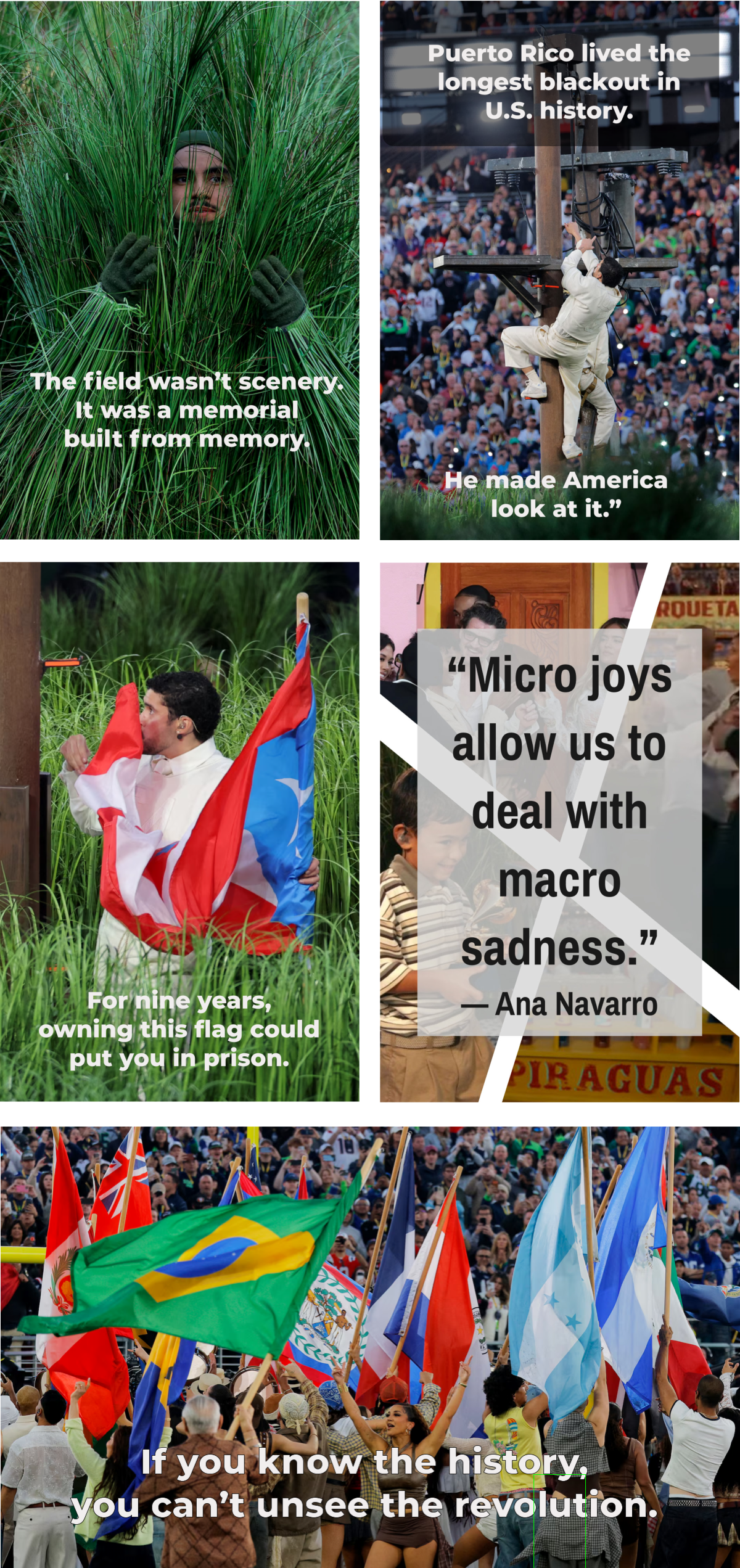
Before the first note, 380 performers dressed as sugar cane workers filled the field. Their pava hats and simple clothing weren’t costume design — they were a memorial. Puerto Rico’s sugar economy was built on the forced labor of Indigenous Taíno people and, after their near‑extinction, enslaved Africans brought by Spanish colonizers. That field wasn’t choreography. It was testimony.
As Bad Bunny walked past domino tables, piragua vendors, and the casita — the small house at the heart of the Puerto Rican community — he wasn’t decorating the stage. He was honoring the micro joys that have carried Puerto Ricans through centuries of macro sadness. Culture as survival. Culture as resistance.
Then came “El Apagón.” The blackout. Bad Bunny climbed an electrical pole while dancers scaled sparking towers. This wasn’t theatrics. It was indictment. After Hurricane Maria in 2017, Puerto Rico endured the longest blackout in U.S. history. Years later, the island still faces widespread power failures. The performance forced millions of Americans to look at a crisis their government allowed to continue.
But the most radical moment came in the form of a flag. Not the official Puerto Rican flag — the light‑blue independence flag. The one that was illegal to own under Law 53, La Ley de la Mordaza. From 1948 to 1957, Puerto Ricans could be imprisoned for ten years for displaying their own national symbol. Police could enter homes without a warrant to seize it. The law criminalized patriotic songs, independence speech, and assembly. It was designed to erase identity.
Bad Bunny held that flag on the largest broadcast stage in the world. He waved the symbol that Puerto Rican people once risked their lives to protect.
Then Tonita appeared — the matriarch of the Caribbean Social Club in Brooklyn, one of the last Puerto Rican social clubs in New York. Her presence was an altar to diaspora survival, to the communities built when mainstream America shut its doors.
Finally, the flags of the Americas walked behind him — Chile, Argentina, Mexico, Colombia, Puerto Rico, etal. And Bad Bunny said the only English words of the entire performance: “God bless America.” But he meant the Americas — the hemisphere, the diaspora, the people.
This wasn’t entertainment.
It was reclamation.
It was restoration.
It was a declaration that Puerto Rican history, culture, and identity belong on the biggest stage in the world.
As Ana Navarro said, “Micro joys allow us to deal with macro sadness.”
Bad Bunny gave millions of people both — the joy of recognition and the weight of truth.
Now you know what you were really watching.