The Reflecting Pool Peel
The moment the surface peeled back on the Reflecting Pool, it revealed more than a maintenance issue — it exposed the quiet truth that every reflection depends on the strength of what lies beneath. The thin layer we trust to mirror our ideals lifted just enough to show the underlayer we rarely consider, reminding us that even our most iconic symbols rest on structures that require care.
The Reflecting Pool has always been a place where the nation looks at itself, a long sheet of water designed to hold our collective image. But when the surface shifted, the reflection fractured. What emerged was not a crisis, but a moment of clarity — a glimpse into the foundation that makes the reflection possible in the first place.
We often assume that what we see is what is stable. We assume the surface will hold, the image will remain intact, and the structure beneath will continue to function without our attention. But the peeled edge of the Pool disrupted that assumption. It asked us to consider the unseen work that supports the symbols we rely on, and the vigilance required to keep them sound.
The truth is simple and unavoidable: surfaces change. They weather, they thin, they lift. What matters is whether the foundation beneath them is strong enough to endure. The Reflecting Pool’s quiet reveal is a reminder that the health of our shared spaces — and the systems they represent — depends not on how they appear, but on how well they are maintained.

In mid‑2026, new images of the Reflecting Pool in Washington, D.C., circulated widely after sections of the surface appeared discolored, peeling, or visibly deteriorated. The National Park Service confirmed that the pool was again experiencing algae growth and surface instability, a condition that has occurred periodically due to heat, stagnant water, and organic buildup. The visual contrast between the pool’s iconic appearance and its exposed underlying surface drew immediate public attention.
Photos and videos of the peeling surface spread quickly across social media, prompting commentary, humor, and concern about the state of one of the nation’s most recognizable public landmarks. The unexpected visibility of the underlying material—normally hidden beneath the water—became a focal point of online discussion. The moment gained traction not only because of the pool’s symbolic importance, but also because the exposed surface created a striking and unusual visual.
The Reflecting Pool has required periodic draining and cleaning in the past, including a full maintenance cycle in 2024 to address algae accumulation and basin treatment. These interventions are part of the routine stewardship needed to preserve large public spaces that face environmental stress and heavy use. The 2026 resurfacing of the issue highlighted the ongoing challenges of maintaining national sites that depend on consistent funding, timely upkeep, and environmental management.
The renewed visibility of the pool’s condition drew attention to a broader pattern in which surface‑level deterioration reveals deeper questions about infrastructure resilience and public maintenance systems. When a prominent civic symbol experiences a failure that becomes publicly visible, it often prompts renewed discussion about the structures responsible for its care. The 2026 moment became one such instance, offering a clear view of the gap between appearance and underlying reality.
“The unexpected visibility of the underlying material became a focal point of public discussion.”

Design Notes
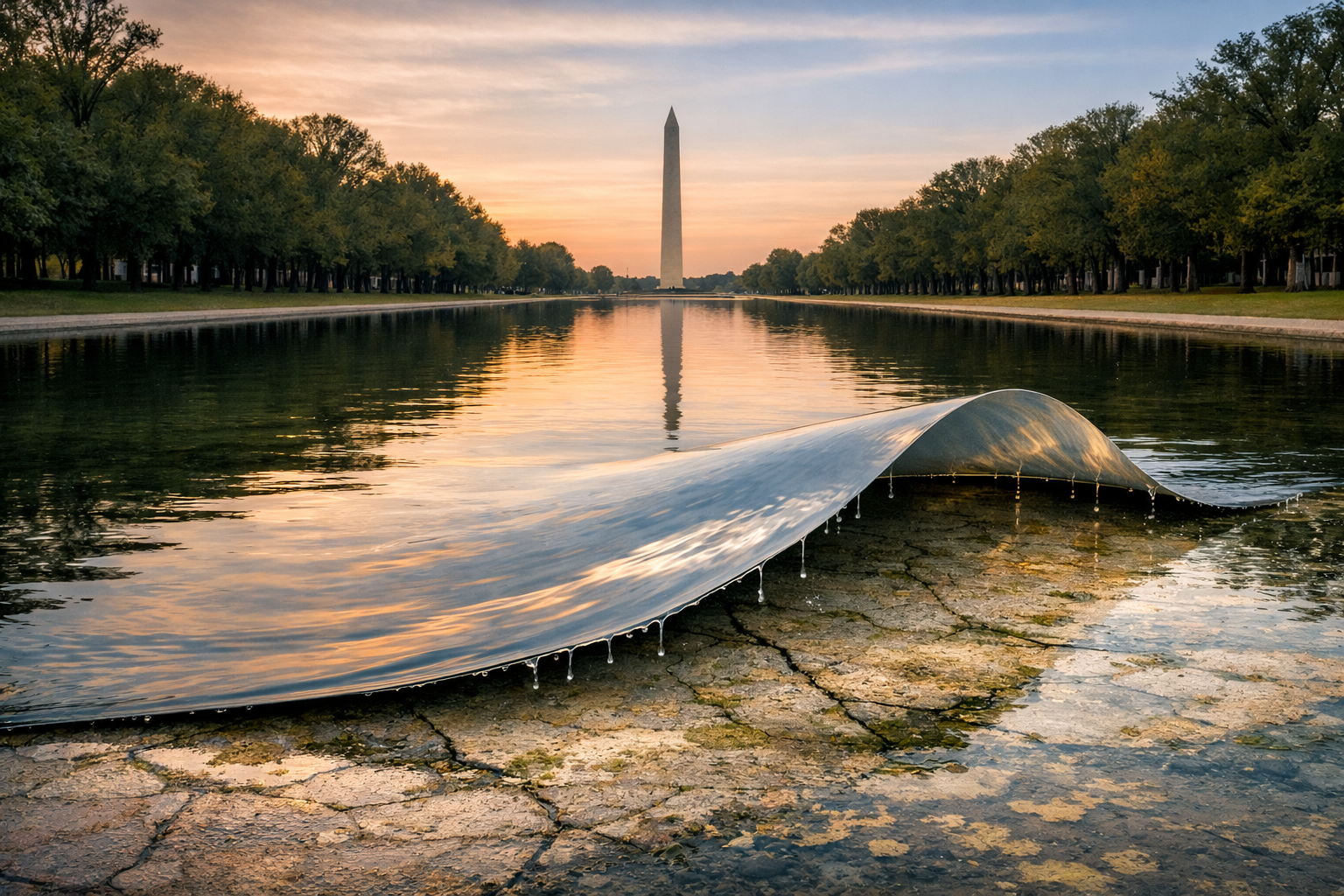
The Reflecting Pool is shown at dawn, its calm surface peeling upward to reveal the cracked basin beneath. The composition centers the Washington Monument, a national symbol of endurance, while the lifted water exposes the fragile infrastructure supporting that reflection. The image captures the moment when beauty and decay coexist in the same frame — a visual truth that mirrors the civic condition it represents.
The peeled surface functions as a metaphor for revelation. What appears serene and unified from a distance is, upon closer view, fractured and neglected. The upward curl of the water suggests both exposure and renewal — the act of lifting illusion to confront reality. The monument’s reflection remains visible but distorted, reminding viewers that national ideals persist even when their foundations require repair.
Civic Meaning
This image speaks to stewardship and accountability. The Reflecting Pool’s deterioration is not merely aesthetic; it symbolizes the maintenance of shared spaces and the systems that sustain them. When the surface fails, the underlying neglect becomes visible to all. The civic message is clear: transparency is not destruction — it is the first step toward restoration.
Why It Opens the Page
The HERO introduces the reader to the page’s central motif — The Peel of Truth. It invites reflection before reaction, positioning the viewer at the threshold between appearance and reality. By opening with the moment of exposure, the page establishes its tone: calm, factual, and unflinching. The peeled surface becomes the lens through which the entire Civic Page is read.
Sometimes the moment that changes the story is the one that exposes what we weren’t meant to see.
Why This Post Matters
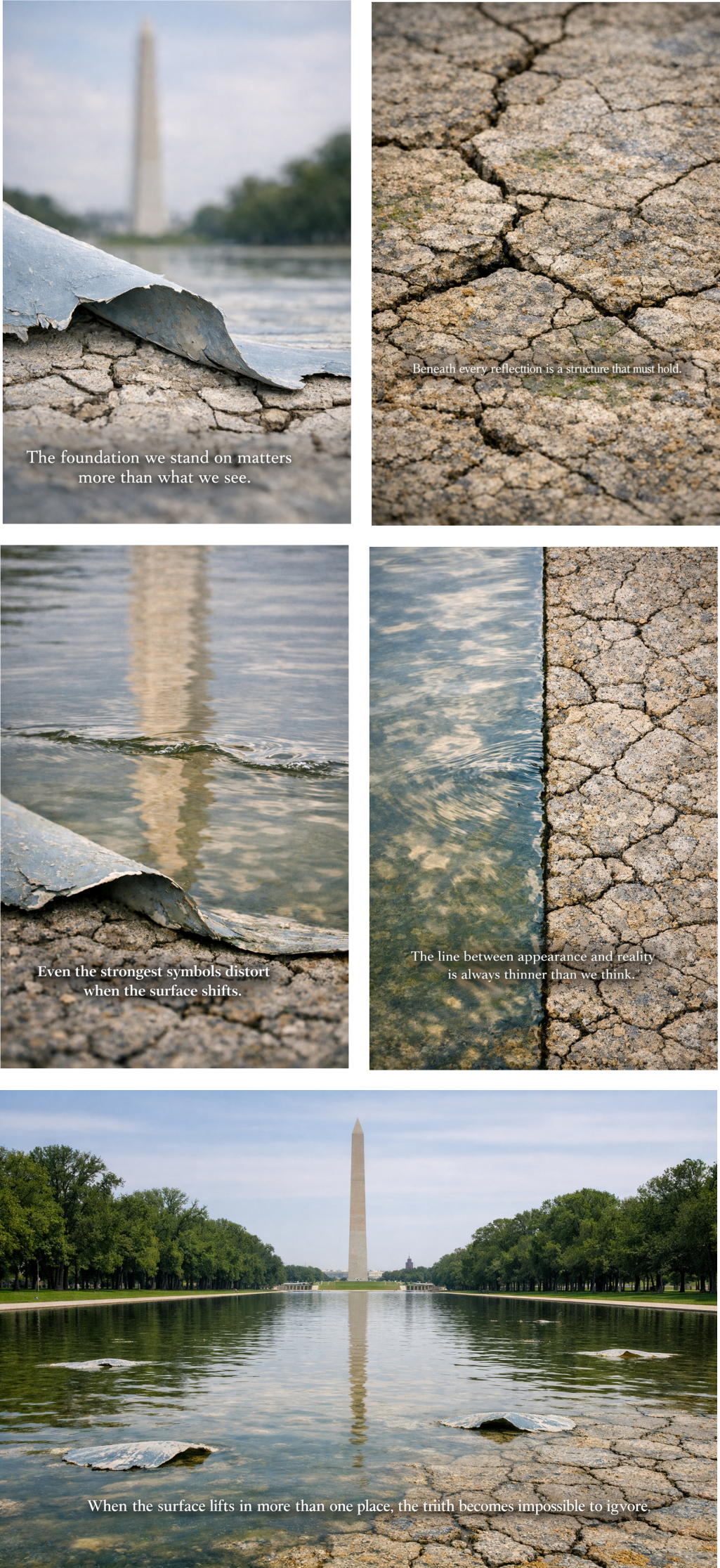
The Reflecting Pool is one of the most photographed civic spaces in the nation, a place where symbolism and reality meet on a thin sheet of water. When that surface unexpectedly peeled back, exposing the cracked basin beneath, it became more than a maintenance issue — it became a moment of public clarity. The image of a national symbol revealing its underlayer resonated far beyond the Mall.
This moment matters because it reminds us that civic life is built on structures we rarely see. We walk past them, rely on them, and assume they will hold. But when the surface fails, the underlying condition becomes visible to everyone at once. The Reflecting Pool’s exposure was not dramatic, but it was unmistakable: a quiet reveal that asked the country to look more closely at the foundations — physical and civic — that support us.
It also matters because transparency is not a crisis — it is a beginning. When the basin was exposed, the conversation shifted from assumptions to facts. The public could see the wear, the weathering, and the need for repair. That visibility created a moment of collective understanding: stewardship requires attention, not just admiration.
Finally, this moment matters because it mirrors a broader civic truth. Our institutions, like the Reflecting Pool, are designed to reflect our highest ideals. But their ability to do so depends on the integrity of the structures beneath. When those structures weaken, the reflection distorts. Seeing the underlayer is not a failure of the system — it is an invitation to strengthen it through vigilant maintenance and structural stability.
When the surface lifts, we’re given a chance to see what needs care — and what can still be restored.
The surface is temporary. Once it peels, the story becomes impossible to ignore.