The Weight of the Uniform
When an active-duty officer steps forward in uniform, the fabric he wears becomes more than cloth — it becomes a contract. A contract with the Constitution, with the institution he serves, and with the people whose freedoms he protects. Most days, that contract is invisible. But on rare days, it becomes unbearably heavy.
Sometimes, an officer chooses to speak — not as a partisan, not as a provocateur, but as someone who believes the oath demands more of them than silence. In those moments, the uniform carries a weight that cannot be measured by regulations alone. The burden shifts from procedural compliance to moral consequence, and the distinction becomes impossible to ignore.
The consequences are never the story. The uniform is. Because when someone bound by duty breaks a rule to honor the oath beneath it, it forces us to confront a question older than the Republic itself: What does loyalty look like when conscience and regulation collide?
This page is not about politics. It is about the burden of the uniform — and the price of carrying it with integrity. It is about the unseen weight that settles on the shoulders of those who serve, and the rare moments when that weight becomes visible to the nation they protect.

Major Jason Watson, an active-duty Air Force officer, appeared on the steps of the U.S. Capitol wearing his service uniform and speaking publicly about the state of the nation. His remarks were not delivered as a political endorsement, nor as a partisan attack, but as a personal appeal rooted in his understanding of the oath he swore.
His presence in uniform, however, placed him in direct conflict with long standing military regulations governing political activity by service members. Federal law and Department of Defense directives strictly limit what active-duty personnel may do while in uniform, especially in public settings that could be interpreted as political. These rules exist to preserve the nonpartisan integrity of the armed forces. By speaking in uniform, Major Watson knowingly crossed a regulatory boundary designed to protect the institution he serves — a boundary he acknowledged even as he stepped forward.
Capitol Police detained him shortly after his remarks, citing violations related to unauthorized demonstration activity. His arrest was procedural, not violent, and he cooperated fully. The incident quickly drew national attention, not because of the charges themselves, but because of the symbolism of a uniformed officer choosing to speak publicly despite the consequences.
The event sparked a broader conversation about duty, conscience, and the limits placed on those who serve. It raised questions about how service members navigate the tension between institutional rules and personal conviction — and what it means when someone bound by regulation chooses to honor the deeper moral obligations of their oath.
“I knew the rules. I spoke anyway.”

Design Notes
Why This Image
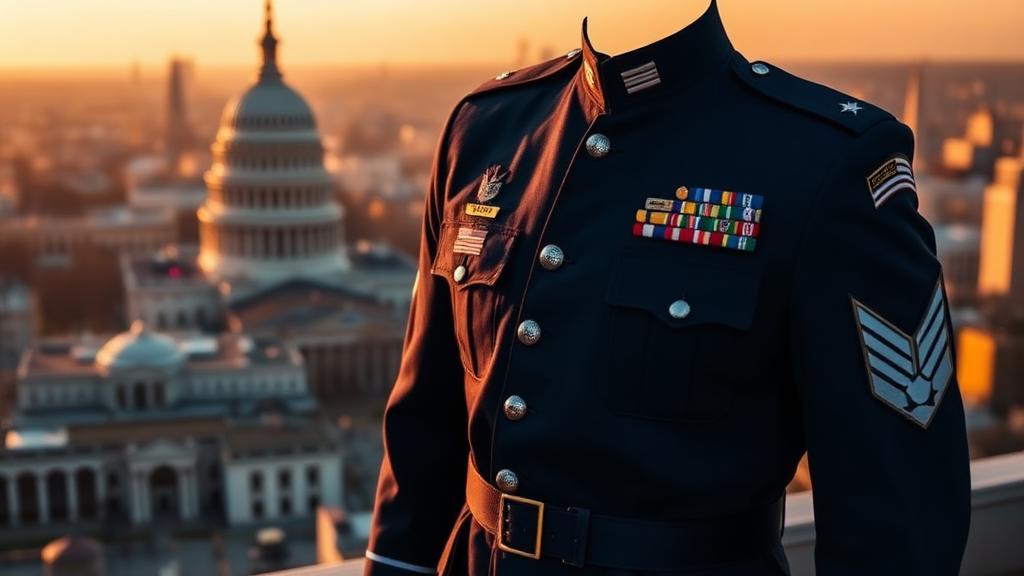
The HERO image presents the uniform without a visible wearer, transforming it from a portrait into a symbol. By placing the jacket on an invisible mannequin, the focus shifts away from any individual and toward the institutional meaning of service itself. The Capitol in the background anchors the image in the seat of democratic authority, reminding the viewer that the uniform’s legitimacy flows from the Republic — not from personal power, personality, or politics.
Symbolic Function
The uniform stands as a proxy for duty, restraint, and constitutional fidelity. Its medals and insignia represent earned responsibility, not entitlement. The absence of a visible person reinforces the idea that service is not about the individual — it is about the office, the oath, and the principles the uniform is sworn to uphold. The warm sunset light symbolizes clarity, transition, and the enduring nature of the Republic’s ideals.
Civic Meaning
This image visually asserts the foundational hierarchy of American democracy: The uniform serves the Republic — never the reverse. By placing the Capitol behind the uniform, the image communicates that military service is subordinate to civilian authority and the rule of law. It embodies the constitutional guardrails that protect the nation from authoritarian drift and affirms that the moral weight of service lies in upholding democratic institutions, not overshadowing them.
Why It Opens the Page
The HERO sets the altitude for the entire Civic Page. It establishes the tone — solemn, principled, and grounded in constitutional meaning — before the reader encounters any text. It signals that this page is not about politics, outrage, or personalities; it is about the Republic itself. By opening with this image, the page immediately frames the conversation around duty, restraint, and the civic architecture that holds the nation together.
Why This Post Matters
This page is about the moral architecture that holds a constitutional republic together. The images, captions, and reflections are not political commentary — they are reminders of the civic hierarchy that protects the nation from sliding into personality‑driven power. The uniform, the Capitol, the Constitution, and the quiet symbols of service all point to the same truth: duty is not about the individual who wears the uniform, but about the Republic that grants it meaning.
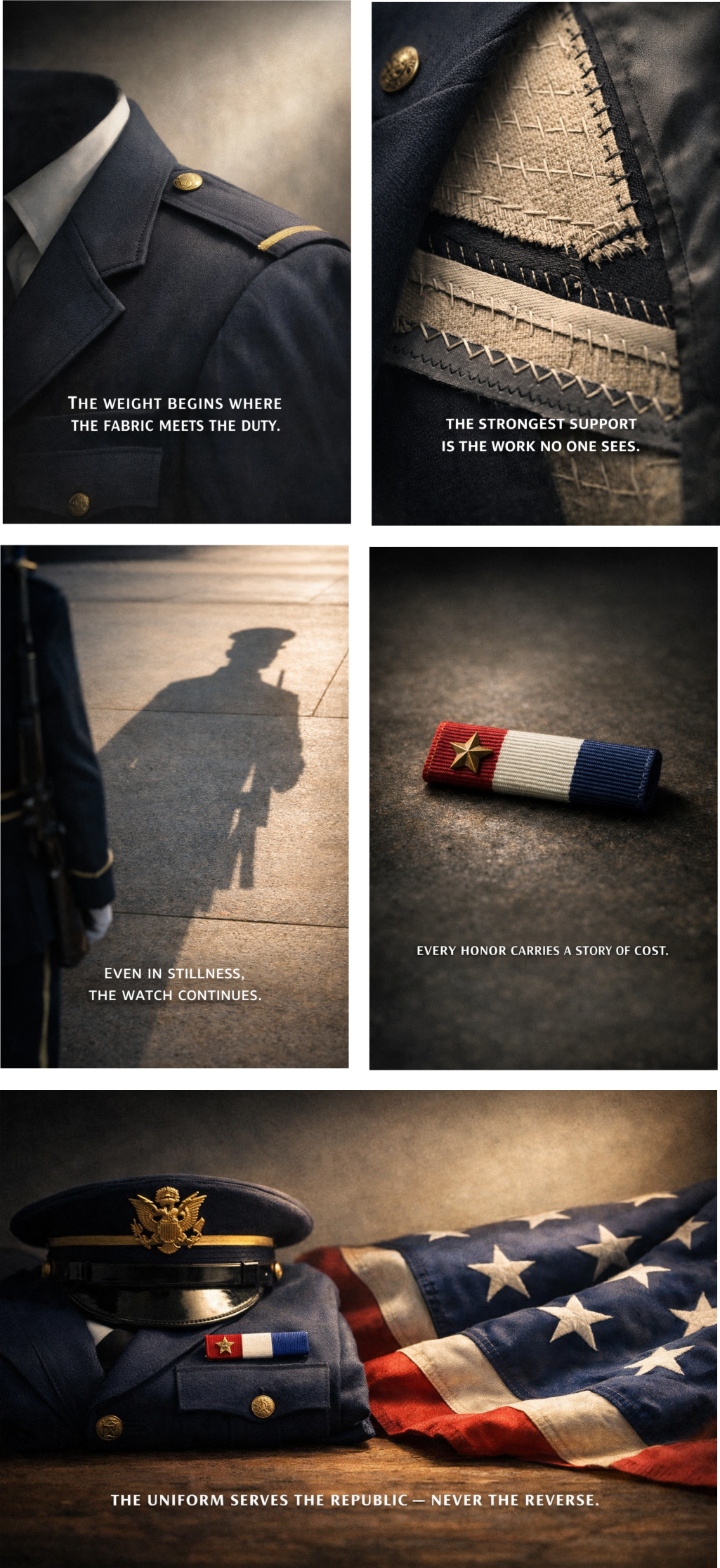
Each visual element on this page serves a specific symbolic role. The HERO image establishes the primacy of the Republic by placing the Capitol behind the uniform. The Grid sequence walks the reader through the emotional and constitutional burdens of service — weight, labor, vigilance, sacrifice, and finally, alignment with the Republic. Together, they form a civic narrative that restores perspective in a moment when surface‑level debates often drown out deeper principles.
This page speaks from the rule‑of‑law perspective — the altitude where service is measured not by procedural infractions but by fidelity to democratic institutions. It invites the reader to consider the constitutional hierarchy that places the Republic above the individual and the uniform beneath the law.
It reminds the reader that the weight of the uniform is not personal power — it is borrowed authority, held only in service to the Republic.
When the rules bind the body, but the oath binds the soul, the uniform becomes heavier than law.