Part II — The Years We Stopped Noticing
The shift didn’t announce itself. It settled in slowly, softening the edges of what we thought we understood, reshaping the familiar until the familiar no longer meant what it used to. Signals blurred, certainty thinned, and the line between truth and repetition grew faint enough to mistake one for the other. By the time we realized how much had changed, we were already living inside the distortion—adjusting to it, navigating by it, and trusting it simply because it had been there long enough to feel normal.

This chapter draws from Robert Arnold’s 2026 State of the Union reflection on the slow erosion of public attention during the years when manufactured reality became the country’s default atmosphere. For those who want to hear his February 25, 2026 video, “The State of the Union,” in his own voice, you may view it here: Watch on YouTube. Arnold warns, “The danger wasn’t the lies themselves — it was how quickly we stopped noticing them.” His analysis documents how political actors exploited distraction, fatigue, and information overload to reshape public perception without resistance, turning disorientation into a political tool that numbed the public into passivity. This page uses the Fog of the Familiar motif to illuminate the civic cost of that drift: a nation whose anchors didn’t break, but gradually blurred at the edges.
“Skepticism without evidence becomes corrosion, and it eats at trust, and it hollows out confidence.”

Notes on the symbolism behind the HERO image
Design Notes
Why This Image Looks the Way It Does
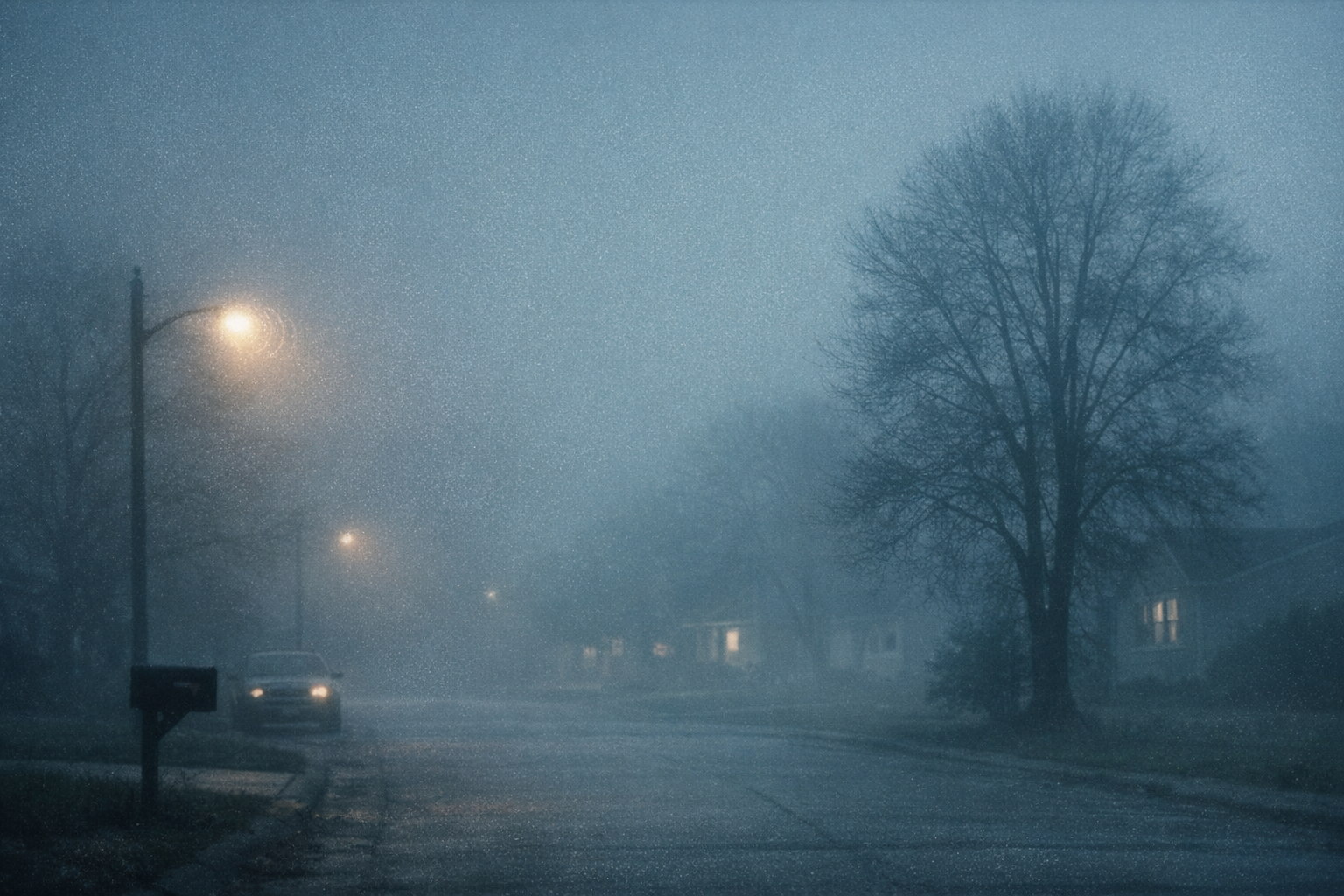
This image captures the quiet, cumulative disorientation that defined the years when the country stopped noticing what was happening to it. The suburban street at dusk represents the ordinary American backdrop where the erosion of attention took place—not in moments of crisis, but in the soft, numbing drift of daily life. The thin haze is not dramatic fog; it’s the visual metaphor for manufactured reality: subtle, ambient, and easy to ignore until it becomes the air everyone breathes. The tree rendered in faint double exposure symbolizes the instability of our civic root system—anchors that once held firm but began slipping out of phase during this era.
What to Look For
- The Tree in Double Exposure: Positioned in the right third of the frame, the tree’s silhouette is rendered with a faint vertical offset, creating a subtle double-exposure effect. This signals the loss of grounding and symbolizes the instability of our civic root system. The distortion is localized to the tree alone, reinforcing the idea that the anchor itself has slipped out of phase. The fog softens the branches, making the silhouette feel less trustworthy, while the trunk remains mostly intact — because the danger in Part II is not collapse, but drift.
- The Flickering Streetlight: A warped halo around the light represents signals that were still present but increasingly distorted.
- Muted, Cool Palette: Desaturated blues and grays create the emotional temperature of numbness and drift.
- Subtle Grain Texture: A light interference pattern evokes the feeling of a broadcast losing signal, reinforcing the theme of reality becoming unreliable.
- Stillness That Feels Wrong: The quiet, almost frozen quality of the scene mirrors the years when abnormality became normalized.
Why It Matters
Part II is the hinge of the trilogy—the chapter that explains how the public lost its ability to distinguish signal from noise. This image teaches the viewer to recognize the danger not in chaos, but in the slow erosion of attention. By destabilizing the tree—the symbol of rootedness—the image encodes the civic truth of this era: our anchors didn’t break; they blurred. The HERO image prepares the audience for the narrative shift from resilience (Part I) to revelation (Part III), grounding the viewer in the emotional and symbolic logic of the trilogy’s middle movement.
A brief note about the post that sparked this page
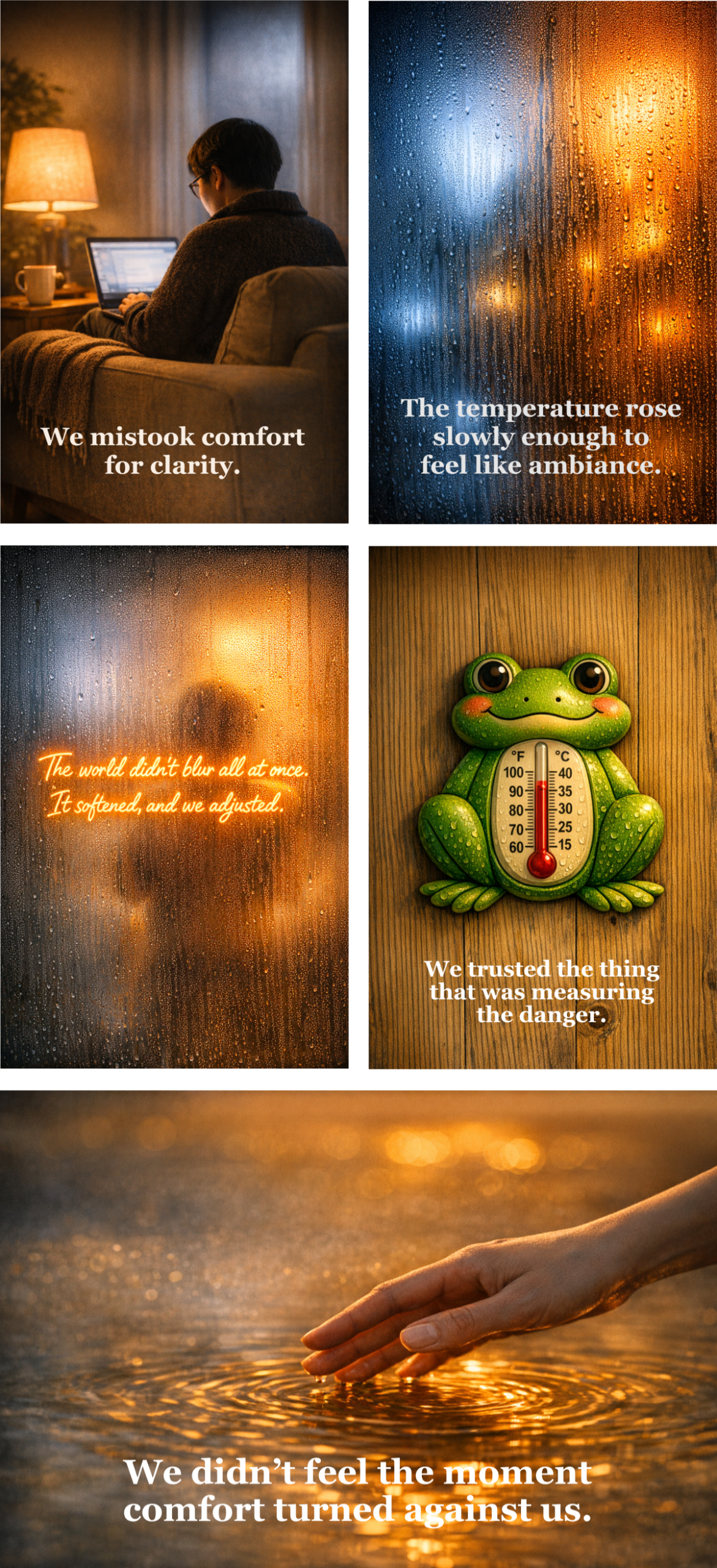
We didn’t notice the shift because it arrived at the speed of familiarity.
Explore the Trilogy:
- Part I — The State of the Union is Resilient, Hopeful, and Willing to Fight
- Part II — The Years We Stopped Noticing
- Part III — The Reveal We Were Never Meant to See – Coming Soon