WHAT LEADERSHIP REFUSED TO CONFRONT: Proximity and Silence in the Epstein Era

A brick red closed door set into a cracked light gray concrete wall, with warm light leaking from the bottom edge. On the right side of the wall, bold white text reads: 'THE THRESHOLD THEY REFUSED TO CROSS.' The scene symbolizes institutional avoidance and the refusal to confront systemic harm.
ALT-""

WHAT LEADERSHIP REFUSED TO CONFRONT: Proximity and Silence in the Epstein Era

We confront what they chose to ignore.

Series Page · USA Protect Your Vote Inspired by:
Robert Arnold — YouTube.com/@Defiance13
Source Video:
“On His Pattern of Judgement” December 29, 2025

I. Opening Strike

There are moments in a nation’s history when the failure is not hidden, complicated, or ambiguous — it is simply refused. The Epstein era is one of those moments. For years, leaders across parties, administrations, and institutions were confronted with warning signs that were visible, persistent, and impossible to mistake. Some stood too close to the rot and pretended not to see it. Others stood far away and convinced themselves that silence was neutrality. But leadership is neither proximity nor distance. Leadership is discernment. It is the ability — and the obligation — to recognize exploitation when it unfolds in your orbit and to act before the vulnerable are harmed again. In the Epstein era, too many in power chose comfort over confrontation, and that choice is its own indictment.

This page draws from Robert Arnold’s December 29, 2025 video,
“On His Pattern of Judgement.”
You can watch the full video here:
Watch on YouTube.

Soft, faint gray single line divider, low-contrast and gently blurred, symbolizing quiet resilience and reflection. Accessibility: Symbolizes quiet resilience, reflection, and gentle healing.

“Proximity and silence are different failures, but both are refusals.”

II. The Distinction That Matters

In every era of public reckoning, there comes a point when a nation must remember the difference between what can be proven in court and what must be recognized in plain sight. Allegations require evidence. Documentation requires verification. A courtroom requires certainty. But leadership requires something else entirely — judgment. Discernment. The ability to recognize danger before it becomes irreversible, and exploitation before it becomes a case file. The Epstein era exposed a truth we have tried, again and again, to outrun: that the threshold for holding power cannot be reduced to the absence of a conviction. A president is not entrusted with authority because they have avoided indictment. They are entrusted because they can see what others refuse to see, and act when others hesitate. When leaders collapse those standards into a single binary — guilty or not guilty — they are not defending justice. They are defending convenience. And convenience has never protected a single survivor.
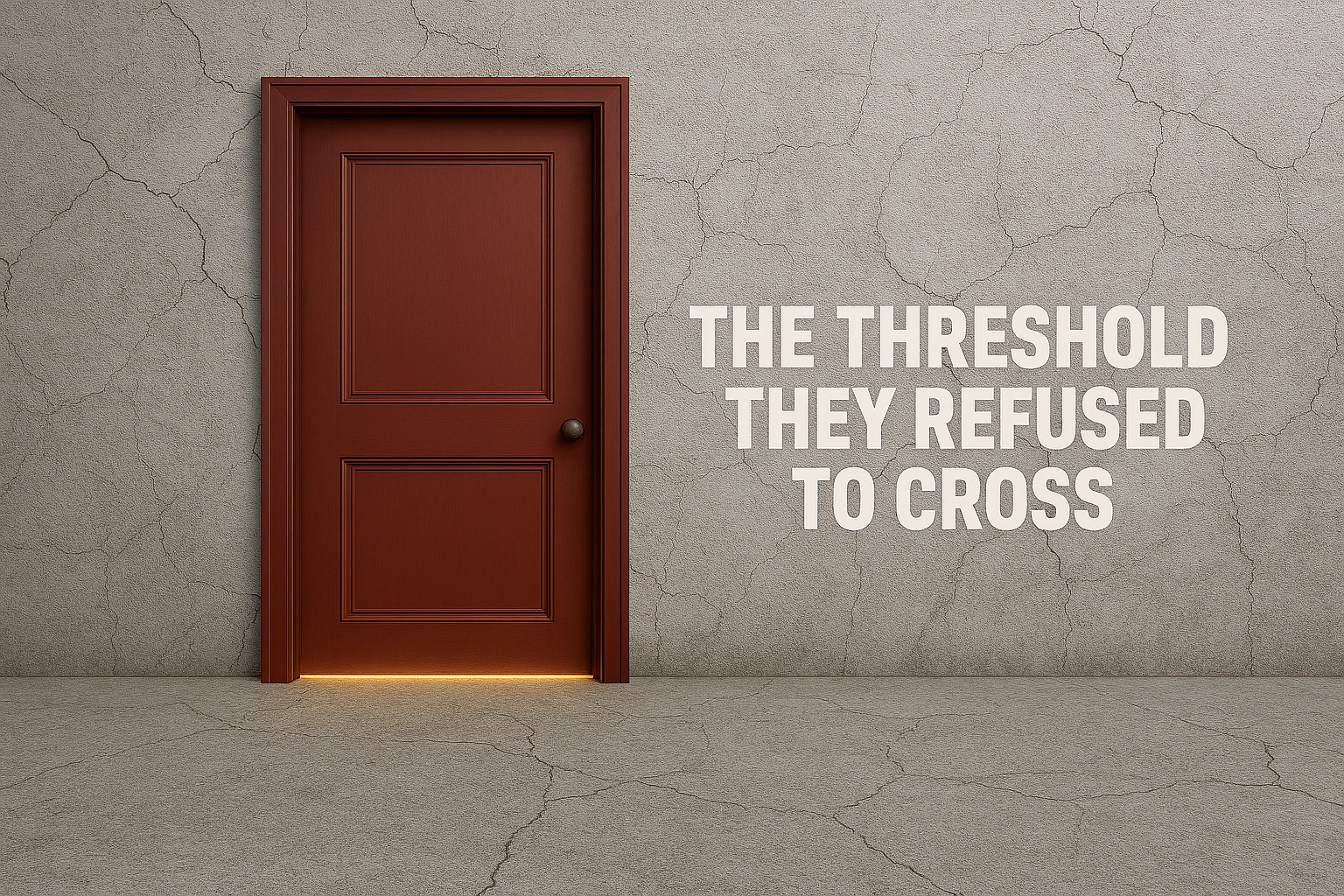
A brick red closed door set into a light gray cracked concrete wall, with warm light leaking from the bottom edge. The caption “THE THRESHOLD THEY REFUSED TO CROSS” appears on the wall to the right of the door. This image shows a closed brick red door on the left side of a cracked concrete wall. Warm light glows from beneath the door. On the right side of the wall, bold white text reads: “THE THRESHOLD THEY REFUSED TO CROSS.” The scene evokes institutional avoidance and the refusal to confront systemic harm.

Design Notes
Why This Image Looks the Way It Does

The HERO image uses a closed door with light leaking around the edges because the page centers on avoidance, proximity, and the refusal to act. The door is the threshold leadership would not cross — the barrier between what they knew and what they chose not to confront. The warm light beneath the door represents the truth they avoided, the evidence they sidestepped, and the moral clarity they refused to claim. The institutional texture of the wall — concrete, stone, or archival paper — reinforces the systemic nature of the failure. This is not a depiction of the harm; it is a depiction of the silence that enabled it.

What to Look For

The brick red door anchors the frame with a sense of authority and institutional weight. Its placement on the left side creates visual tension, as though the viewer has arrived at the moment just before accountability should have begun. The cracked concrete wall introduces subtle distress, echoing the motif language across your Civic Pages: institutions under strain, truth pressing outward. The soft gold or muted white light leaking from beneath the door is the emotional pivot — a quiet insistence that the truth was always present, always visible, and always ignored. The caption “THE THRESHOLD THEY REFUSED TO CROSS” appears on the wall itself, making the indictment part of the architecture.

Why It Matters

This HERO image prepares the reader for the page’s central argument: leadership was not confused, overwhelmed, or uninformed — they were proximate, aware, and silent. The closed door symbolizes the deliberate choice to avoid confrontation, while the leaking light exposes the truth they refused to face. By pairing institutional textures with a simple, declarative visual metaphor, the image becomes both evidence and accusation. It teaches the viewer how to read the Civic Page: not as a story of ignorance, but as a story of refusal. Nothing in the composition is decorative; every element reinforces the motif of proximity without courage.

Blue wave motif flowing across the screen—symbol of civic vigilance, legacy protection, and unstoppable movement. Accessibility: Symbolizes civic vigilance, legacy protection, and unstoppable movement.

III. The Proximity Problem

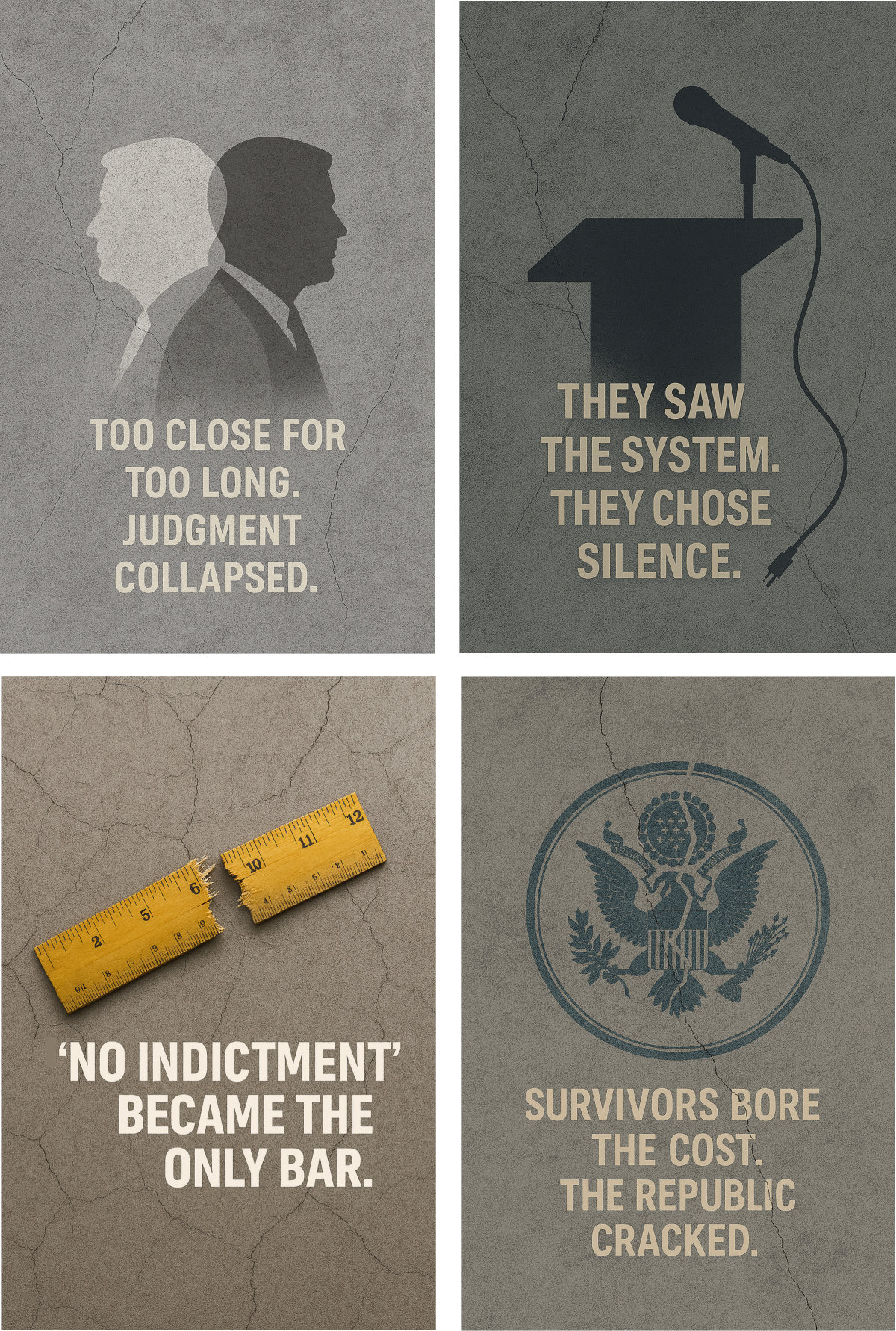
Leadership failure in the Epstein era did not take a single form. It split along two equally damning paths. On one side were those who stood too close for too long — men who shared rooms, flights, favors, and social circles with a predator whose warning signs were visible long before the public ever saw a case file. Proximity is not guilt, but it is judgment. It reveals what a leader notices, what they tolerate, and what they choose to excuse when power is in the room. A decade of overlap is not coincidence. It is discernment collapsing in slow motion. On the other side were those who stood far away and convinced themselves that distance was virtue. They inherited a system already warped by secrecy, already shaped by years of avoidance, and still chose not to confront the rot directly. Survivors waited. Institutions stalled. Files gathered dust. Silence became the default posture of power — not because the truth was unclear, but because confronting it would demand courage, transparency, and political risk. Passivity is not neutrality. It is a decision with consequences. Proximity and silence are different failures, but they converge on the same outcome: a leadership class that protected its own comfort more reliably than it protected the vulnerable. One failure is intimacy with corruption. The other is indifference to it. Both are refusals at their core — refusals to confront exploitation when it mattered most.

IV. The Loyalist Collapse

Every era of moral failure produces its own chorus of excuses, and the Epstein era is no different. The most predictable defense arrives like muscle memory: there was no conviction, therefore there is no problem. It is a shield built on technicalities, wielded by those who would rather debate legal thresholds than confront moral ones. But leadership is not a courtroom, and the public is not a jury bound by rules of evidence. A nation does not entrust power to someone simply because they have avoided prosecution. It entrusts power to those capable of recognizing danger before it becomes irreversible. The loyalist defense collapses under its own weight because it cannot answer the simplest civic question: What does it say about a leader when exploitation unfolds in their orbit, and they do nothing? If someone stood close to a man surrounded by visible warning signs of exploitation and never recognized them, that is a failure of judgment. If someone inherited a system shaped by secrecy and still chose not to confront it, that is a failure of courage. One failure is proximity. The other is silence. Both are refusals. Both are incompatible with the responsibilities of high office. Survivors have watched these defenses play out for decades — the minimization, the deflection, the insistence that unless a crime can be proven beyond a reasonable doubt, no one in power bears responsibility. But responsibility is not a verdict. It is a standard. And when leaders refuse to confront exploitation, when they hide behind legalistic shields or political convenience, they are not defending justice. They are defending themselves. The cost of that refusal has been paid by the vulnerable, again and again, while those in power perfected the art of looking away.

A Failure Written in Avoidance

They had every opportunity to act and declined each one. The damage that followed was not accidental but predictable. This reflection marks the breach they hoped would be forgotten.

Read the Summary

On His Pattern of Judgement

Summary of the December 29, 2025, Video by Robert Arnold.

The video examines a moment when the country is forced to confront not a verdict or a single revelation, but a pattern — one that becomes undeniable when viewed in full. The recent release of tens of thousands of documents related to the Epstein investigation created a chaotic transparency dump: verified material mixed with unverified claims, rumors, dead ends, and fragments logged out of investigative obligation. Arnold stresses that allegations are not guilt, documentation is not proof, and inclusion in a file is not an indictment. That distinction matters because it separates justice from hysteria.

But he argues that another distinction matters just as much: the difference between legal innocence and fitness for the presidency. Those standards were never meant to be the same. Even if every unproven allegation is discarded, the remaining record still reveals something deeply troubling — a long-term pattern of proximity, association, and personal connection between Donald Trump and Jeffrey Epstein, extending across years when warning signs were visible to anyone willing to see them.

Arnold notes that Epstein did not emerge “out of nowhere” in 2008. His behavior, his company, and the presence of young girls in his orbit were visible long before formal charges. Despite this, the record shows that Trump maintained social and personal ties with Epstein over a significant period. Newly released documents strengthen earlier indications that travel between them was more extensive than previously acknowledged. A single flight proves nothing, Arnold says — but repeated proximity over years proves judgment.

He addresses the familiar defense that proximity is not guilt, that there was no conviction, no prosecution. While those points may be true, Arnold argues they are insufficient because the presidency is not a jury box — it is a trust. The office demands discernment, moral awareness, and the ability to recognize danger and exploitation in one’s immediate orbit. At some point, probability matters. Patterns matter. Duration matters. No one is that unlucky, and if someone is truly that oblivious, they fail the most basic threshold of leadership.

Arnold outlines the unavoidable dilemma:

  • If Trump knew and tolerated Epstein’s behavior, he is disqualified.
  • If he didn’t know and failed to notice, he is disqualified.

There is no third option that preserves a claim to the office.

He criticizes the insistence that all standards collapse into a binary of guilt or innocence, calling that framing an abdication of responsibility. It demands that character, judgment, and moral awareness become optional so long as a technical defense exists. The presidency, he argues, was never meant to be awarded to the most legally insulated person in the room, but to someone capable of recognizing corruption and acting accordingly.

The documents released by the Department of Justice do not prove criminal guilt, and claiming otherwise is reckless. But they do prove something else that should matter to a functioning republic: that the bar for acceptable judgment has been lowered so far that proximity to trafficking circles can be dismissed with talking points. They show that duration no longer triggers moral reckoning and that loyalty has replaced judgment.

Arnold concludes that a nation that confuses “not convicted” with “qualified” has forgotten what leadership is supposed to be. We do not need a verdict to say this was unacceptable. We do not need certainty of guilt to recognize catastrophic judgment. Stripped of speculation and rage, the record reveals a judgment threshold far below what the presidency demands. And if leaders are now too afraid of their own loyalists to defend the standards of the office, then the problem is no longer one man — it is all of them.


The Slap in the Face: Survivors Betrayed Again.

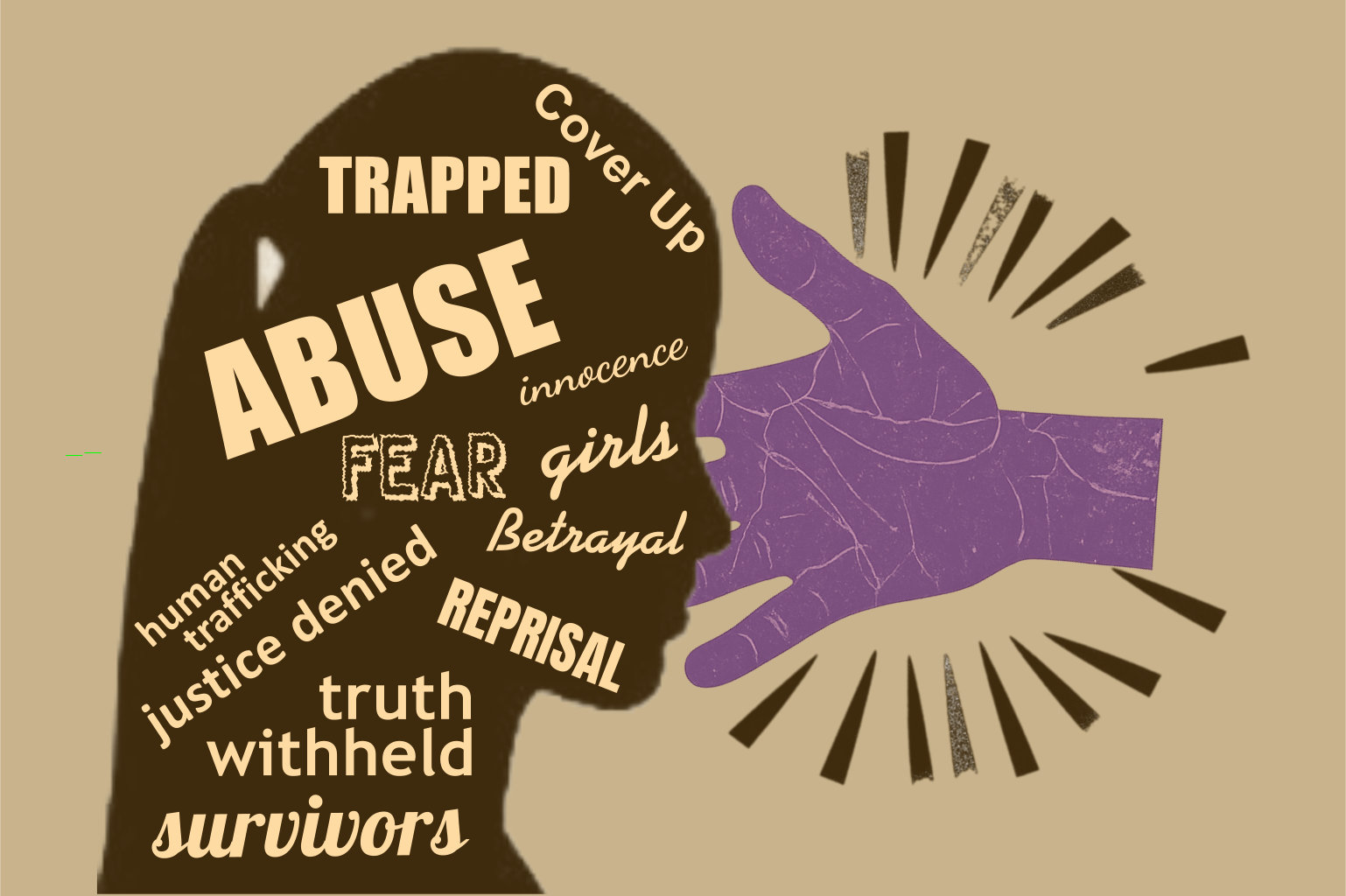
Silhouette of a girl’s head filled with words like “ABUSE,” “TRAPPED,” “FEAR,” “Betrayal,” “truth withheld,” “justice denied,” and “human trafficking,” with a purple hand covering her mouth, symbolizing the silencing and control of girls and women affected by abuse. Accessibility text: Exemplifies the intimidation, control, and anguish inflicted upon girls and women subjected to abuse.
ALT-""

The Slap in the Face: Survivors Betrayed Again.

Series Page · USA Protect Your Vote Inspired by: — The collective shockwave that followed when the Trump Administration ignored the court-ordered deadline to release the Epstein Files. This page exists because survivors were forced to watch — again — as transparency was treated like an optional courtesy instead of a legal and moral obligation. The moment itself was the catalyst. AUTHOR(S) or ARTIST — None. This wasn’t sparked by a single reporter, outlet, or creator. It was sparked by a government choosing secrecy over accountability and leaving survivors to absorb the consequences. “Exact Title of Article or Work” — None. This Civic Page responds to the pattern, the headlines, the silence around survivor impact, and the familiar sting of being dismissed by people in power. Date — No single publication date. This page was born out of the rolling coverage and public outrage surrounding the missed deadline and the survivors who were once again left unprotected.


Radiating line symbolizes amplified voices and distorted headlines. Accessibility: Symbolizes amplified voices and distorted headlines.

Design Notes
Why This Image Looks the Way It Does

The HERO image uses a hand‑drawn profile of a girl’s face filled with a word cloud because the page centers the internal reality of survivors — not the spectacle of the slap itself. The raised hand outside the profile represents the external betrayal, while the words inside the silhouette reveal the internalized trauma survivors carry long after the harm. This dual structure honors your Survivor‑Centered Protocol: the violence is not depicted; the impact is. The visual metaphor makes the civic indictment unmistakable — the slap was staged, but the consequences were not.

What to Look For

The placement of the words inside the profile is intentional. “ABUSE” sits at the center as the core wound. Words like “girls” and “betrayal” cluster near the mouth and voice area, symbolizing silenced testimony. Terms such as “fear,” “reprisal,” and “trapped” sit along the edges of the face, representing external pressure and the forces that kept survivors quiet. The mix of bold, heavy fonts and softer scripts encodes emotional contrast directly into the design — the brutality of the harm against the vulnerability of the victims. The raised hand outside the silhouette is not a depiction of violence; it is a symbol of institutional betrayal.

Why It Matters

This HERO image prepares the reader for the page’s central argument: survivors were not only harmed — they were betrayed again by the systems meant to protect them. By placing the word cloud inside the profile, the image makes visible what survivors carry internally, while the external hand represents the civic failure that compounded their trauma. The design reframes the “slap in the face” as a structural indictment, not a momentary gesture. Nothing in the composition is decorative; every element reinforces the motif of silencing, complicity, and the long shadow of institutional betrayal.

Image Grid:


ALT Text Descriptions:

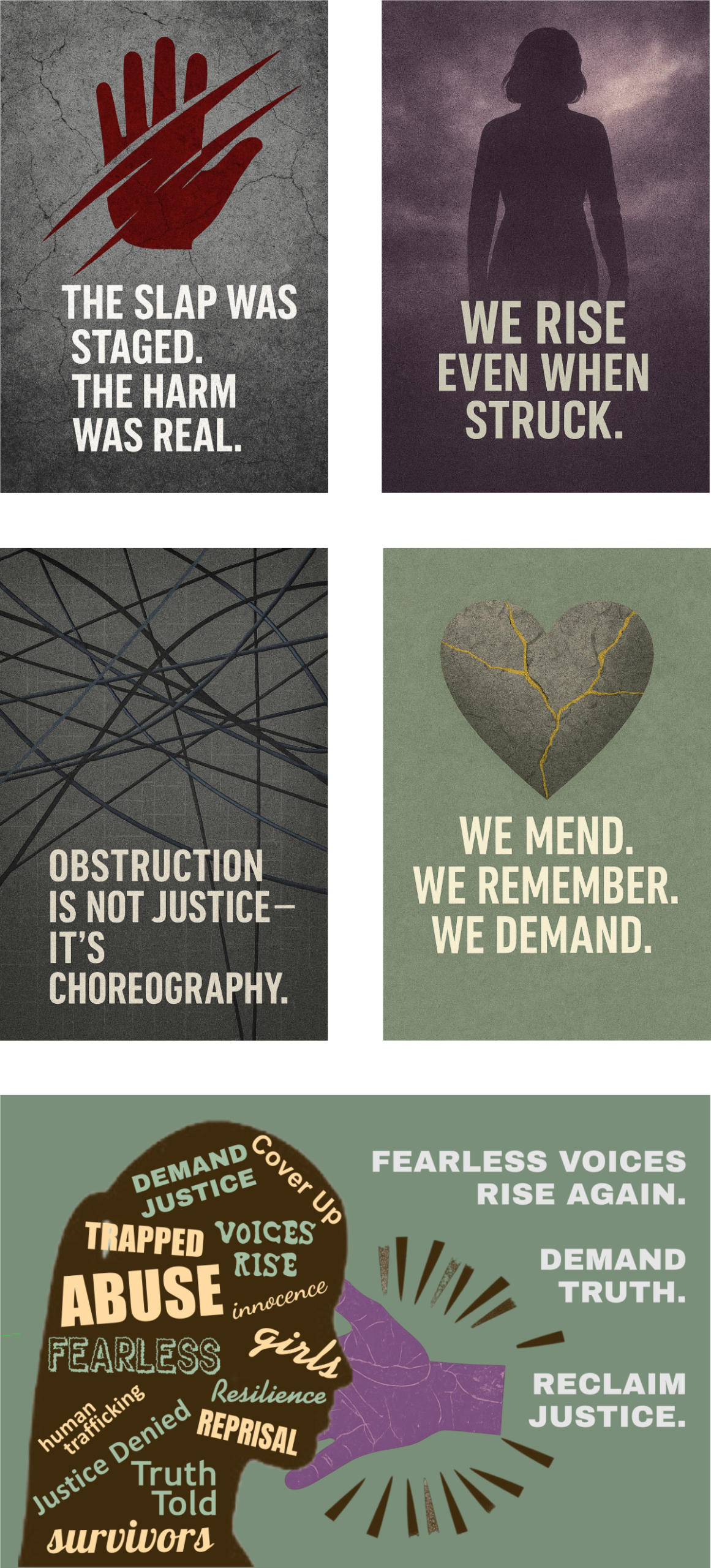
HERO Image – Silhouette of a girl’s head filled with words like “ABUSE,” “TRAPPED,” “FEAR,” “Betrayal,” “truth withheld,” “justice denied,” and “human trafficking,” with a purple hand covering her mouth, symbolizing the silencing and control of girls and women affected by abuse. Opening Indictment – Red handprint with a diagonal strike across it, paired with the text “THE SLAP WAS STAGED. THE HARM WAS REAL.” Grief Detail –  Silhouette of a person standing against a purple background with the text “WE RISE EVEN WHEN STRUCK.” Systemic Failure – Dense network of intersecting dark lines on a gray background with the text “OBSTRUCTION IS NOT JUSTICE—IT’S CHOREOGRAPHY.” Defiance Statement – Cracked heart shape on a green background with the text “WE MEND. WE REMEMBER. WE DEMAND.” FINALE HERO Image – Silhouette of a girl’s head filled with words such as “DEMAND JUSTICE,” “TRAPPED,” “VOICES RISE,” “FEARLESS,” “Resilience,” “survivors,” and “human trafficking,” while a purple hand covers her mouth. Radiating lines emphasize the force of silencing. On the right, bold white text reads: “FEARLESS VOICES RISE AGAIN. DEMAND TRUTH. RECLAIM JUSTICE.”

Captions:

HERO Image – The moment the truth hits. The moment the excuses fall apart. Opening Indictment – The spectacle was fake. The harm wasn’t. This image calls out the staged distraction that hid real damage. Grief Detail – Even when targeted, we rise. Survivors stand in defiance of the blows meant to silence them. Systemic Failure – What looks like chaos is often engineered. Obstruction isn’t justice — it’s choreography designed to confuse and delay accountability. Defiance Statement – Healing is not forgetting. We mend, we remember, and we demand the justice that was denied. FINALE HERO Image –  The era of silence is over. Survivors rise with fearless clarity, demanding truth, exposing cover‑ups, and reclaiming justice long denied. Blue wave motif flowing across the screen—symbol of civic vigilance, legacy protection, and unstoppable movement.


The Slap in the Face:  Survivors Betrayed Again.

The Department of Justice’s incomplete release of the Epstein files is more than a bureaucratic delay. For survivors, it is a slap in the face. After decades of being silenced, carrying the weight of abuse, threats, and fear of reprisal, testifying, and demanding transparency, they are met not with justice but with silence and redactions. This isn’t just about missing documents. It’s about survivors being told, once again, that their pain can be postponed, their voices can be muted, their truth can be managed. The system has always protected the reputations of powerful men, and as this release shows, it couldn’t even be bothered to protect the names of the women who were victims of abuse. Every withheld page is a reminder that the system still shields power before people.

Brick Red Strike Line Divider – bold red line over softened cracked concrete, anchoring urgency and rupture. Accessibility Text: : Divider signaling indictment phase; grounds the page before footer grid, and symbolizes rupture and urgency

Survivors do not need another performance of control. They need acknowledgment. They need the record to speak plainly. They need institutions to stop rehearsing excuses and start delivering accountability. For survivors, the incomplete release is not just a bureaucratic failure — it is retraumatization. Every redacted line tells them their truth is still negotiable, their pain still expendable. After decades of silence and threats, to see powerful men’s reputations shielded while women’s names are exposed is more than negligence. It is cruelty. Survivors deserve dignity that does not disappear the moment powerful men’s reputations are at stake. This betrayal cuts deeper because survivors were promised transparency. They stepped forward, relived their trauma in testimony, and trusted that the system would finally honor their courage. Instead, the DOJ’s actions send a chilling message: power is still protected first, and survivors are still asked to carry the burden alone.

Brick Red Strike Line Divider – bold red line over softened cracked concrete, anchoring urgency and rupture. Accessibility Text: : Divider signaling indictment phase; grounds the page before footer grid, and symbolizes rupture and urgency

The “slap in the face” is not metaphorical. It is the lived experience of being erased in public view. Survivors are forced to watch as the system bends over backwards to guard the powerful, while their own dignity is treated as collateral damage. This is not justice delayed — it is justice denied. Survivors have already carried the burden of silence, threats, and fear for decades. They should not be forced to continue carrying the burden of secrecy. Protecting survivors means more than redacting names after the fact. It means centering their dignity in every decision. It means refusing to let powerful men’s reputations outweigh the safety of the girls who endured abuse and grew into women carrying its scars. And it means recognizing that transparency, when done responsibly, is not about shielding anyone — it is about ending the silence that has always favored the powerful.

Brick Red Strike Line Divider – bold red line over softened cracked concrete, anchoring urgency and rupture. Accessibility Text: : Divider signaling indictment phase; grounds the page before footer grid, and symbolizes rupture and urgency

Transparency is not a courtesy — it is the minimum standard of justice survivors were promised. Institutions must understand that every delay, every half release, every redacted truth is not neutral. It is harm. Survivors deserve a system that values their courage more than it fears embarrassment. They deserve records that speak plainly, not archives that whisper through omissions. Survivors have carried the truth for decades. They should not have to carry the burden of secrecy too. The incomplete release of the Epstein files is not just a bureaucratic misstep — it is a betrayal that retraumatizes those who were girls when the abuse began and are women still living with its scars. The public must refuse to accept half-truths and redacted justice. Institutions must be pressed to honor survivors with full transparency, responsible disclosure, and protection of their dignity. Every page withheld is another wound. Every delay is another denial. This moment demands more than outrage. It demands action. Survivors need allies who will insist that the record be complete, that accountability be real, and that the system stop protecting power at the expense of the vulnerable. Justice is not a performance. It is a promise — and it is long past time to keep it

Brick Red Strike Line Divider – bold red line over softened cracked concrete, anchoring urgency and rupture. Accessibility Text: : Divider signaling indictment phase; grounds the page before footer grid, and symbolizes rupture and urgency

Call to Action:

If this page shook you, let it move you toward the people who lived it. Share the truth. Challenge the silence. Stand with survivors by supporting the advocates and reforms that protect them and hold power accountable. The path forward is clear: protect survivors, confront the systems that failed them, and refuse to let this harm be repeated.

Rippled echo line splitting the frame—represents rupture, reckoning, and the reverberation of truth. Accessibility: Symbolizes fragility and fracture of civic trust. Accessibility: Symbolizes fragility and fracture of civic trust.

ALT Text Descriptions:

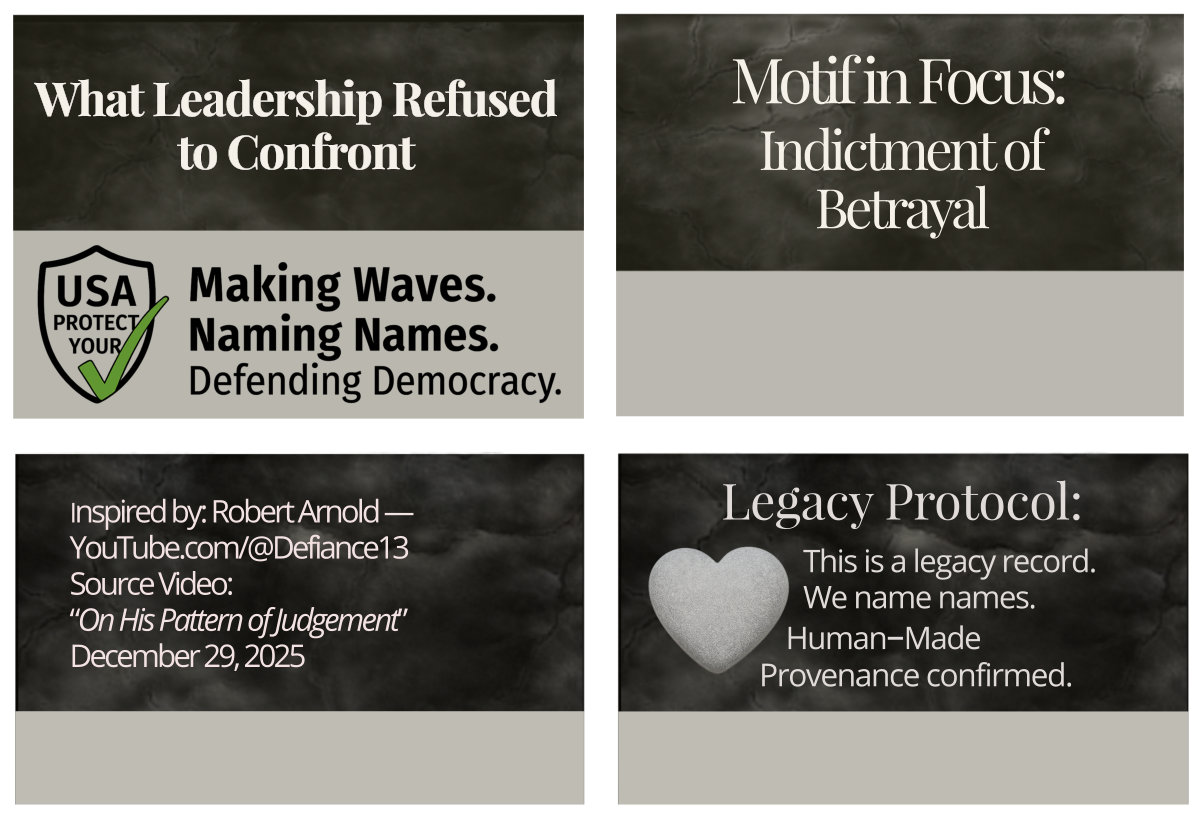
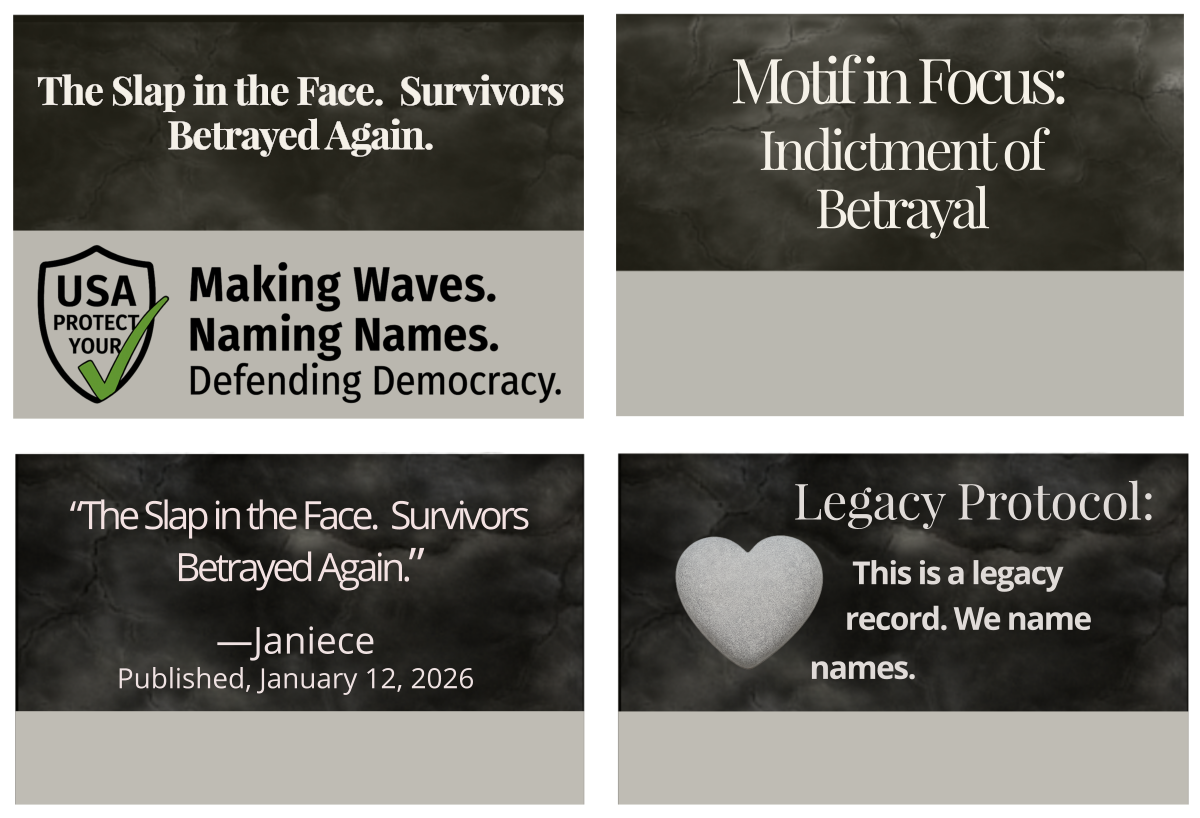
Civic Identity – USA PROTECT YOUR VOTE shield logo on a cracked concrete background, paired with the title “The Slap in the Face,” representing civic vigilance and public accountability.

Motif in Focus – Indictment motif expressed through fractured textures and stark contrast, emphasizing institutional failure and the demand for truth.

Source Attribution – Original artwork created for the Civic Page series, using the established Indictment visual palette and standardized footer layout.

Legacy Protocol Reminder – ALT text aligned with emotional tone and motif integrity.

Captions:

Civic Page Identity – The Slap in the Face — a call to confront the harm that was ignored.

Motif in Focus – Indictment: naming the failure, exposing the pattern, refusing the silence.

Source Attribution – Original Civic Page footer design using the cracked‑concrete Indictment palette.

Legacy Protocol Reminder – Accessibility and motif alignment were preserved across all footer assets

Civic Page Identity – 

Motif in Focus – 

Source Attribution – 

Legacy Protocol Reminder – 

Brick Red Strike Line Divider – bold red line over softened cracked concrete, anchoring urgency and rupture. Accessibility Text: : Divider signaling indictment phase; grounds the page before footer grid, and symbolizes rupture and urgency


Spark to Flame. End Citizens United.

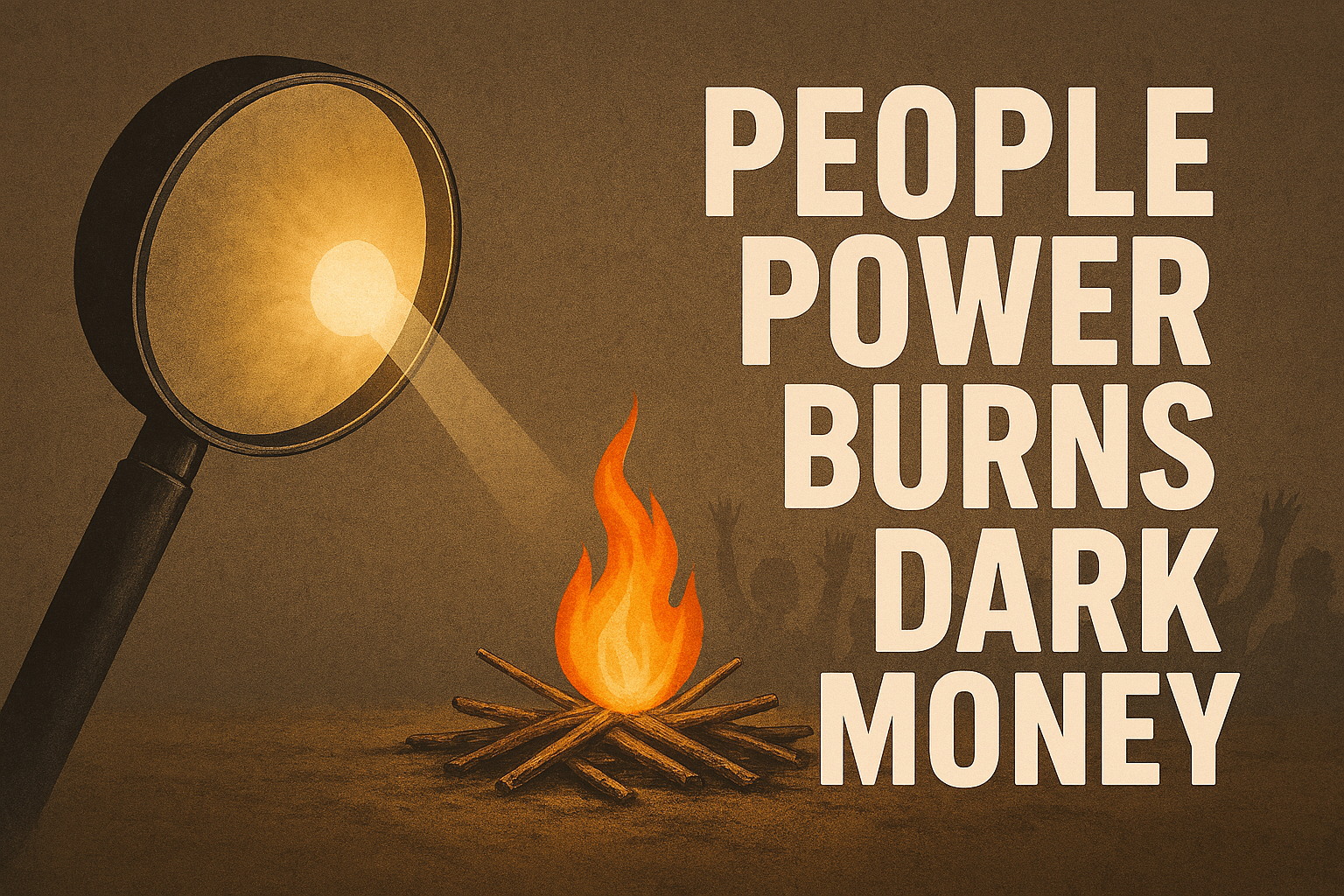
Magnifying glass focusing sunlight into a small flame on kindling, cracked concrete backdrop. • Accessibility Text: Hero image symbolizing collective ignition of citizen action against dark money.
ALT-""

Spark to Flame. End Citizens United.

Series Page · USA Protect Your Vote Inspired by: — Substack ROBERT REICH “How to Get Rid of “Citizens United” November 24, 2025


Artist acknowledgment

This Civic Page acknowledges the reporting and creative work of Robert Reich at Substack. His work documents the enduring damage of Citizens United, exposing how corporate political spending and dark money have drowned out democratic voices, and showing that states themselves hold the power to reclaim control.

“We can do away with it without a new Supreme Court. Nor do we need a constitutional amendment. There’s a far simpler way.” — Robert Reich

By crediting Robert Reich, we honor the civic courage and clarity of his work. His words anchor this page’s motifs in lived reality, ensuring that democratic voices are not drowned out by corporate capture of democracy.


Source summary paragraph

Robert Reich’s November 24, 2025 Substack article How to Get Rid of “Citizens United” lays out a clear path for dismantling the Supreme Court ruling that unleashed corporate money into American politics. He explains that reform does not require a new Court or constitutional amendment, but can be achieved through state‑level action that reasserts democratic control. This source grounds the Indictment Quadrant of the Spark to Flame grid, exposing how false power was granted to corporations and clarifying the strategy for reclaiming the fire of democracy. Read the original article here:

Source attribution standard

Names are published as they appear in the original title or byline. Inconsistent usage (e.g., middle initials) is noted in the archive but not replicated unless formally presented. Platform: Substack Author: Robert Reich Article: How to Get Rid of “Citizens United” Date: November 24, 2025

Flame Orange horizontal line with subtle glow, framed in white. • Accessibility Text: Ignition cue divider separating header from source narrative; symbolizes spark of civic action.

Show Full Transcript

How to Get Rid of “Citizens United” We can do away with it without a new Supreme Court. Nor do we need a constitutional amendment. There’s a far simpler way. Friends, Several of you responded to my “Sunday thought” yesterday by saying that the first step out of the mess we’re in is to get rid of the Supreme Court’s bonkers Citizens United v. Federal Election Commission decision of 2010, which held that corporations are people — entitled to the same First Amendment protection as the rest of us. Corporate political spending was growing before Citizens United, but the decision opened the floodgates to the unlimited super PAC spending and undisclosed dark money we suffer from today. Between 2008 and 2024, reported “independent” expenditures by outside groups exploded by more than 28-fold — from $144 million to $4.21 billion. Unreported money also skyrocketed, with dark money groups spending millions influencing the 2024 election. Most people I talk with assume that the only way to stop corporate and dark money in American politics is either to wait for the Supreme Court to undo Citizens United (we could wait a very long time) or amend the U.S. Constitution (this is extraordinarily difficult). But there’s another way! I want to tell you about it because there’s a good chance it will work. It will be on the ballot next November in Montana. Maybe you can get it on the ballot in your state, too. Here’s the thing: Individual states — either through their legislators or their citizens wielding ballot initiatives — have the authority to limit corporate political activity and dark money spending, because they determine what powers corporations have. In American law, corporations are creatures of state laws. For more than two centuries, the power to define their form, limits, and privilege has belonged only to the states. In fact, corporations have no powers at all until a state government grants them some. In the 1819 Supreme Court case Trustees of Dartmouth College v. Woodward, Chief Justice John Marshall established that: “A corporation is an artificial being, invisible, intangible, and existing only in contemplation of law. Being the mere creature of law, it possesses only those properties which the charter of its creation confers upon it, either expressly, or as incidental to its very existence….The objects for which a corporation is created are universally such as the government wishes to promote. They are deemed beneficial to the country; and this benefit constitutes the consideration, and, in most cases, the sole consideration of the grant.” States don’t have to grant corporations the power to spend in politics. In fact, they could decide not to give corporations that power. This isn’t about corporate rights, as the Supreme Court determined in Citizens United. It’s about corporate powers. When a state exercises its authority to define corporations as entities without the power to spend in politics, it will no longer be relevant whether corporations have a right to spend in politics — because without the power to do so, the right to do so has no meaning. Delaware’s corporation code already declines to grant private foundations the power to spend in elections. Importantly, a state that no longer grants its corporations the power to spend in elections also denies that power to corporations chartered in the other 49 states, if they wish to do business in that state. All a state would need to do is enact a law with a provision something like this: “Every corporation operating under the laws of this state has all the corporate powers it held previously, except that nothing in this statute grants or recognizes any power to engage in election activity or ballot-issue activity.” Sound farfetched? Not at all. In Montana, local organizers have drafted and submitted a constitutional initiative for voters to consider in 2026 — the first step in a movement built to spread nationwide. It would decline to grant to all corporations the power to spend in elections. Called the Transparent Election Initiative, it wouldn’t overturn Citizens United — it would negate the consequences of Citizens United. (Click on the link and you’ll get the details.) The argument is laid out in a paper that the Center for American Progress published several weeks ago. (Kudos to CAP and the paper’s author, Tom Moore, a senior fellow at CAP who previously served as counsel and chief of staff to a longtime member of the Federal Election Commission.) Note to governors and state legislators: The Citizens United decision is enormously unpopular. Some 75 percent of Americans disapprove of it. But most of your governors and state legislators haven’t realized that you have the authority to make Citizens United irrelevant. My recommendation to you: Use that authority to rid the nation of Citizens United. Hopefully, Montanans will lead the way. ROBERT REICH November 24, 2025


Pull Quote:

“Individual states — either through their legislators or their citizens wielding ballot initiatives — have the authority to limit corporate political activity and dark money spending, because they determine what powers corporations have.” — Robert Reich, Substack, November 24, 2025


Broken line divider — symbolizes amplified voices and distorted headlines.

Magnifying glass focusing sunlight into a small flame on kindling, cracked concrete backdrop. • Accessibility Text: Hero image symbolizing collective ignition of citizen action against dark money.

Brick Red Strike Line Divider – bold red line over softened cracked concrete, anchoring urgency and rupture. Accessibility Text: Divider signaling indictment phase; grounds the page before footer grid, and symbolizes rupture and urgency

Design Notes
Why This Image Looks the Way It Does

The HERO image uses a magnifying glass focusing sunlight into a rising flame to visualize the core argument of the page: concentrated citizen action can ignite change powerful enough to challenge dark money. The cracked concrete or weathered parchment backdrop grounds the image in civic urgency and historical weight. This is not a metaphor of destruction — it is a metaphor of ignition. The flame is intentionally small, signaling that transformation begins with a spark, not a blaze. The centered, bold white text “People Power Burns Dark Money” functions as both thesis and rallying cry.

What to Look For

The magnifying glass is angled to catch light with precision, reinforcing the motif of focused collective effort. The kindling beneath it is dry, ready, and waiting — a visual cue that the conditions for change already exist. Subtle silhouettes at the edges of the frame represent the collective nature of the spark: no single person is the firestarter; the ignition belongs to the crowd. The textured background adds friction and gravity, reminding the viewer that the fight against dark money is rooted in long-standing structural imbalance. Every element in the frame points toward the same idea: power grows when people gather their light.

Why It Matters

This HERO image reframes the fight against dark money as a matter of disciplined ignition rather than overwhelming force. It prepares the reader for the page’s deeper argument: that citizen action, when focused and sustained, can burn through the influence of unchecked wealth. The flame is not symbolic optimism — it is a visual strategy. By pairing a precise ignition point with collective silhouettes, the image teaches the viewer how to interpret the Civic Page: change begins when ordinary people concentrate their power. Nothing in the composition is decorative; every choice reinforces the motif of people-powered fire rising against entrenched influence.

Image Grid:

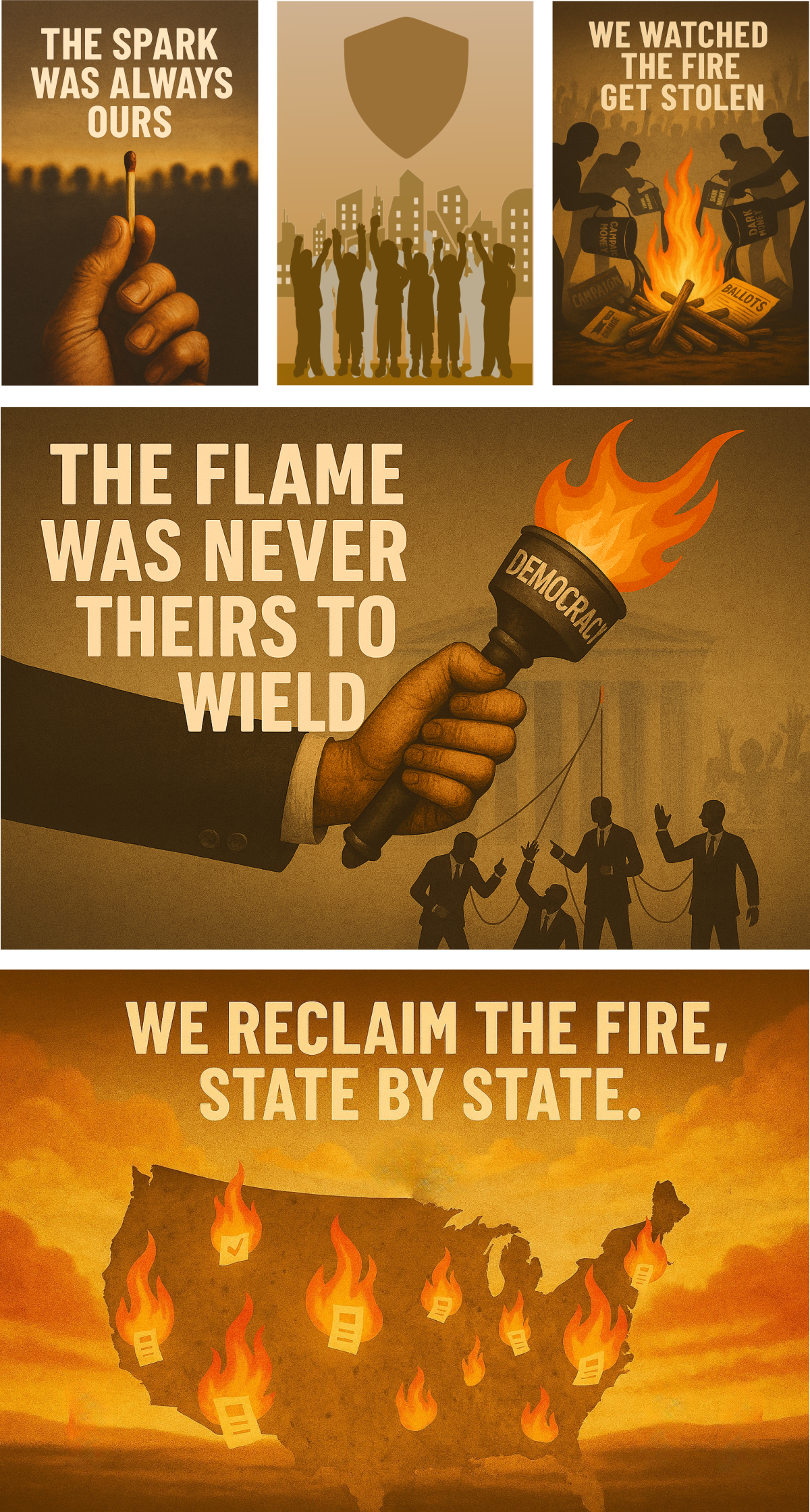
Grouped image grid for the Spark to Flame. End Citizens United Series Page. See individual ALT descriptions below the page image.

ALT Text Descriptions:

Hero Image – People Power Burns Dark Money Magnifying glass focusing sunlight into a small flame on kindling, cracked concrete backdrop. • Accessibility Text: Hero image symbolizing collective ignition of citizen action against dark money.

Clarity Quadrant – The Spark Was Always Ours Single match held between two fingers, glowing faintly against blurred crowd backdrop.

Shield Divider – No Text Dark parchment shield overlaying city skyline, protesters in foreground.

Grief Quadrant – We Watched the Fire Get Stolen Bonfire drowned by corporate silhouettes pouring dark liquid, ballots half‑buried in ash.

Indictment Quadrant – The Flame Was Never Theirs to Wield Torch labeled “Democracy” held by corporate hand, puppet strings attached to legislators, courtroom backdrop.

Reckoning Quadrant – We Reclaim the Fire, State by State Map of U.S. with ballot‑shaped flames igniting in Montana, California, and other states, sunrise breaking through smoke.

Broken line divider — symbolizes amplified voices and distorted headlines.

Captions:

Hero Image Spark to Flame — Change begins with us.

Clarity Quadrant Change begins with us — clarity before ignition.

Shield Divider Divider motif — shield of civic strength.

Grief Quadrant Grief of civic passion stolen by dark money.

Indictment Quadrant Indictment of false power granted by Citizens United.

Reckoning Quadrant State‑level reckoning — reclaiming democracy’s fire.

Blue wave motif flowing across the screen—symbol of civic vigilance, legacy protection, and unstoppable movement. The Fire Was Stolen. We Name Who Took It. The motifs on this page remind us that democracy’s flame was never meant to be wielded by corporations. Citizens United opened the floodgates to dark money, drowning out the voices of citizens. Yet the spark remains ours — clarity before ignition, grief for what was stolen, indictment of false power, and reckoning through state‑level action. This reflection anchors the imagery in lived reality: the magnifying glass focusing sunlight, the match glowing in the crowd, the shield divider, and the map igniting state by state. Each motif is a reminder that civic courage is not abstract — it is the fire we reclaim together.


Call to Action:

Reclaim the Fire — State by State

The path to ending Citizens United does not run through waiting for a new Supreme Court or a constitutional amendment. It runs through us — citizens and states willing to act. Legislators and ballot initiatives can strip corporations of the false power to spend in politics, restoring democracy to the people. This Civic Page calls on readers to demand state‑level action: • Organize locally to push ballot initiatives that curb corporate political spending. • Pressure legislators to redefine corporate powers and close the dark money floodgates. • Amplify voices that expose corporate capture and insist democracy belongs to citizens, not corporations. The flame was stolen, but the spark remains ours. By naming who took it and reclaiming the fire, we ensure that democracy burns bright again — fueled not by money, but by people power.

You can’t start a fire without a spark. And today, friends, we are the spark. We are the magnifying glass that turns sunlight into flame — a flame strong enough to burn away the dark money choking our democracy.

Steel Silver horizontal band with white frame, echoing footer spine. • Accessibility Text: Protective divider tying footer quadrants together; symbolizes reclamation and defense.

ALT Text Descriptions:

Civic Identity

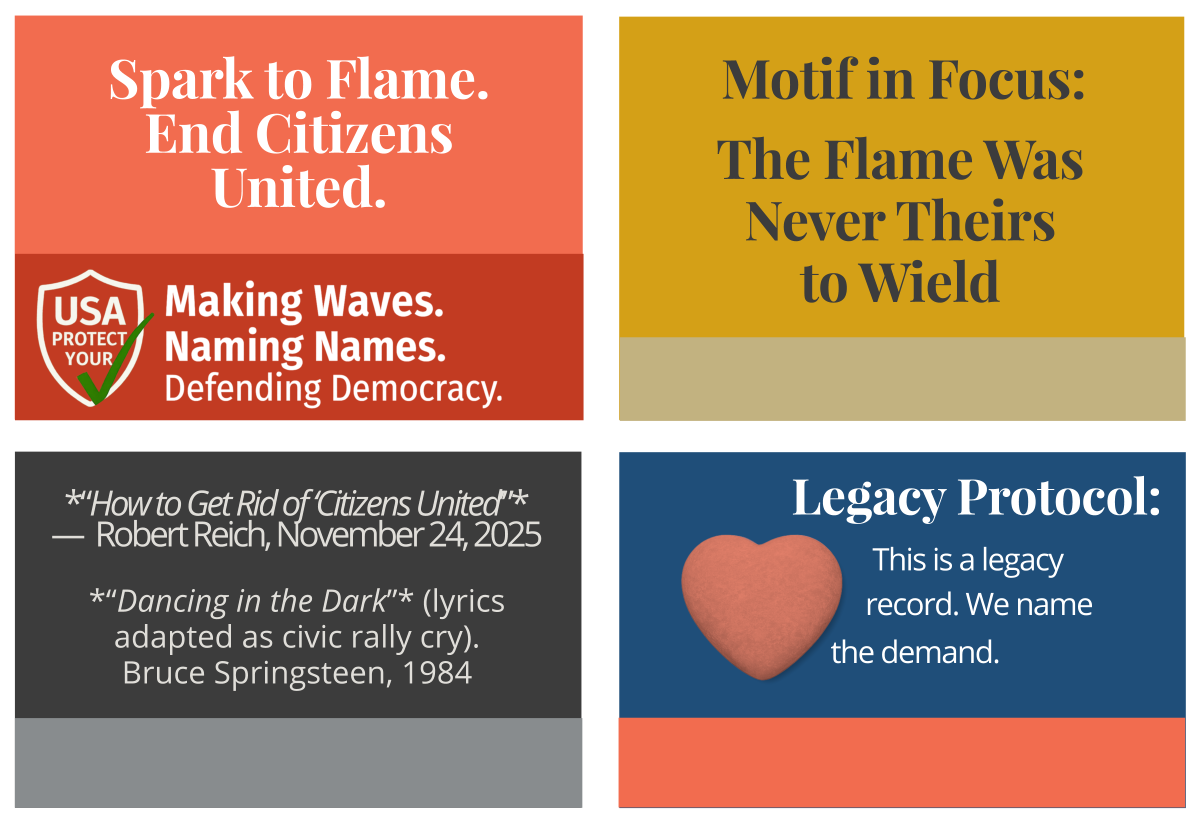
Coral and red block featuring shield emblem adapted from Janiece’s website logo, with green checkmark symbolizing the word “Vote.” Text includes “Spark to Flame. End Citizens United.” and “Making Waves. Naming Names. Defending Democracy.” • Accessibility Text: Civic identity quadrant anchoring the campaign’s title, shield emblem, and affirmation of democratic defense.

Motif in Focus

Mustard yellow and beige block with centered text: “Motif in Focus: The Flame Was Never Theirs to Wield.” • Accessibility Text: Motif quadrant highlighting the central indictment theme of the Civic Page.

Source Acknowledgment

Dark gray and light gray block with campaign‑authored rally cry quote: “You can’t start a fire without a spark. And today, friends, we are the spark. We are the magnifying glass that turns sunlight into flame — a flame strong enough to burn away the dark money choking our democracy.” • Accessibility Text: Source quadrant featuring authored rally cry attribution. — Rally Cry Draft “Spark to Flame,” authored by Janiece (December 2025)

Legacy Protocol Reminder

Navy blue and coral block with red heart icon and text: “Legacy Protocol: This is a legacy record. We name the demand.” • Accessibility Text: Legacy quadrant affirming the page’s archival status and civic demand naming.

Broken line divider — symbolizes amplified voices and distorted headlines.

Captions:

Civic Identity Civic Identity — shield emblem adapted from Janiece’s logo. The green checkmark represents the word “Vote.”

Motif in Focus Motif in focus — the flame was never theirs to wield

Source Acknowledgment Campaign quote — rally cry opening line anchoring the motif of spark to flame. — Rally Cry Draft “Spark to Flame,” authored by Janiece (December 2025)

Legacy Protocol Legacy protocol — this is a legacy record. We name the demand.

Soft, faint gray single line divider, low-contrast and gently blurred, symbolizing quiet resilience and reflection. Accessibility: Symbolizes quiet resilience, reflection, and gentle healing.