Micro Joys in a Macro Sadness – What Bad Bunny Taught America in 13 Minutes

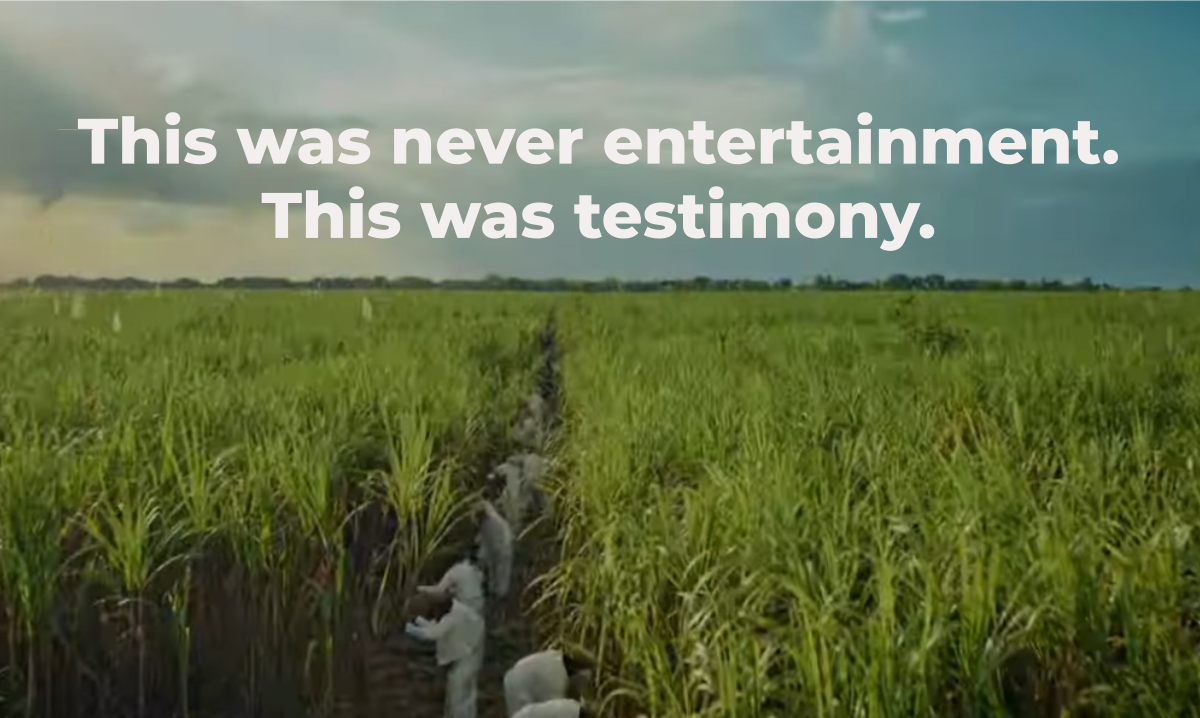
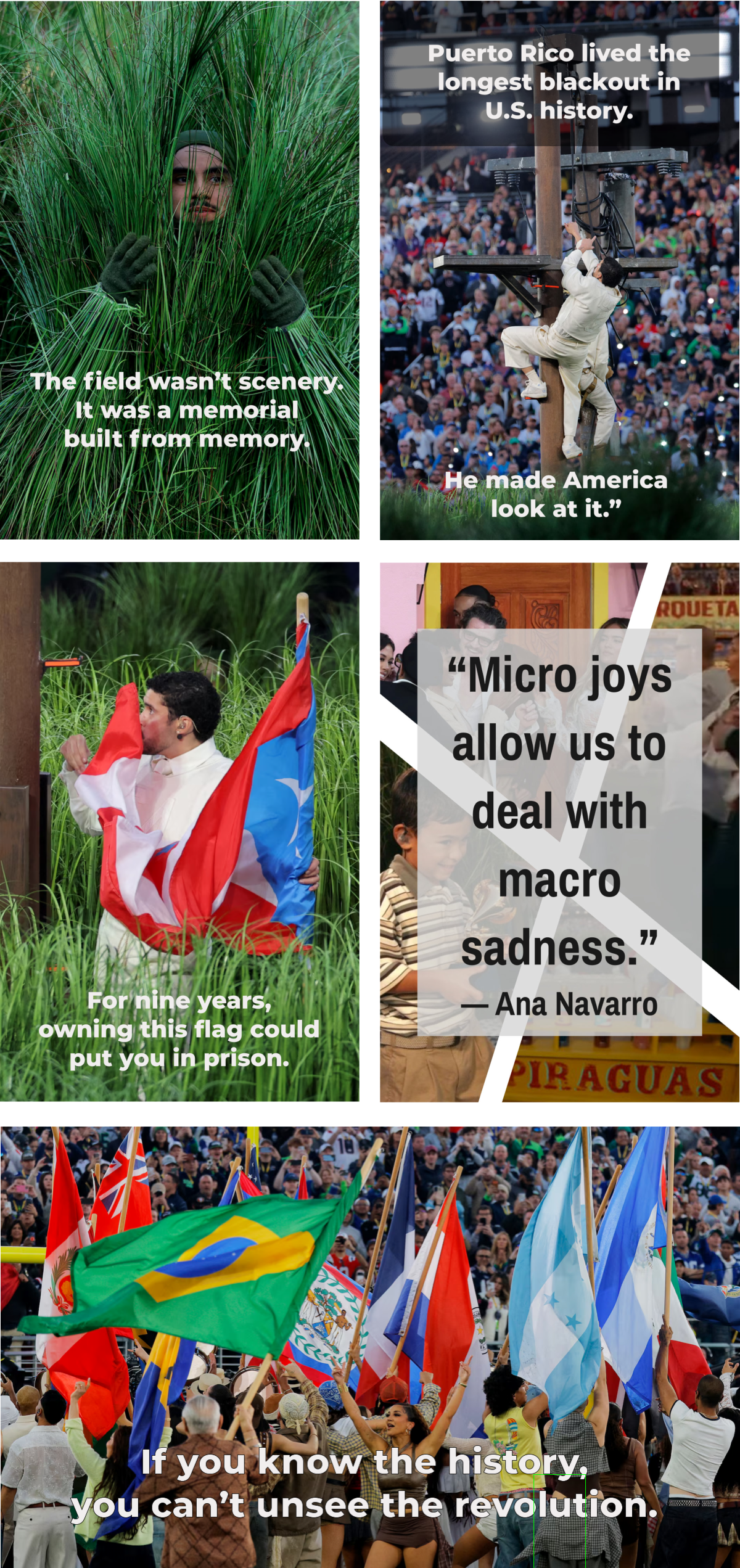
Workers in white clothing and pava-style hats in a dense sugarcane field symbolize the historical labor that built Puerto Rico’s economy.
USA Protect Your Vote banner with bold civic message and blue wave icons. Accessibility Text: A rectangular banner with the words “USA PROTECT YOUR VOTE. MAKING WAVES. NAMING NAMES. DEFENDING DEMOCRACY.” in bold blue capital letters on a white background. Below the text are three stylized blue wave icons, framed by a rough hand-drawn border.

Micro Joys in a Macro Sadness – What Bad Bunny Taught America in 13 Minutes

In a year heavy with distortion, division, and the quiet ache of a country forgetting its own people, Bad Bunny offered something rare on the Super Bowl stage: a micro joy with macro meaning. His thirteen‑minute performance didn’t just entertain — it insisted on visibility, dignity, and cultural truth in a place where erasure has long been the norm. Micro joys are not small; they are precise and profound. They are the moments that cut through the noise and remind us who we are, and who we refuse to disappear. This civic page traces how one artist, in one of America’s most-watched broadcasts, made the nation pause long enough to feel something real again.

Soft, faint gray single line divider, low-contrast and gently blurred, symbolizing quiet resilience and reflection.

On February 8, 2026, Bad Bunny transformed the Super Bowl halftime show into a living archive of Puerto Rican history, weaving cultural joy with historical grief. Through symbolic staging — from sugar cane workers honoring Indigenous Taíno and enslaved African labor, to the blackout referencing Puerto Rico’s ongoing energy crisis, to the once illegal light blue independence flag — he delivered a 13-minute civic lesson on identity, colonialism, and resistance. His performance, grounded in documented history from the Museum of the American Revolution, the Library of Congress, the Puerto Rico Legislature, and U.S. energy reports, re-framed entertainment as testimony. It was a hemispheric declaration: our culture belongs here, our history belongs here, and we refuse to be erased.

“Belonging isn’t granted.
It’s embraced.
It’s lived.”

Blue wave motif flowing across the screen—symbol of civic vigilance, legacy protection, and unstoppable movement.

Why this image:
The HERO image places viewers inside a narrow path cut through towering green cane — a landscape historically tied to labor, migration, and the erasure of the very people who built it. The single‑file line of figures moving through the field evokes both endurance and testimony. It signals that what we’re witnessing is not spectacle, but lived history.

Symbolic function:
The height of the cane creates a visual metaphor for systems that obscure, minimize, or consume the people within them. The narrow path becomes a corridor of visibility — a reminder that presence itself can be an act of resistance. The muted sky and soft light keep the emotional temperature grounded, allowing the figures to carry the weight of the narrative.

Civic meaning:
This image re-frames the idea of “performance.” It asserts that cultural expression — whether on a field, a stage, or a path through a cane field — is never just entertainment for communities who have been historically erased. It is testimony. It is lineage. It is belonging lived out loud.

Why it opens the page:
As the first visual encounter, the HERO image sets the thesis: Micro joys are not small; they are precise and profound. It prepares the reader to understand Bad Bunny’s halftime performance not as a diversion, but as a declaration — a moment where visibility, culture, and truth stepped into the center of America’s biggest stage.
Blue wave motif flowing across the screen—symbol of civic vigilance, legacy protection, and unstoppable movement.

A brief note about the post that sparked this page

What You Were Really Watching

Source Summary

Bad Bunny didn’t perform at the Super Bowl.
He turned the biggest stage in America into a classroom most viewers didn’t realize they had entered.

Before the first note, 380 performers dressed as sugar cane workers filled the field. Their pava hats and simple clothing weren’t costume design — they were a memorial. Puerto Rico’s sugar economy was built on the forced labor of Indigenous Taíno people and, after their near‑extinction, enslaved Africans brought by Spanish colonizers. That field wasn’t choreography. It was testimony.

As Bad Bunny walked past domino tables, piragua vendors, and the casita — the small house at the heart of the Puerto Rican community — he wasn’t decorating the stage. He was honoring the micro joys that have carried Puerto Ricans through centuries of macro sadness. Culture as survival. Culture as resistance.

Then came “El Apagón.” The blackout. Bad Bunny climbed an electrical pole while dancers scaled sparking towers. This wasn’t theatrics. It was indictment. After Hurricane Maria in 2017, Puerto Rico endured the longest blackout in U.S. history. Years later, the island still faces widespread power failures. The performance forced millions of Americans to look at a crisis their government allowed to continue.

But the most radical moment came in the form of a flag. Not the official Puerto Rican flag — the light‑blue independence flag. The one that was illegal to own under Law 53, La Ley de la Mordaza. From 1948 to 1957, Puerto Ricans could be imprisoned for ten years for displaying their own national symbol. Police could enter homes without a warrant to seize it. The law criminalized patriotic songs, independence speech, and assembly. It was designed to erase identity.

Bad Bunny held that flag on the largest broadcast stage in the world. He waved the symbol that Puerto Rican people once risked their lives to protect.

Then Tonita appeared — the matriarch of the Caribbean Social Club in Brooklyn, one of the last Puerto Rican social clubs in New York. Her presence was an altar to diaspora survival, to the communities built when mainstream America shut its doors.

Finally, the flags of the Americas walked behind him — Chile, Argentina, Mexico, Colombia, Puerto Rico, etal. And Bad Bunny said the only English words of the entire performance: “God bless America.” But he meant the Americas — the hemisphere, the diaspora, the people.

This wasn’t entertainment.
It was reclamation.
It was restoration.
It was a declaration that Puerto Rican history, culture, and identity belong on the biggest stage in the world.

As Ana Navarro said, “Micro joys allow us to deal with macro sadness.”
Bad Bunny gave millions of people both — the joy of recognition and the weight of truth.

Now you know what you were really watching.
Part III — Seeing Through the Noise

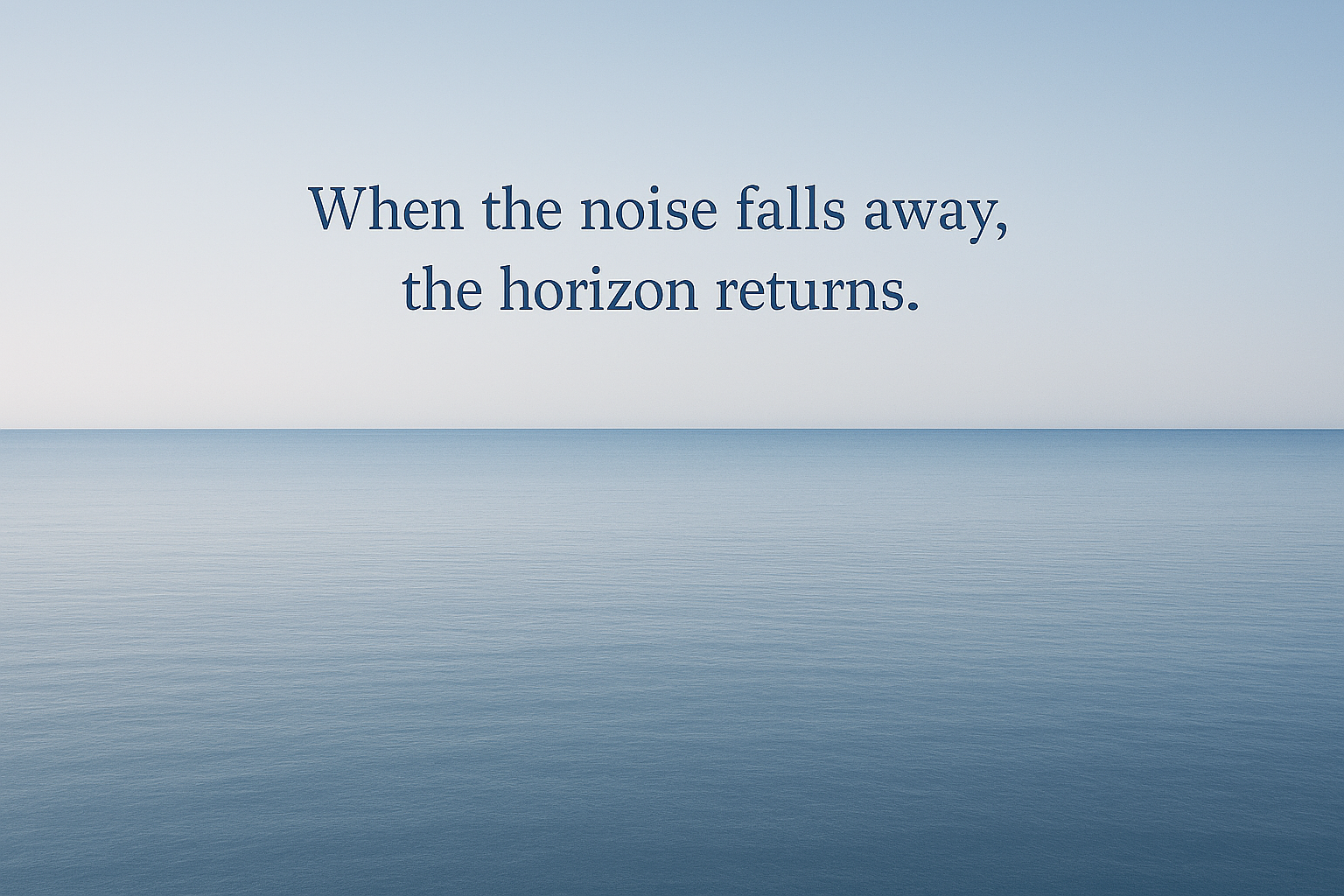
A calm, wide horizon divides sky and sea in soft clarity blues. The caption reads: “When the noise falls away, the horizon returns.”
USA Protect Your Vote banner with bold civic message and blue wave icons. Accessibility Text: A rectangular banner with the words “USA PROTECT YOUR VOTE. MAKING WAVES. NAMING NAMES. DEFENDING DEMOCRACY.” in bold blue capital letters on a white background. Below the text are three stylized blue wave icons, framed by a rough hand-drawn border.

Part III — Seeing Through the Noise

A Forgery Lab Investigation

The danger was never just the lies themselves. It was the noise — the blur, the overwhelm, the deliberate fog that made it harder to tell what was real, what was missing, and what was being quietly rewritten in the background. Manufactured chaos doesn’t need to convince you of anything; it only needs to exhaust your ability to see. Part III is about reclaiming that sight.

Soft, faint gray single line divider, low-contrast and gently blurred, symbolizing quiet resilience and reflection.

This chapter draws from reporting, public testimony, and civic research documenting how confusion, omission, and manufactured overwhelm have become tools of modern disinformation. Experts warn that democracies rarely collapse through dramatic events; they erode through blurred details, missing context, and the steady normalization of uncertainty. Part III examines how that fog is created, why it works, and what it takes to see clearly again.

“Once you can see the distortion, you can’t be controlled by it.”

Blue wave motif flowing across the screen—symbol of civic vigilance, legacy protection, and unstoppable movement.

A calm, wide horizon divides sky and sea in soft clarity blues. The caption reads: “When the noise falls away, the horizon returns.”

Notes on the symbolism behind the HERO image

Design Notes

The HERO image for Part III centers on the moment clarity breaks through distortion.
The composition uses soft blue‑gray tones to evoke steadiness, contrasted with subtle
visual interference that hints at the manufactured noise explored in this chapter.
The focal point is a clean, uninterrupted horizon line—an anchor symbol throughout
the series—representing the return of perception once confusion and overwhelm fall away.

The image is intentionally quiet. After the spectacle and chaos of manufactured
distortion, the most powerful statement is the reappearance of something simple,
stable, and true. The HERO sets the emotional tone for the chapter: clarity is not
dramatic; it is steady, patient, and always waiting beneath the noise.

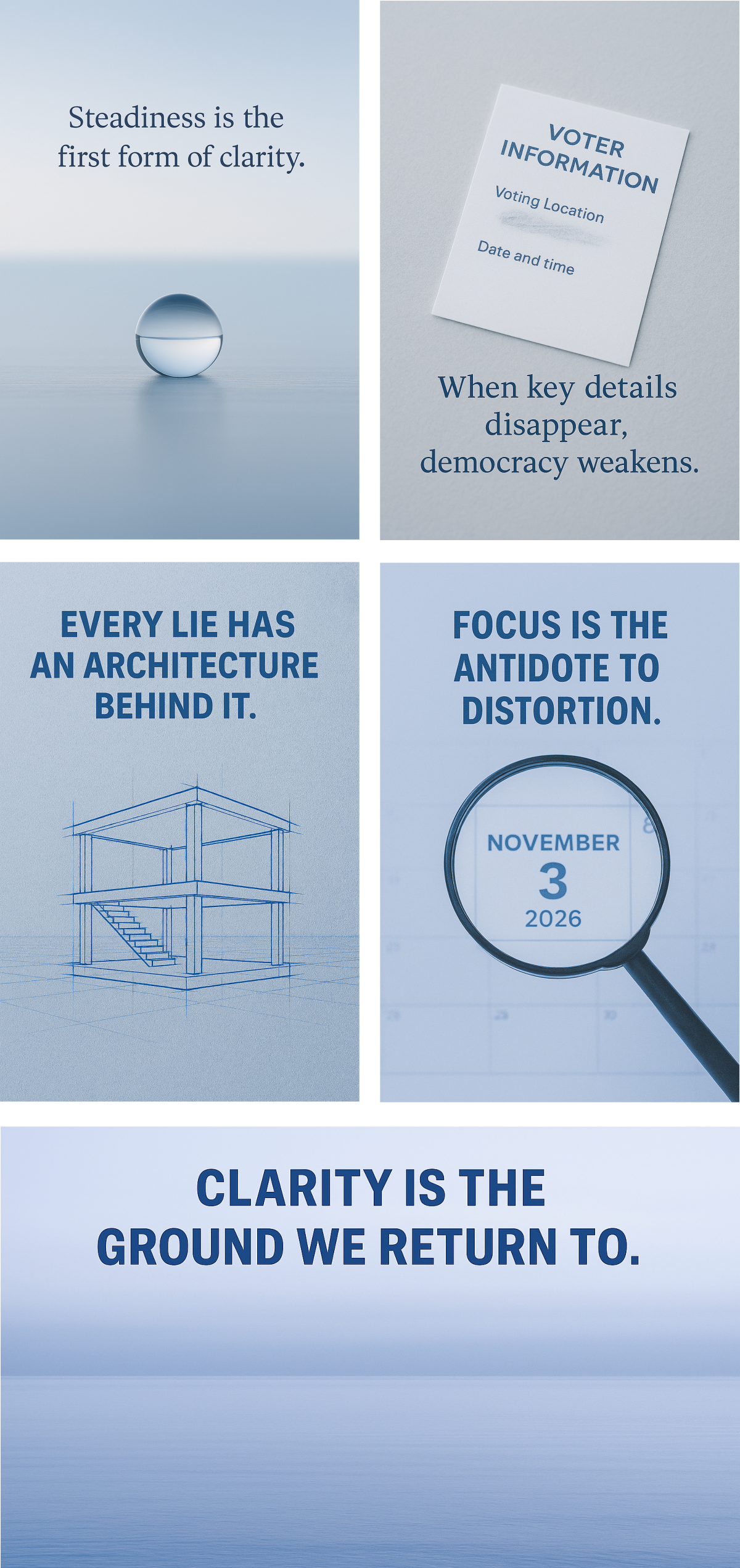
Five panel image grid illustrating the process of seeing through distortion, moving from steadiness to restored clarity. The panels depict a clear sphere on a calm horizon, blurred voter information signaling democratic erosion, blueprint blue structural lines revealing hidden architecture, a magnified election date emphasizing discernment, and a crisp ocean horizon representing the return of clarity once the noise recedes.

Blue wave motif flowing across the screen—symbol of civic vigilance, legacy protection, and unstoppable movement.

A brief note about the post that sparked this page

Source Transparency

This page responds to a now-removed social media post that circulated a fabricated
image and misleading narrative. To avoid amplifying disinformation, we do not display
or link to the original content. Instead, we examine the mechanisms that allowed it
to spread and the civic vulnerabilities it exposed.

Why it matters civically:
The post’s rapid circulation demonstrated how easily manipulated content can distort
public understanding. Its spread underscored the growing need for stronger civic
safeguards, clearer information pathways, and public awareness of how misinformation
exploits confusion and overwhelm.

When the Noise Falls Away

Clarity doesn’t arrive with fanfare. It returns quietly, the moment you stop fighting the noise long enough to notice what has been steady all along. The horizon is never gone; it is only obscured. Part III reminds us that confusion is not a natural state — it is a manufactured one.

Distortion works because it overwhelms, not because it persuades. When details blur and context disappears, even simple truths can feel out of reach. But every lie has a structure, and every fog has a source. Once you recognize the architecture behind the noise, its power begins to dissolve.

Seeing clearly is not a passive condition; it is a civic skill. It requires steadiness, focus, and the willingness to look past the spectacle to what remains true. When the noise falls away, what’s left is the horizon — and the responsibility to act on what you can finally see.

Explore the Trilogy:

Author’s Note

This trilogy was written to help readers navigate a world where distortion has become routine
and clarity feels increasingly rare. My intention is that these pages offer a steady place to
return to whenever the noise rises or the mirrors close in. We protect our shared reality by
learning to see clearly — and by refusing to surrender that skill to anyone. Clarity isn’t loud.
It’s steady. And steadiness is its own form of strength.

Part II— The Age of Manufactured Reality

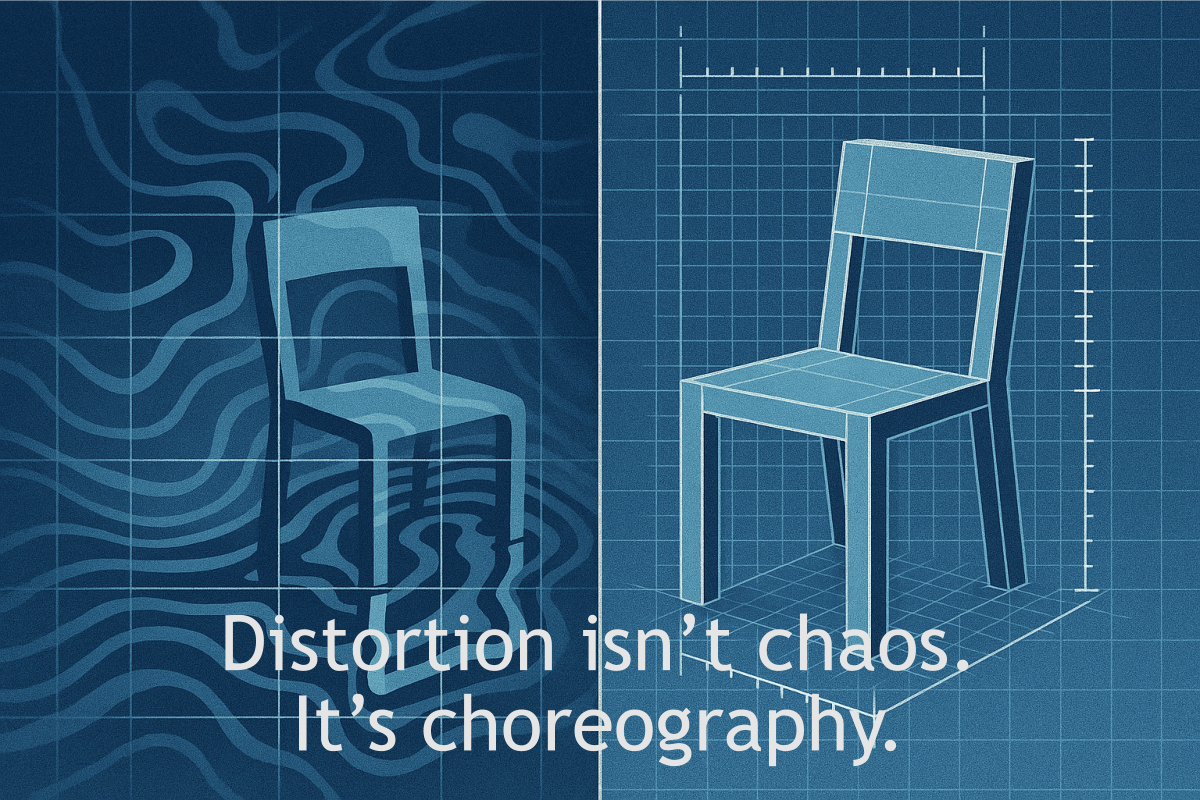
Landscape image showing a dark, high‑contrast investigative workspace with scattered evidence elements partially illuminated by a focused overhead light. A blurred document, a redacted line, and a magnifying circle appear on the right side, connected by a thin evidence marker line. Centered white text reads “Distortion isn’t chaos. It’s choreography.” The overall composition emphasizes analysis, pattern‑finding, and the deliberate construction behind manipulated information.
USA Protect Your Vote banner with bold civic message and blue wave icons. Accessibility Text: A rectangular banner with the words “USA PROTECT YOUR VOTE. MAKING WAVES. NAMING NAMES. DEFENDING DEMOCRACY.” in bold blue capital letters on a white background. Below the text are three stylized blue wave icons, framed by a rough hand-drawn border.

Part II — The Age of Manufactured Reality

A Forgery Lab Investigation

Have you noticed how something feels off in the way information moves now? Not because people are lying more boldly, but because the volume, speed, and emotional charge of what reaches us is engineered to overwhelm. The goal isn’t persuasion — it’s exhaustion. When you’re tired, you stop questioning. When you stop questioning, someone else gets to define what’s real.
This is the architecture of manufactured reality: a world where the reflection looks familiar enough to trust, but warped just enough to mislead.

Soft, faint gray single line divider, low-contrast and gently blurred, symbolizing quiet resilience and reflection.

This investigation draws from a widely circulated manipulated Facebook post that spread across multiple communities in December 2025. Its rapid reach, emotional framing, and selective presentation make it a clear example of how manufactured reality enters public view — and how quickly it can distort understanding.

“Confusion isn’t a side effect. It’s a strategy.”

Blue wave motif flowing across the screen—symbol of civic vigilance, legacy protection, and unstoppable movement.

Landscape image showing a dark, high‑contrast investigative workspace with scattered evidence elements partially illuminated by a focused overhead light. A blurred document, a redacted line, and a magnifying circle appear on the right side, connected by a thin evidence marker line. Centered white text reads “Distortion isn’t chaos. It’s choreography.” The overall composition emphasizes analysis, pattern‑finding, and the deliberate construction behind manipulated information.

Design Notes

Why This Image Looks the Way It Does

This HERO image exposes the engineered nature of distortion.
The composition splits the frame into two visual truths: on the left, an ordinary object rendered strange through funhouse like warping; on the right, the same object clarified through blueprint lines, measurements, and structural cues. This duality is the core metaphor of manufactured reality — distortion is not accidental, emotional, or chaotic. It is designed.

What to Look For

The cool, analytical lighting reinforces the emotional register of Clarity moving toward Indictment. The viewer is invited to compare the warped reflection with the precise blueprint, revealing that the “funhouse” effect is not whimsy but architecture. The grid lines, measurement ticks, and clean geometry on the right side function as the forensic counterweight to the manipulated image on the left.

Why It Matters

By pairing distortion with its underlying blueprint, the image teaches the reader how to interpret Part II: manufactured reality is not a glitch in perception but a system built to shape perception. The HERO establishes the investigative tone for the entire page — not by dramatizing the distortion, but by revealing the machinery behind it.

Real‑World Note — Blueprint Annotation

Recent global investigations into unsafe AI image generators have revealed how easily synthetic harm can slip into the world when guardrails are thin or absent. These cases mirror the dynamic described in this section: when the counterfeit can be produced without friction, it begins to blur the edges of the authentic in ways that feel ordinary until the damage is already done. The civic implication is clear and clinical — emerging technologies require tighter, enforceable safety regulations, because voluntary safeguards erode at the same speed as the systems that depend on them.

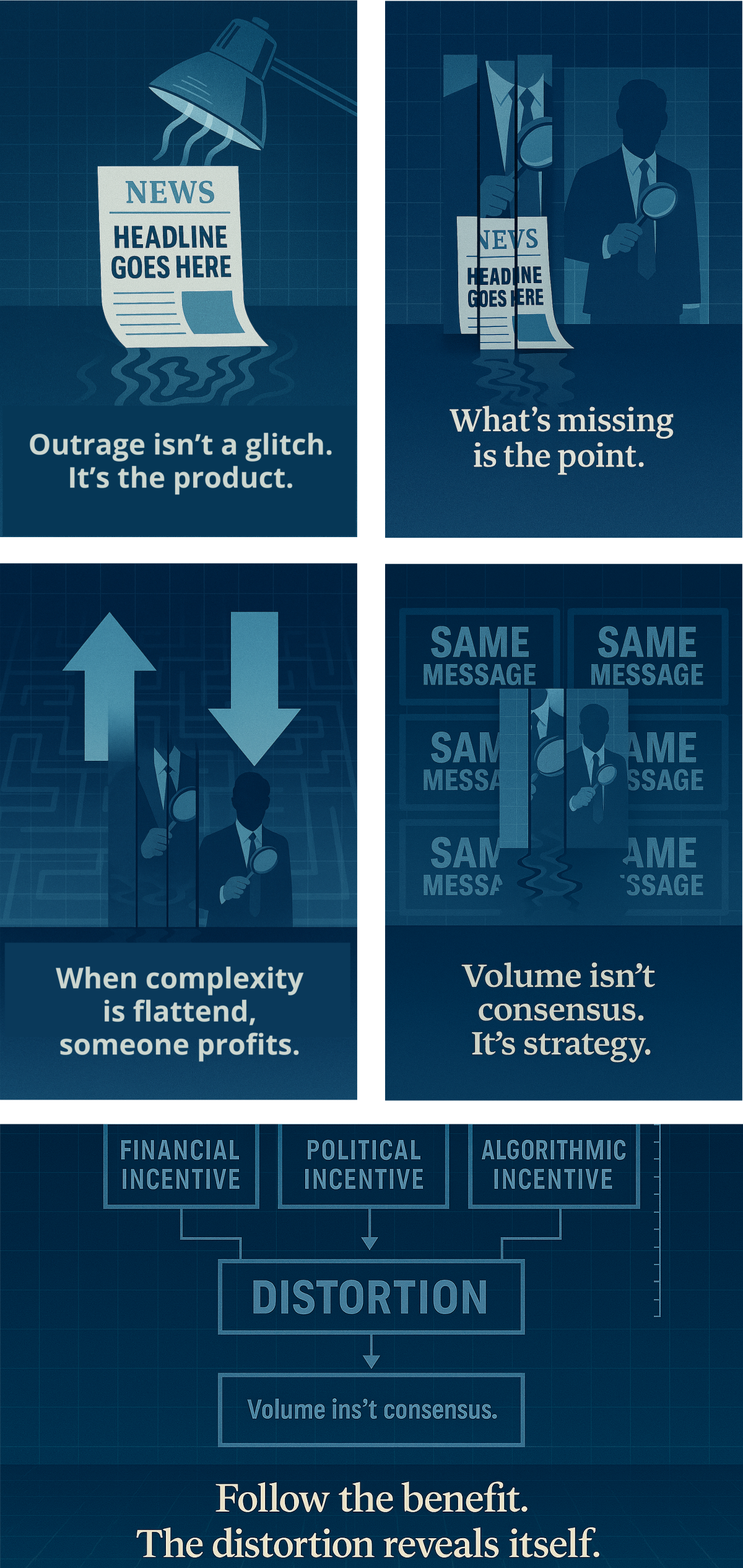
Five panel image grid depicting modern information distortion through blurred newsrooms, rapid social media scrolls, duplicated rally crowds, conflicting digital billboards, and a smudged newspaper front page. Each panel represents a different mechanism of manufactured reality, emphasizing emotional manipulation, spectacle, contradiction, and the erosion of trust in traditional sources.

Blue wave motif flowing across the screen—symbol of civic vigilance, legacy protection, and unstoppable movement.

A brief note about the post that sparked this page

How Confusion Became a Political Weapon

Source Summary

A manipulated Facebook post circulated widely in December 2025 — a piece of content engineered to confuse, provoke, and fracture public understanding. I am not reproducing it here. Its specifics are less important than what it revealed: how easily a fabricated narrative can spread, how quickly people can be swept into its momentum, and how the deliberate infusion of confusion has become a political weapon. This page examines the conditions that allowed that post to thrive, not the post itself.

Where the Signal Is Deliberately Broken

Manufactured reality does not rely on a single lie. It works by flooding the public sphere with distortions, half-truths, and engineered ambiguity until certainty itself feels out of reach. The confusion is not accidental; it is the product of design.

This strategy succeeds because it targets the most vulnerable point in any information system: the moment when people are unsure what to believe. When doubt becomes the default, bad actors no longer need to persuade — they only need to destabilize. The goal is not to replace truth, but to exhaust it.

The betrayal lies in that exhaustion. When clarity is deliberately broken, the public loses more than facts; it loses the ability to act with confidence. Manufactured confusion weakens civic judgment, erodes collective memory, and blurs the line between accountability and noise. Part II examines this fracture not to amplify it, but to expose the machinery that depends on our disorientation and to name the civic harm it inflicts.

This strategy succeeds because it targets the most vulnerable point in any information system: the moment when people are unsure what to believe. When doubt becomes the default, bad actors no longer need to persuade — they only need to destabilize. The goal is not to replace truth, but to exhaust it.

Explore the Trilogy:

Author’s Note

This trilogy was written to help readers navigate a world where distortion has become routine
and clarity feels increasingly rare. My intention is that these pages offer a steady place to
return to whenever the noise rises or the mirrors close in. We protect our shared reality by
learning to see clearly — and by refusing to surrender that skill to anyone. Clarity isn’t loud.
It’s steady. And steadiness is its own form of strength.